Dinner · Part 2 of 3: Instructions
Slow Cooker Mango Habanero Spareribs Step-by-step instructions
- Prep
- Cook
- Total
- Serves
- 4
Before you start
Before starting, ensure that your slow cooker insert is clean and dry. Prepare the pork by cutting the rack of ribs into individual sections or smaller pieces that are easy to manage. If you are using fresh mangos, peel and dice them into uniform pieces to ensure they cook evenly.
Have all your measured ingredients ready on the counter so you can assemble the cooker quickly and efficiently, keeping the preparation process streamlined and organized for the best results.
Ingredients at a glance (4)
- 3 lb bone-in pork spareribs, cut into sections
- 1 cup diced mango
- 1 tsp garlic powder
- 1 cup mango habanero sauce
Instructions
Assembly Phase
- Prepare the slow cookerArrange the bone-in pork spareribs in a ring around the inside wall of the slow cooker insert. Ensure the ribs are standing upright against the ceramic walls to allow for even heat distribution during the long cooking process.Look for Ribs are standing firmly in a circular formation.Tip If the ribs are too long, trim them to fit the height of your slow cooker insert.
At the end of this phase, the ribs should be neatly arranged in a ring against the walls of the slow cooker insert. This circular arrangement is essential for consistent heat distribution.
Ensure that the ribs are stable and standing upright, providing a solid foundation for the remaining ingredients. Check that the insert is sitting securely on the base and that the cord is plugged in properly before proceeding to add the aromatics and sauce.
Seasoning Phase
- Add aromatics and glazeScatter the diced mango evenly over the top of the ribs. Sprinkle the garlic powder over the meat, then pour the mango habanero sauce over everything, ensuring the sauce coats the ribs and mango pieces thoroughly.Look for Ingredients are distributed and coated in sauce.Tip Use a spatula to gently push down any mango pieces that are stuck to the sides.
Once the mango, garlic powder, and sauce have been added, the ribs should be well-coated. The diced mango should be scattered evenly to ensure its sweetness permeates the entire dish. Before covering the slow cooker, visually confirm that the sauce has reached the bottom of the insert. This ensures that the ribs will braise in the liquid rather than just steaming, which is vital for achieving the desired sticky, glazed finish.
Cooking and Resting Phase
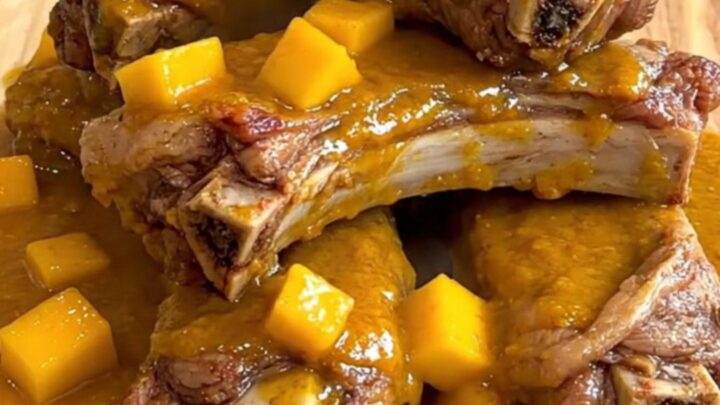
- Slow cook and serveCover the slow cooker and cook on low for 8 hours until the pork reaches an internal temperature of 145°F (63°C). Once cooked, transfer the ribs to a serving board and let them rest for 5 minutes before serving.Look for Meat is very tender and pulls away from the bone.Safe temperature 145°F (63°C) internal temperature (steaks, chops and roasts)Tip Keep the lid closed throughout the cooking process to maintain a steady temperature.
After the long cooking time, the ribs should look deeply glazed and incredibly tender. The meat should be soft and yielding to the touch. Once you have reached the required internal temperature, carefully remove the ribs from the slow cooker. Let them rest on a cutting board, allowing the excess glaze to set slightly. The ribs are ready to be served once they have rested for at least five minutes, ensuring a succulent eating experience.
Common mistakes
A common mistake is overcrowding the slow cooker, which can prevent even heat distribution and lead to uneven cooking. Always ensure there is enough space for the heat to circulate around the ribs.
Another error is opening the lid too frequently, which allows heat and steam to escape, significantly increasing the cooking time. Finally, do not ignore the resting time; letting the ribs rest for at least five minutes is crucial for the juices to redistribute, ensuring the meat remains moist and flavorful.
How to tell it’s done
The spareribs are perfectly done when the meat is exceptionally tender and begins to pull away from the bone. Use a digital meat thermometer to check the thickest part of the meat, ensuring it reaches at least 145°F (63°C).
The sauce should be thick and glossy, clinging to the ribs rather than being watery. If the sauce is too thin, you can remove the ribs and simmer the remaining liquid in a saucepan until it reaches your desired consistency.
- Steaks, chops and roasts: 145°F (63°C) in the thickest part, then a 3-minute rest
Up next · Part 3 of 3
2 variations · storage & make-ahead · 3 answers · printable card
Tips, FAQ & printable recipe (Part 3)← Back to the ingredients (Part 1)