Dinner · Part 2 of 3: Instructions
Slow Cooker Mango Coconut Pork Curry Step-by-step instructions
- Prep
- Cook
- Total
- Serves
- 4
Before you start
Before beginning, ensure the work surface is clean and organized. Cut the pork loin into uniform one-inch cubes to ensure they cook at the same rate. Prepare the mango by peeling and dicing it into similar-sized pieces. Gather all ingredients, including the curry paste and coconut milk, so they are ready for assembly. Check that the slow cooker is plugged in and the insert is clean and dry. Having everything measured and prepped in advance allows for a smooth, stress-free cooking process from start to finish.
Ingredients at a glance (4)
- 1 1/2 lb pork loin cut into cubes
- 1 cup diced mango
- 2 tbsp mild curry paste
- 1 cup canned coconut milk
Instructions
Assembly Phase
- Prepare the Slow Cooker BasePlace the cubed pork loin into the bottom of the slow cooker insert. Ensure the meat is distributed in an even layer to promote consistent cooking throughout the process.Look for The pork should be arranged in a single layer at the base.Tip Pat the pork dry with paper towels before placing it in the cooker for better browning potential.
At the assembly phase, the slow cooker contains the raw pork, diced mango, curry paste, and coconut milk in distinct layers. The ingredients look fresh and organized, with the curry paste sitting atop the pork and fruit. Ensure the pork is evenly distributed across the bottom of the insert.
Everything should be ready for the long, slow transition that will eventually turn these raw components into a cohesive, fragrant, and tender curry. No heat is applied yet, so verify that the slow cooker is switched off until all ingredients are successfully added.
Cooking Phase
- Add Aromatics and LiquidScatter the diced mango pieces over the pork. Add the mild curry paste on top, then pour the coconut milk over the mixture. Do not stir yet; let the ingredients settle as they are.Look for The coconut milk should partially submerge the pork and mango.Tip Use a spatula to scrape every bit of coconut milk from the measuring cup.
During the cooking phase, the slow cooker maintains a steady, gentle heat that slowly transforms the raw ingredients. The kitchen will begin to fill with the aromatic scent of curry spices and sweet coconut. The pork will gradually change from a raw pink color to a cooked, opaque appearance. Check occasionally to ensure the lid is properly seated. The liquid will begin to bubble slightly as the coconut milk releases its fats and combines with the juices from the pork and mango. No intervention is needed during this time.
Finishing Phase
- Slow Cook and ServeCover the slow cooker and cook on high for 4 hours. Once the time is up, ensure the pork reaches an internal temperature of 145°F (63°C). Let the dish rest for 5 minutes before serving on warm plates.Look for The curry should smell fragrant and the pork should be tender.Safe temperature 145°F (63°C) internal temperature (steaks, chops and roasts)Tip If the sauce is too thin, remove the lid for the final 30 minutes to reduce it.
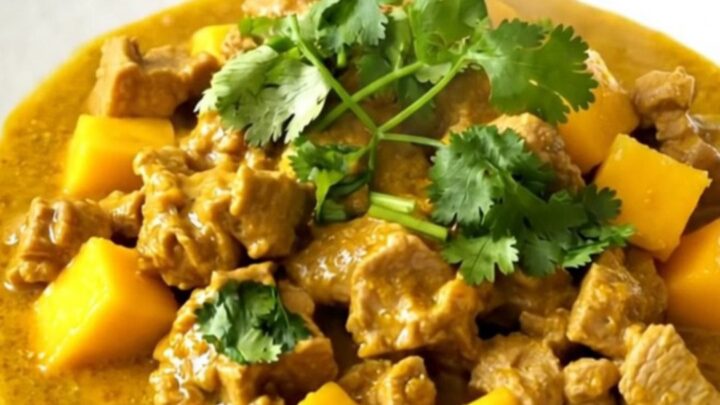
In the finishing phase, the curry has reached its final, delicious state. The pork is tender and fully cooked, the mango is soft, and the sauce is rich and glossy. The meat should easily pull apart with a fork, and the internal temperature must be confirmed at 145°F (63°C).
The scent should be warm and inviting. Before serving, give the curry a gentle stir to integrate the sauce components perfectly. Check that the sauce consistency is to your preference, and prepare to serve the dish immediately while it is steaming hot.
Common mistakes
A common mistake is overcrowding the slow cooker with too much liquid, which can result in a watery sauce rather than a rich, creamy curry. Stick to the recommended amount of coconut milk to maintain the right balance. Another error is not cutting the pork into uniform pieces; unevenly sized cubes lead to some pieces being overcooked while others remain underdone.
Ensure that the curry paste is fully incorporated into the liquid during the final stages of serving to distribute the flavor evenly throughout the dish. Avoid lifting the lid frequently, as this releases essential heat and moisture.
How to tell it’s done
The pork is done when it is fork-tender and pulls apart easily with minimal pressure. Using an instant-read thermometer, verify that the thickest pieces of pork have reached an internal temperature of at least 145°F (63°C). The sauce should be glossy and thickened enough to coat the back of a spoon.
If the meat still feels firm or resistant to the fork, continue cooking for an additional 20 to 30 minutes. Always allow the meat to rest for at least 5 minutes before serving to ensure the juices redistribute throughout the fibers.
- Steaks, chops and roasts: 145°F (63°C) in the thickest part, then a 3-minute rest
Up next · Part 3 of 3
2 variations · storage & make-ahead · 3 answers · printable card
Tips, FAQ & printable recipe (Part 3)← Back to the ingredients (Part 1)