Dinner · Part 1 of 3: Ingredients
Slow Cooker Lemon Herb Turkey Meatballs for Easy Weeknight Dinners
- Prep
- Cook
- Total
- Serves
- 6
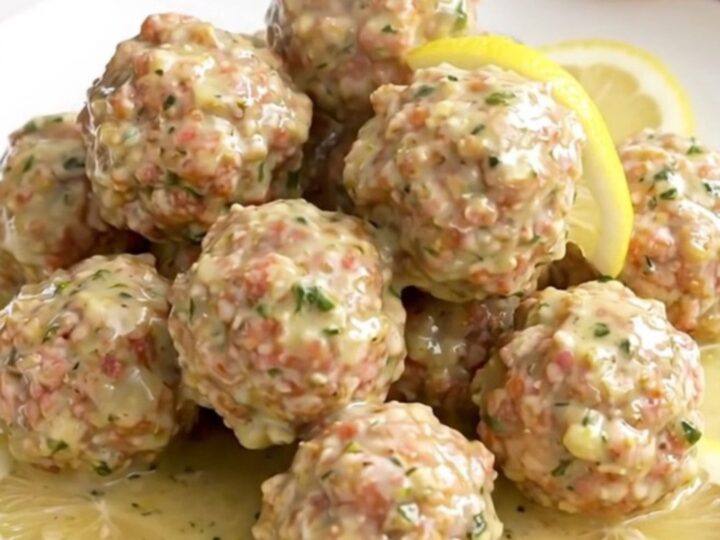
Five minutes of prep is all this dinner asks. Frozen turkey meatballs go straight into the slow cooker, lemon slices tuck in between them, a shake of garlic herb seasoning follows, and a can of cream of chicken soup thinned with broth pours over the top. Hours later the lid lifts onto tender meatballs in a creamy, lemony sauce that tastes far more involved than the effort behind it.
This is the kind of recipe that earns its place in the weeknight rotation by being almost impossible to get wrong. Everything goes into the slow cooker in layers, in the order the flavors need: meatballs first so they sit closest to the heat, lemon slices next so their oils and juice perfume the sauce from the inside, seasoning sprinkled over so it dissolves into the liquid, and finally the thinned soup that becomes the sauce.
There is no browning, no sautéing, no stove time at all. The cooker does the work while the rest of the day happens. The result is a plate of glossy, sauce-coated turkey meatballs with soft lemon rounds, comforting enough for a cold evening and bright enough to feel like a deliberate choice rather than a fallback.
Ingredients
- 2 lb frozen precooked turkey meatballs
- 1 lemon, thinly sliced
- 1 tbsp garlic herb seasoning
- 10.5 oz condensed cream of chicken soup (1 can)
- 1/2 cup chicken broth
Why this recipe works
The slow cooker is the right tool here because turkey meatballs, especially the frozen precooked kind, turn tender in moist, gentle heat. A stovetop simmer can bounce them around and toughen the outside before the center warms through, but a low, steady bath keeps them plump.
The long cook also gives the lemon slices time to release their oils and juice into the sauce, mellowing the sharpness into something rounded and fragrant rather than puckery.
Thinning the condensed soup with broth before pouring is the detail that makes the sauce work. Undiluted condensed soup is too thick to circulate, so it would sit in a heavy layer on top while the meatballs below steam dry.
Whisked with broth, it flows down through the gaps in the meatball layer, coats every surface, and slowly reduces and thickens around the edges over hours of cooking. The result is a sauce that clings to the meat instead of pooling thin at the bottom.
Notes and substitutions
Frozen precooked turkey meatballs are the backbone here because they are already fully cooked and only need to heat through, which makes the timing forgiving. Look for a plain or Italian-style variety rather than one glazed in sauce.
Any size works; smaller cocktail meatballs cook a little faster and stretch the sauce further. If only raw meatballs are available, brown them first and expect a longer cook to reach a safe internal temperature.
A 6-quart oval slow cooker fits this batch with room to spare; anything from 4 to 7 quarts is fine, though a fuller cooker heats more evenly. Condensed cream of chicken soup brings body and savory depth, and a low-sodium can plus low-sodium broth gives more control over the final salt level. Garlic herb seasoning blends vary between brands; taste the sauce at the end and adjust with a squeeze of lemon or a pinch more seasoning if needed.
- frozen precooked turkey meatballs: Frozen precooked chicken or beef meatballs work the same way; keep the quantity at 2 lb and cook to an internal temperature of 165°F (74°C) for poultry or 160°F (71°C) for beef.
- condensed cream of chicken soup: Condensed cream of mushroom or cream of celery soup swaps in one for one and gives the sauce a slightly earthier flavor.
- garlic herb seasoning: Use 2 tsp Italian seasoning plus 1/2 tsp garlic powder if a blended garlic herb mix is not on the shelf.
- chicken broth: Chicken stock or 1/2 cup warm water with 1 tsp chicken bouillon base both thin the soup to the right spoonable consistency.
Equipment
- 6-quart slow cooker
- small mixing bowl
- whisk
- chef's knife
- cutting board
- silpat spatula or serving spoon
- instant-read thermometer
Up next · Part 2 of 3
8 steps · 4 h of cooking · what to look for at each stage
Step-by-step instructions (Part 2)