Dinner · Part 2 of 3: Instructions
Slow Cooker Lamb Tagine with Sweet Potatoes Step-by-step instructions
- Prep
- Cook
- Total
- Serves
- 4
Before you start
Before beginning, ensure that your slow cooker is placed on a stable, heat-resistant surface with adequate clearance around the unit. Peel and dice the sweet potatoes into uniform one-inch cubes to ensure they cook evenly.
Trim the lamb of any large, hard pieces of fat, and pat the meat dry with paper towels to prepare it for the slow cooker basin. Have all your measured ingredients ready on the counter to streamline the assembly process.
Ingredients at a glance (4)
- 2 lb lamb shoulder, cut into 1-inch chunks
- 2 large sweet potatoes, peeled and diced
- 2 tsp ground cinnamon
- 1 1/2 cups vegetable broth
Instructions
Assembly phase
- Assemble the basePlace the raw lamb chunks into the bottom of the slow cooker bowl. Scatter the diced sweet potatoes evenly over the lamb pieces to ensure they cook through within the liquid.Look for The lamb should be in a single layer at the bottom for even cooking.Tip Trim excess fat from the lamb before adding it to the cooker for a cleaner sauce.
At this stage, the slow cooker basin contains the raw lamb and diced sweet potatoes. Ensure the lamb is distributed evenly across the bottom to maximize contact with the heating element.
The potatoes should be layered on top to prevent them from becoming too soft during the extended cooking time. Everything should look clean and organized before adding the liquid components.
Seasoning and liquid phase
- Season and pourSprinkle the ground cinnamon over the sweet potatoes and lamb. Carefully pour the vegetable broth over the ingredients, ensuring the spices are distributed throughout the liquid.Look for The broth should partially submerge the ingredients without filling the cooker to the brim.Tip Use a low-sodium broth if you prefer to control the salt content later.
Once the spices and broth are added, the cooker should look like a cohesive, aromatic mixture. The cinnamon should be lightly dusted over the ingredients, and the broth should be visible around the edges. Check that the liquid level is sufficient to partially submerge the contents, which will provide the necessary moisture for the braising process to begin effectively.
Cooking phase
- Slow cook and serveCover and cook on low for 6 hours until the lamb reaches an internal temperature of 145°F (63°C). Let the meat rest for 5 minutes before serving on a plate.Look for The lamb is tender enough to pull apart easily with a fork.Safe temperature 145°F (63°C) internal temperature (steaks, chops and roasts)Tip Keep the lid closed during the cooking process to maintain a consistent temperature.
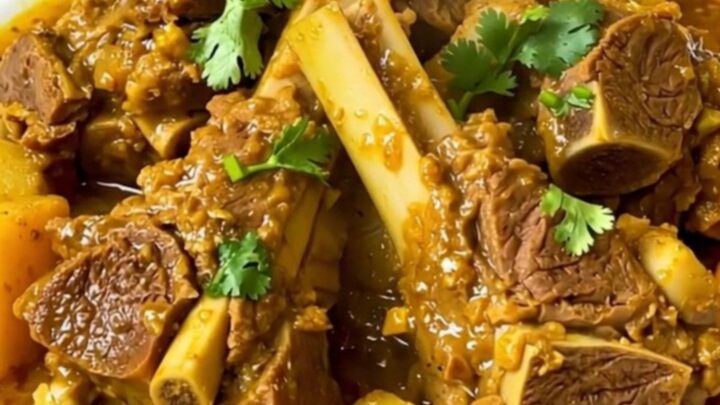
As the cooking concludes, the kitchen will be filled with the warm, inviting scent of cinnamon and savory lamb. The liquid will have reduced into a rich, flavorful sauce that clings to the tender meat. Verify the doneness by checking the texture of the lamb and ensuring the sweet potatoes are tender, then let the dish rest briefly to allow the juices to settle.
Common mistakes
A common mistake is overcrowding the slow cooker, which can prevent the ingredients from cooking uniformly. Ensure you have enough space for the broth to circulate.
Another error is cutting the meat or potatoes into uneven sizes, which leads to some pieces being mushy while others remain undercooked. Finally, avoid lifting the lid frequently, as each time you open it, the internal temperature drops, significantly increasing the total cooking time required.
How to tell it’s done
The lamb is finished when it is fork-tender and reaches an internal temperature of 145°F (63°C). The meat should offer no resistance when pierced with a fork.
The sweet potatoes should be soft enough to yield easily when pressed against the side of the cooker but should not be completely disintegrated. The sauce should be thickened and glossy, coating the back of a spoon with a rich, dark color.
- Steaks, chops and roasts: 145°F (63°C) in the thickest part, then a 3-minute rest
Up next · Part 3 of 3
2 variations · storage & make-ahead · 3 answers · printable card
Tips, FAQ & printable recipe (Part 3)← Back to the ingredients (Part 1)