Dinner · Part 2 of 3: Instructions
Slow Cooker Lamb Stew with Prunes and Almonds Step-by-step instructions
- Prep
- Cook
- Total
- Serves
- 4
Before you start
Before beginning the assembly, gather all ingredients and ensure the slow cooker is clean and positioned near a power outlet. Pat the lamb chunks dry with paper towels to remove excess moisture. If using large prunes, you may leave them whole or halve them, depending on your texture preference.
Ensure the beef broth is at room temperature to avoid a drastic temperature drop when added to the cooker. Having all components measured out makes the assembly process fast and efficient, allowing for a seamless transition into the long cooking phase.
Ingredients at a glance (5)
- 2 lb lamb chunks, cut into 1-inch pieces
- 1 cup whole prunes
- 1 tsp ground cinnamon
- 2 cups beef broth
- 1/2 cup slivered almonds, toasted
Instructions
Assembly Phase
- Prepare the Slow CookerPlace the raw lamb chunks into the bottom of the slow cooker insert. Ensure the meat is distributed evenly to allow for uniform cooking throughout the process.Look for lamb chunks arranged at the bottomTip Ensure the lamb is patted dry before placing it in the slow cooker to help develop better flavor during the long cooking period.
At the end of this phase, the lamb is arranged at the bottom with prunes, cinnamon, and beef broth added. Everything is ready for the slow cooking process to begin. Check that the slow cooker is plugged in and set to the correct temperature before walking away to let the magic happen.
Cooking Phase
- Add Aromatics and LiquidScatter the whole prunes over the lamb. Sprinkle the ground cinnamon evenly over the ingredients, then pour the beef broth over the top of the mixture until the ingredients are partially submerged.Look for liquid covering the bottom ingredientsTip Using a high-quality beef broth will significantly enhance the depth of the finished sauce.
During this phase, the lamb slowly transforms into a tender, flavorful dish. The kitchen will begin to smell warm and savory. Check periodically if the liquid is bubbling gently; if it is boiling vigorously, consider turning the setting down to low to preserve the delicate texture of the meat.
Finishing Phase
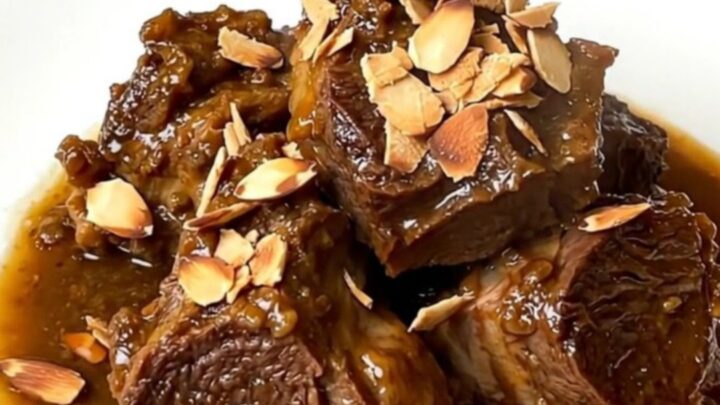
- Slow Cook and ServeCover the slow cooker and cook on low for 6 to 8 hours or high for 3 to 4 hours until the lamb reaches 145°F (63°C). Let the meat rest for 5 minutes before serving. Garnish with toasted slivered almonds.Look for lamb is tender and sauce is glossySafe temperature 145°F (63°C) internal temperature (steaks, chops and roasts)Tip Check the internal temperature of the thickest piece of lamb to ensure it has reached the target temperature for safe consumption.
The final phase involves checking the tenderness of the lamb and ensuring the sauce has reached a glossy, rich consistency. Once the meat is tender and the temperature is reached, it is ready to be garnished with toasted almonds and served immediately while hot to enjoy the best flavor.
Common mistakes
A common mistake is overcrowding the slow cooker, which can prevent even cooking and lead to uneven texture. Ensure the lamb pieces are not piled too high in the center.
Another frequent error is using a high heat setting for too long without checking the liquid level, which might lead to the sauce reducing too much or the meat drying out.
Always verify the internal temperature of the meat to ensure it is cooked through while maintaining its tender, juicy quality.
How to tell it’s done
The lamb is done when it is fork-tender and pulls apart with minimal pressure. Using a digital meat thermometer, the thickest pieces should register at least 145°F (63°C). The sauce should appear glossy and slightly thickened, with the prunes having softened into the liquid.
If the sauce is too thin, you may leave the lid off for the final 30 minutes of cooking to allow some reduction, though this is usually unnecessary given the natural sugars in the prunes.
- Steaks, chops and roasts: 145°F (63°C) in the thickest part, then a 3-minute rest
Up next · Part 3 of 3
2 variations · storage & make-ahead · 3 answers · printable card
Tips, FAQ & printable recipe (Part 3)← Back to the ingredients (Part 1)