Dinner · Part 2 of 3: Instructions
Slow Cooker Lamb Neck with Chickpeas for an Easy Dinner Step-by-step instructions
- Prep
- Cook
- Total
- Serves
- 4
Before you start
Before you begin, ensure your slow cooker is clean and placed on a stable, heat-resistant surface. Take the lamb out of the refrigerator about 20 minutes before you start to take the chill off, which helps the meat cook more evenly.
Prepare your ingredients by draining and rinsing the chickpeas thoroughly to remove any excess starch from the canning liquid. Having everything ready to go makes the assembly process fast and efficient, allowing you to get the meal started in just a few minutes of active work.
Ingredients at a glance (4)
- 2 lb lamb neck pieces
- 15 oz canned chickpeas, drained and rinsed
- 1 tsp paprika
- 2 cups tomato coulis
Instructions
Layering the ingredients
- Assemble the ingredientsPlace the lamb neck pieces into the base of the slow cooker. Distribute the chickpeas evenly over the lamb to ensure they are well dispersed throughout the cooking vessel.Look for The slow cooker is layered with the raw meat at the bottom and the legumes on top.Tip Ensure the lamb pieces are in a single layer if possible for even cooking.
At this stage, the slow cooker contains the raw lamb and chickpeas arranged in the base. The meat should be positioned at the bottom to ensure it stays submerged in the liquid that will accumulate during cooking.
The chickpeas should be spread evenly over the top, ready to absorb the flavors from the tomato coulis and paprika. Check that the slow cooker is correctly plugged in and the base is stable before moving on to the seasoning step.
Seasoning and adding liquid
- Season and add liquidSprinkle the paprika uniformly over the chickpeas and lamb. Carefully pour the tomato coulis over the entire mixture, ensuring the lamb is mostly covered by the liquid to help keep it moist during the long cooking process.Look for The tomato coulis coats the lamb and chickpeas evenly.Tip Do not stir the mixture, as the slow cooker will distribute the flavors during the cooking cycle.
The tomato coulis should now cover the lamb and chickpeas, creating a moist environment for the braising process. The paprika is sprinkled over the surface, promising a subtle warmth and color as it infuses the sauce. Ensure that the lid is tightly sealed to trap the heat and moisture inside. At this point, the slow cooker is ready to be set to the low heat setting for the long cooking duration required to achieve the perfect texture.
Slow cooking and resting
- Cook and restCover the slow cooker and cook on low for 8 hours until the lamb is tender. Once finished, verify the internal temperature of the lamb reaches at least 145°F (63°C). Allow the meat to rest for at least 5 minutes before serving to ensure the juices redistribute through the fibers.Look for The lamb is fork-tender and the sauce has thickened slightly.Safe temperature 145°F (63°C) internal temperature (steaks, chops and roasts)Tip Check the lamb for tenderness by gently pressing with a fork; it should easily pull apart.
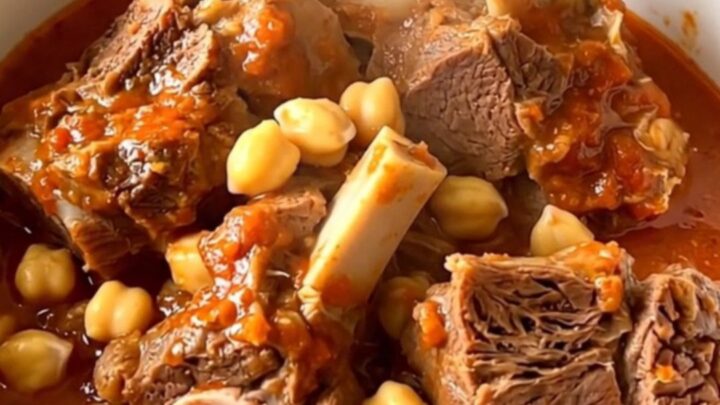
After the long cook, the lamb will be aromatic and tender, with the sauce thickened into a rich, flavorful gravy. The chickpeas should be soft but still hold their shape. Before serving, verify that the lamb has reached the safe internal temperature of 145°F (63°C). After confirming the temperature, allow the dish to rest for five minutes, which allows the sauce to settle and the meat to reach its optimal serving temperature and texture.
Common mistakes
A common mistake is overcrowding the slow cooker, which can lead to uneven cooking and excess liquid that dilutes the sauce. Ensure the lamb pieces are arranged in a way that allows for some space.
Avoid opening the lid frequently during the cooking process; every time the lid is lifted, heat escapes, significantly increasing the total cooking time required. Finally, do not forget to let the lamb rest after it is done, as cutting into it too soon can cause the juices to escape, leading to drier meat.
How to tell it’s done
The lamb is done when it is fork-tender and pulls away easily from the bone or breaks apart with minimal pressure. Use a food thermometer to ensure the thickest part of the meat has reached an internal temperature of at least 145°F (63°C).
The sauce should be reduced and fragrant, with the tomato coulis having penetrated the meat, creating a rich and savory consistency. Proper resting is vital to maintain the juiciness of the lamb after the slow cooking process.
- Steaks, chops and roasts: 145°F (63°C) in the thickest part, then a 3-minute rest
Up next · Part 3 of 3
2 variations · storage & make-ahead · 3 answers · printable card
Tips, FAQ & printable recipe (Part 3)← Back to the ingredients (Part 1)