Dinner · Part 2 of 3: Instructions
Slow Cooker Korean Ground Turkey for an Easy Dinner Step-by-step instructions
- Prep
- Cook
- Total
- Serves
- 4
Before you start
Before you begin, ensure your slow cooker is clean and ready for use. Have all your ingredients measured out and prepared; specifically, make sure your carrots are shredded and your sauce is ready to pour.
Since this is a slow cooker recipe, there is no need to preheat any equipment, but having everything ready will make the assembly process take less than five minutes of your time.
Ingredients at a glance (4)
- 1 lb ground turkey
- 1 cup shredded carrots
- 1 tsp ground ginger
- 1/2 cup brown sugar soy sauce
Instructions
Assembly
- Combine ingredients in the slow cookerPlace the ground turkey into the slow cooker, breaking it up slightly if needed. Add the shredded carrots and the ground ginger over the turkey.Look for The turkey is distributed evenly across the bottom of the slow cooker insert.Tip Adding the ingredients in layers helps the flavors meld during the slow cooking process.
At this stage, your slow cooker should be filled with the raw turkey, shredded carrots, and aromatics. Everything should be layered neatly, ready to receive the sauce.
Ensure the ingredients are spread out to provide even contact with the heat source once you start the cooking process, which will promote consistent and uniform cooking throughout the entire duration.
Slow Cooking
- Add sauce and slow cookPour the brown sugar soy sauce over the turkey and carrot mixture. Cover the slow cooker and cook on low for 3 hours or on high for 1.5 hours until the turkey is fully cooked through.Look for The sauce is bubbling and the turkey is fully browned and cooked through.Safe temperature 165°F (74°C) internal temperature (poultry)Tip Ensure the lid is secure to keep the moisture inside during the cooking process.
During the cooking phase, the slow cooker will be filled with the enticing aroma of ginger and savory soy. The turkey will gradually change from raw to fully cooked as the sauce penetrates the meat. You should see steam rising from the slow cooker, and the carrots should become tender as they soften in the simmering, flavorful liquid base.
Finishing
- Finish and serveOnce the turkey reaches an internal temperature of 165°F (74°C), turn off the heat. Stir the mixture well to ensure the sauce coats the turkey and carrots completely before serving.Look for The turkey is hot, fully cooked, and coated in a glossy, thickened sauce.Safe temperature 165°F (74°C) internal temperature (poultry)Tip If the sauce is too thin, leave the lid off for the last 15 minutes of cooking to allow it to reduce slightly.
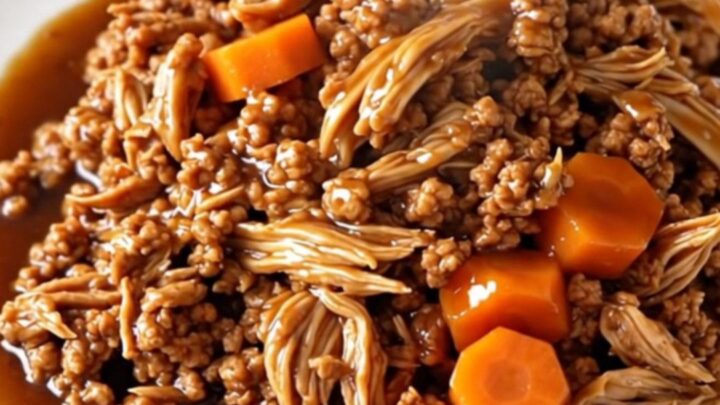
Once the cooking time is complete, the dish should look uniform, with the turkey and carrots coated in a glossy, dark brown sauce. The mixture should be hot and fragrant. Give it a final stir to combine any remaining sauce at the bottom of the insert before serving, ensuring every bite is perfectly seasoned and ready for your dinner table.
Common mistakes
A common mistake is overcooking the turkey, which can make the meat lose its moisture despite the sauce. Always start checking for doneness at the lower end of the suggested time range.
Another potential error is overcrowding the slow cooker with too much liquid; the turkey and vegetables release their own moisture during the cooking process, so follow the provided measurements to ensure the sauce does not become too thin or watery at the end.
How to tell it’s done
To ensure the turkey is safely cooked, it must reach an internal temperature of 165°F (74°C). You can check this by inserting a food thermometer into the thickest part of the turkey mixture.
The meat should be fully browned throughout, with no signs of pink, and the texture should be crumbly and tender. The sauce should be well-incorporated and slightly thickened, clinging to the turkey and carrots.
- Poultry: 165°F (74°C) in the thickest part
Up next · Part 3 of 3
2 variations · storage & make-ahead · 3 answers · printable card
Tips, FAQ & printable recipe (Part 3)← Back to the ingredients (Part 1)