Dinner · Part 1 of 3: Ingredients
Slow-Cooker Korean Gochujang Pulled Pork
- Prep
- Cook
- Total
- Serves
- 8
This slow-cooker Korean gochujang pulled pork brings together the bold, complex flavors of gochujang, soy, sesame, and honey in one effortless dish.
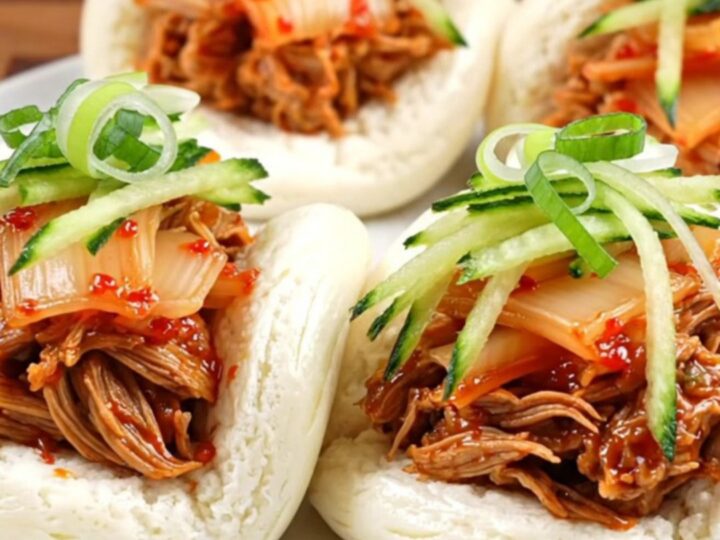
Just a few minutes of prep in the morning, and by dinner you have tender, saucy pork that’s perfect stuffed into fluffy bao buns with crunchy kimchi and cool cucumber. It’s a set-and-forget meal that feels like a special occasion but is easy enough for a weeknight.
Korean gochujang pulled pork, also known as dwaeji bulgogi, is a beloved barbecue dish with a sweet-spicy-savory profile that’s irresistible. This version uses the slow cooker to turn a tough pork shoulder into meltingly tender shreds that soak up a thick, caramelized sauce.
The sauce is a simple whisk of pantry staples: gochujang paste, soy sauce, toasted sesame oil, honey, garlic, and ginger. After eight hours on low, the pork is fork-tender and ready to be piled into steamed bao buns with kimchi, cucumber ribbons, and scallions. It’s a fun, interactive dinner that’s sure to become a favorite.
Ingredients
- 4 lb pork shoulder (butt), trimmed of excess fat
Sauce
- 1/2 cup gochujang (Korean chili paste)
- 1/3 cup soy sauce
- 3 tbsp toasted sesame oil
- 1/4 cup honey
- 6 cloves garlic, grated
- 1 tbsp fresh ginger, grated
For serving
- 8 steamed bao buns
- 1 cup kimchi, chopped if large
- 1 cucumber, cut into ribbons
- 3 scallions, sliced
- 1 tbsp toasted white sesame seeds
Why this recipe works
The slow cooker is the ideal tool for pork shoulder. The low, moist heat breaks down the collagen in the meat over several hours, turning a tough cut into fork-tender shreds. This method requires almost no hands-on time and yields consistently juicy results. The sauce, made with gochujang, soy, sesame oil, and honey, clings to the meat and caramelizes slightly as it cooks, creating deep, layered flavors.
The combination of gochujang’s fermented chili heat with honey’s sweetness and sesame oil’s nuttiness mirrors the classic balance of Korean barbecue. The pork absorbs the sauce as it cooks, so every bite is infused with flavor.
Serving the pork in soft bao buns with crunchy kimchi and cool cucumber provides contrasting textures and temperatures, making each bite exciting. The result is a dish that’s both comforting and impressive.
Notes and substitutions
Gochujang, a Korean chili paste, is the star of this dish. It’s sold in jars at Asian markets and many supermarkets. It has a thick, sticky texture and a complex flavor that’s spicy, sweet, and savory. If you can’t find it, you can substitute a mix of Sriracha and miso, but the flavor will be different. Soy sauce adds saltiness and umami; use a good-quality one for the best taste.
Toasted sesame oil is essential for its nutty aroma; don’t skip it or substitute regular vegetable oil. Honey provides sweetness that balances the heat; you can use brown sugar or maple syrup if you prefer.
Fresh garlic and ginger are grated finely so they blend into the sauce. Pork shoulder (also called pork butt) is the best cut for pulling; it has enough fat and connective tissue to become tender. Trim excess fat but leave some for flavor.
- pork shoulder: pork butt or boneless pork picnic; increase cook time if using a larger cut.
- gochujang: Use 1/4 cup gochujang plus 1/4 cup Sriracha for a similar heat level if needed.
- honey: Brown sugar or maple syrup can replace honey; adjust sweetness to taste.
- bao buns: Serve in soft slider buns, lettuce cups, or over steamed rice.
Equipment
- Slow cooker (Crockpot)
- Mixing bowl
- Whisk
- Two forks
- Cutting board
- Chef's knife
- Measuring cups and spoons
- Steamer basket for bao buns
Up next · Part 2 of 3
7 steps · 8 h of cooking · what to look for at each stage
Step-by-step instructions (Part 2)