Appetizers · Part 2 of 3: Instructions
Slow-Cooker King Crab Dip with Boursin and Artichokes Step-by-step instructions
- Prep
- Cook
- Total
- Serves
- 8
Before you start
Before starting, ensure the cream cheese is softened to room temperature so it melts evenly. Cut the Alaskan king crab meat into bite-sized chunks, removing any cartilage or shell bits.
Drain and chop the roasted artichoke hearts. Shred the Fontina cheese if not already shredded. Have your slow cooker ready and a rubber spatula on hand for stirring. No other prep is needed—the slow cooker does the rest.
Ingredients at a glance (6)
- 1 lb Alaskan king crab meat, cut into chunks
- 2 wheels garlic-and-fine-herbs Boursin cheese (5.2 oz each)
- 8 oz cream cheese, softened
- 1 1/2 cups roasted artichoke hearts, drained and chopped
- 2 cups Fontina cheese, shredded
- rosemary sourdough crisps, for serving
Instructions
Layer and Set
- Layer the IngredientsPlace the Alaskan king crab meat chunks evenly across the bottom of the slow cooker insert. Break up the Boursin wheels and drop them over the crab. Add the cream cheese in spoonfuls, then scatter the chopped roasted artichoke hearts over the top. Finally, sprinkle the shredded Fontina over the entire mixture.Look for All ingredients are layered in the slow cooker; the cheeses sit on top of the crab.Tip Use a rubber spatula to spread the cream cheese if it is still firm, but avoid overmixing—the layers will melt together.
- Cover and Set to LowPlace the lid on the slow cooker. Set the slow cooker to LOW heat. Do not stir yet. Allow the mixture to heat gradually so the cheeses melt slowly and evenly without scorching on the edges.Look for The slow cooker is covered and set to LOW; no steam escapes yet.Tip Resist the urge to lift the lid frequently, as that releases heat and extends cooking time.
At the end of this phase, all ingredients are in the slow cooker, with the cheeses on top. The slow cooker is covered and set to LOW. You will not see any melting yet, but the aromas of garlic and herbs start to gently warm. Check that the lid is secure and the heat is set correctly before moving on.
Melt to Velvet
- Slow-Cook Until MeltedCook on LOW for 90 minutes. After about 45 minutes, check the dip and gently stir once to help the cheeses combine. Continue cooking until the Boursin and Fontina have fully melted into a smooth, bubbling fondue and the crab is heated through. The dip should be hot and creamy throughout.Look for The cheese is bubbling around the edges and the dip is thick and creamy when stirred.Safe temperature 145°F (63°C) internal temperature (shellfish)Tip If the dip looks too thick, a splash of heavy cream or milk can loosen it, but the video does not include that—stick to the original ingredients.
- Stir and Check TemperatureAfter 90 minutes, stir the dip thoroughly to ensure the cheeses are fully incorporated and the crab is evenly distributed. Insert an instant-read thermometer into the center of the dip; it should read at least 145°F (63°C) to ensure the crab is heated safely. If not, continue cooking for 10-15 minutes more.Look for The dip is smooth, glossy, and the temperature reads at least 145°F (63°C).Safe temperature 145°F (63°C) internal temperature (shellfish)Tip Keep the slow cooker on LOW while serving to maintain the temperature and creamy texture.
After 90 minutes, the dip should be bubbling around the edges and the cheeses fully melted into a glossy, creamy sauce. The crab is tender and heated through.
Give it a gentle stir to ensure everything is combined. The dip should be thick enough to hold its shape on a spoon but still soft and scoopable.
Serve and Savor
- Serve Warm with CrispsKeep the slow cooker on the warm setting. Scoop generous portions of the dip into small bowls or directly onto serving plates. Serve immediately with rosemary sourdough crisps for dipping. The dip should be spooned straight from the slow cooker to retain its warm, velvety consistency.Look for The dip is hot, creamy, and ready to be scooped with crisps.Tip For a pretty presentation, garnish with a sprig of fresh rosemary or a dusting of cracked pepper, though the video does not show these.
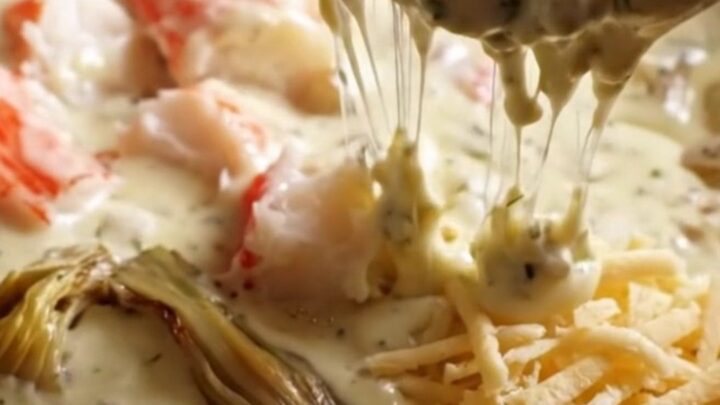
The dip is ready to serve. It should be hot, aromatic, and inviting, with chunks of crab visible throughout the creamy cheese mixture. The sourdough crisps are ready for dipping. Keep the slow cooker on warm to maintain the perfect texture throughout your gathering.
Common mistakes
One common mistake is stirring too much during the first hour, which can break the cheese emulsion. Let the layers melt undisturbed for at least 45 minutes before stirring. Another pitfall is overheating: cooking on high or for too long can cause the cheese to separate and become oily.
Stick to the 90-minute low heat. Also, do not use low-quality crab or imitation crab, as the flavor will be noticeably inferior. Finally, avoid adding extra liquid, as the cheeses naturally release moisture.
How to tell it’s done
The dip is done when the cheeses have fully melted into a smooth, creamy sauce that bubbles gently around the edges. The crab should be heated through to at least 145°F (63°C) on an instant-read thermometer.
The dip should be thick enough to coat a spoon but still scoopable. If it seems too thin, continue cooking on low for another 10-15 minutes to thicken; if too thick, a splash of milk can loosen it, but the original recipe does not call for it.
- Shellfish: 145°F (63°C) in the thickest part
Up next · Part 3 of 3
4 variations · storage & make-ahead · 5 answers · printable card
Tips, FAQ & printable recipe (Part 3)← Back to the ingredients (Part 1)