Dinner · Part 2 of 3: Instructions
Slow-Cooker Japanese Chashu Pork Belly for Ramen Step-by-step instructions
- Prep
- Cook
- Total
- Serves
- 6
Before you start
Start by ensuring your pork belly is properly rolled and secured with butcher twine to maintain its shape. Gather your aromatics, including the ginger and garlic, and make sure your slow cooker insert is clean and ready.
It is important to have all your liquid ingredients measured out beforehand to keep the assembly process seamless. If you are serving this with ramen, ensure your noodles and broth are prepared separately so everything is ready to assemble once the pork is finished and rested.
Ingredients at a glance (8)
- 3 lb pork belly, rolled and tied with butcher twine
- 1 cup soy sauce
- 3/4 cup mirin
- 1/2 cup sake
- 1/3 cup sugar
- 1 bunch green onions
- 6 cloves garlic cloves, smashed
- 1 piece fresh ginger, sliced
Instructions
Braising setup
- Prepare the braising liquidIn the ceramic insert of your slow cooker, combine the soy sauce, mirin, sake, and sugar. Stir gently until the sugar begins to dissolve into the liquid base. Add the smashed garlic cloves and the sliced fresh ginger to the mixture to infuse the braising liquid with deep aromatics.Look for The liquid should be well-mixed and fragrant with ginger and garlic notes.Tip Ensure the sugar is thoroughly incorporated to prevent burning at the base of the slow cooker.
At the start of the process, the liquid mixture should look deep brown and clear. The aromatics should be distributed evenly at the bottom, and the pork belly should be securely tied and placed firmly within the liquid. The kitchen should begin to fill with the savory scent of soy sauce and ginger as the slow cooker begins to warm up.
Slow simmering
- Braise the pork bellyPlace the rolled and butcher-twine-tied pork belly log into the slow cooker, nestling it into the liquid. Arrange the green onions around the pork. Cover with the lid and set the slow cooker to LOW. Cook for 7 hours until the meat reaches an internal temperature of at least 145°F (63°C). Let the meat rest for at least 3 minutes before slicing.Look for The pork should be extremely tender and easily pierced with a fork.Safe temperature 145°F (63°C) internal temperature (steaks, chops and roasts)Tip Turn the pork belly occasionally during the cooking process to ensure even glazing.
During the middle of the cooking phase, the pork belly will begin to absorb the dark color of the braising liquid. The liquid itself will start to bubble gently, and you may notice the scent of the aromatics becoming more pronounced.
The pork should remain submerged or be basted occasionally to ensure the outer layer stays moist and begins to take on a rich, caramelized appearance.
Final glaze and presentation
- Final glaze and serviceCarefully remove the pork belly from the slow cooker. If desired, use a kitchen torch to sear the surface of the slices for a caramelized finish. Arrange the slices atop your prepared ramen bowls and serve immediately while hot.Look for The slices should hold their shape but remain incredibly soft and tender.Tip Resting the meat is essential to maintain its juices and ensure the best texture for slicing.
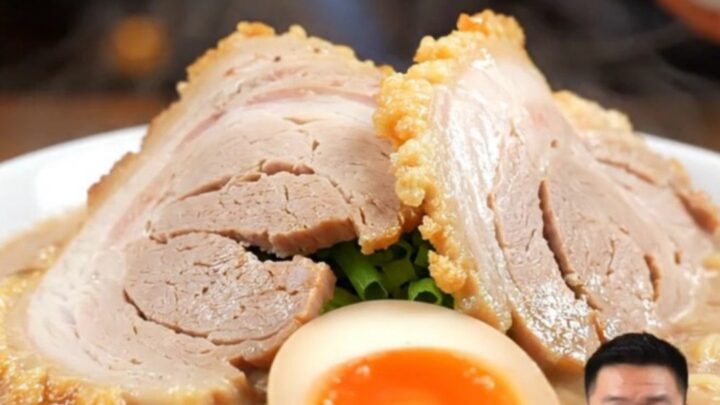
By the end of the process, the pork belly will be dark, glossy, and incredibly soft. The braising liquid will have reduced into a thicker, more flavorful glaze. The pork should be handled with care as it will be very tender. Once sliced, the cross-section should show a beautiful marbling of meat and rendered fat, ready to be placed atop your ramen.
Common mistakes
A common mistake is using too much liquid, which prevents the flavors from concentrating and the pork from glazing properly. Ensure you stick to the recommended quantities so the pork is partially submerged rather than floating.
Another error is rushing the cooking time; while it may look cooked after a few hours, the specific texture of Chashu requires the full seven hours on low to properly break down the collagen. Finally, failing to rest the meat before slicing will cause it to fall apart.
How to tell it’s done
The pork belly is done when it is fork-tender, meaning a fork slides into the center with almost no resistance. The internal temperature must reach at least 145°F (63°C) for food safety.
The fat layer should appear translucent and gelatinous, indicating that it has fully rendered. When removed from the liquid, the meat should be structurally sound enough to slice, though it will be very delicate due to the long braising time.
- Steaks, chops and roasts: 145°F (63°C) in the thickest part, then a 3-minute rest
Up next · Part 3 of 3
2 variations · storage & make-ahead · 3 answers · printable card
Tips, FAQ & printable recipe (Part 3)← Back to the ingredients (Part 1)