Dinner · Part 2 of 3: Instructions
Slow-Cooker Japanese Chashu Pork Belly for Tender Ramen Toppings Step-by-step instructions
- Prep
- Cook
- Total
- Serves
- 6
Before you start
Before starting, ensure you have a clean workspace and clear the area of any clutter. Gather your butcher twine and prepare the aromatics by washing the scallions and lightly crushing the ginger knob with the side of your knife.
Having all ingredients measured and ready to go before you begin will make the assembly process efficient and straightforward. Check that your slow cooker is placed on a stable surface away from any heat-sensitive materials to ensure safe operation throughout the long cooking cycle.
Ingredients at a glance (8)
- 2 lb pork belly, tied with butcher twine
- 1/2 cup soy sauce
- 1/2 cup mirin
- 1/2 cup dry sake
- 2 tbsp rock sugar
- 1 knob ginger, crushed
- 4 cloves garlic, whole
- 3 stalks green onion tops
Instructions
Assembly and Setup
- Prepare the PorkSecure the pork belly into a tight cylinder using butcher twine to ensure even cooking and a beautiful shape. Place the tied pork belly carefully into the base of the slow cooker insert.Look for The pork should be tied firmly to maintain its structure while rendering during the long cooking process.Tip Tightening the twine helps the pork belly stay in a uniform shape, which makes slicing much easier once chilled.
- Add Aromatics and LiquidsAdd the soy sauce, mirin, sake, rock sugar, crushed ginger, whole garlic cloves, and green onion tops into the slow cooker around the pork belly. Ensure the liquids are well distributed to create a flavorful braising bath.Look for The aromatics should be distributed evenly to infuse the braising liquid with deep, savory notes.Tip Crushing the ginger slightly releases more essential oils into the braising liquid, enhancing the depth of flavor.
The pork belly should be tightly secured with twine, forming a compact roll that fits comfortably in the slow cooker. The aromatics and liquids should be arranged around the meat to ensure even infusion. You should smell the freshness of the ginger and the savory aroma of the soy sauce as you cover the insert, signaling that the ingredients are ready for the long, slow braising process ahead.
Slow Braising Transformation
- Slow Cook the PorkCover the slow cooker and cook on the low setting for six hours. Turn the pork belly once halfway through the cooking time to ensure the entire surface absorbs the braising liquid and develops a consistent, dark amber color. Ensure the pork reaches an internal temperature of 145°F (63°C) and let it rest at least 3 minutes before slicing.Look for The pork is ready when the fat has rendered and the meat feels extremely tender when pierced with a fork.Safe temperature 145°F (63°C) internal temperature (steaks, chops and roasts)Tip Avoid lifting the lid too frequently, as this releases heat and moisture, which can prolong the cooking time.
During the six-hour cook, the kitchen will fill with the rich, comforting scent of soy and ginger. The pork belly will gradually transform, with the fat rendering down to a silky consistency.
Upon checking at the halfway point, the pork should look slightly darkened and the liquid should be bubbling gently, indicating that the flavors are penetrating the meat as intended for a deeply savory result.
Slicing and Glazing
- Glaze and ServeRemove the pork from the slow cooker and carefully cut away the butcher twine. Slice the pork into thick, tender medallions. Serve the slices immediately in a warm bowl of ramen, spooning the remaining glossy tare reduction over the top.Look for The reduction should be thick and glossy, clinging to the back of a spoon with a deep, caramelized appearance.Tip Letting the meat rest at least 3 minutes before slicing allows the juices to redistribute for maximum moisture.
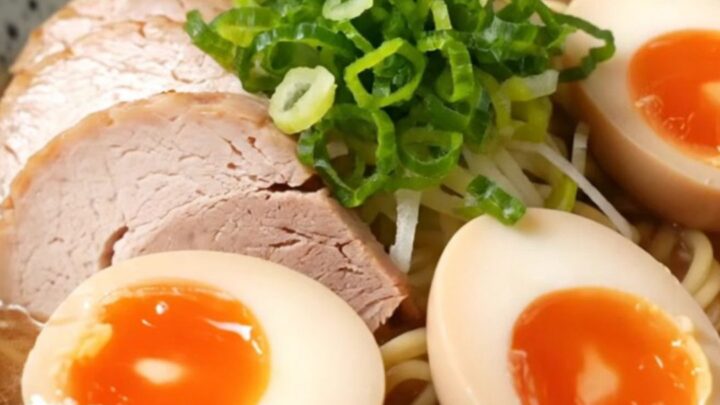
After resting, the chashu should look glistening and dark amber. When sliced, the medallions should show distinct layers of tender meat and rendered fat. The sauce remaining in the slow cooker should be reduced to a syrupy, glossy consistency that coats the back of a spoon, ready to be drizzled over the pork and the surrounding ramen noodles for a perfect finish.
Common mistakes
A common mistake is using a cut of pork that is too lean, which will result in a dry texture after six hours of cooking. Always choose a piece with visible marbling.
Another error is failing to tie the pork belly securely; without the twine, the roll may fall apart during the long simmer, making it difficult to slice properly. Finally, avoid over-reducing the sauce at high temperatures, as the sugar content can lead to burning if not monitored closely during the final stages.
How to tell it’s done
The pork belly is done when the meat is exceptionally tender and the fat has achieved a soft, silky texture. Use an instant-read thermometer to check that the internal temperature has reached at least 145°F (63°C).
The meat should be firm enough to hold its shape but yield easily to a fork. Once cooked, let the pork rest for at least 3 minutes on a cutting board before removing the twine and slicing to ensure the juices stay locked inside the medallions.
- Steaks, chops and roasts: 145°F (63°C) in the thickest part, then a 3-minute rest
Up next · Part 3 of 3
2 variations · storage & make-ahead · 3 answers · printable card
Tips, FAQ & printable recipe (Part 3)← Back to the ingredients (Part 1)