Dinner · Part 2 of 3: Instructions
One-Pot Slow Cooker Italian Sausage and Cabbage Step-by-step instructions
- Prep
- Cook
- Total
- Serves
- 4
Before you start
Before you begin, ensure your workspace is clean and organized. Wash the cabbage thoroughly and chop it into one-inch pieces. Slice the Italian sausage into coins of consistent thickness so they cook at the same rate.
Peel and chop the yellow onion into similar sized pieces as the cabbage. Have all your ingredients measured and ready, including the crushed tomatoes and Italian seasoning, to make the assembly process seamless and efficient once you start.
Ingredients at a glance (5)
- 1 lb Italian sausage, sliced into coins
- 1 head green cabbage, chopped
- 1 medium yellow onion, chopped
- 1 tbsp Italian seasoning
- 28 oz crushed tomatoes
Instructions
Preparation and Layering
- Layer the IngredientsPlace the sliced Italian sausage coins at the bottom of the slow cooker to ensure even heat contact. Add the chopped cabbage and onion on top of the sausage layer to build the base of the dish.Look for Sausage pieces should cover the bottom of the slow cooker evenly.Tip Ensure the vegetables are chopped into bite-sized pieces for uniform cooking.
At the end of this phase, the slow cooker will be filled with a foundation of sausage coins topped with a generous layer of chopped cabbage and onion. The ingredients should be arranged neatly, creating a stable base for the seasoning and tomatoes that follow. Check that the sausage is distributed across the bottom to ensure it receives direct heat.
Seasoning and Assembly
- Season and PourSprinkle the Italian seasoning evenly over the cabbage and onion mixture. Pour the crushed tomatoes over the top, covering the ingredients completely to help steam the vegetables and infuse the meat with flavor.Look for Tomatoes should coat the top layer of vegetables.Tip Avoid stirring the ingredients at this stage to keep the layers intact.
Once the Italian seasoning is sprinkled and the crushed tomatoes are poured over the top, the ingredients should appear fully assembled and ready for the slow cooking process. Ensure the tomatoes cover most of the vegetable layer. There is no need to mix; the natural juices will circulate during the cooking time, allowing the flavors to meld perfectly.
Slow Cooking
- Slow Cook and ServeCover and cook on low for 4 hours until the sausage reaches an internal temperature of 160°F (71°C). Let the dish rest for 5 minutes before serving to allow the sauce to settle and thicken properly.Look for Sausage is fully cooked and cabbage is tender.Safe temperature 160°F (71°C) internal temperature (ground meat)Tip Check the internal temperature with a meat thermometer to ensure safety.
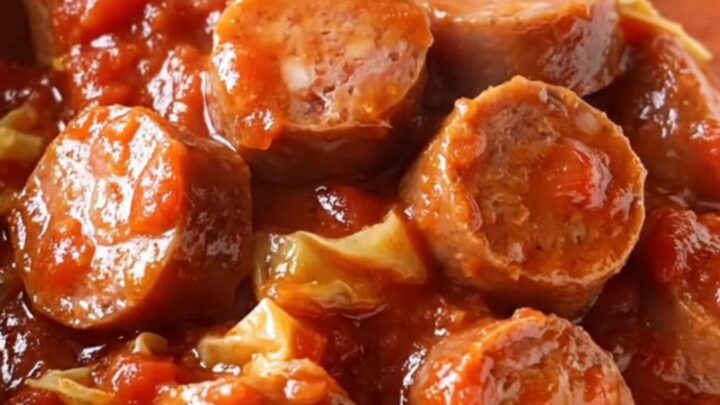
After four hours, the kitchen should be filled with the aromatic scent of savory sausage and herbs. The cabbage will have collapsed and softened significantly, and the tomato sauce will appear thick, glossy, and well-integrated.
The sausage should be fully cooked, tender, and perfectly seasoned. Let the dish rest briefly to allow the sauce to stabilize before serving.
Common mistakes
A common mistake is over-stirring the ingredients before cooking, which can break up the cabbage too early and prevent the proper layering effect. Another error is cutting the sausage too thin, which can cause the pieces to disintegrate during the long cooking time; aim for coins about half an inch thick.
Ensure you do not add extra water, as the cabbage and tomatoes provide plenty of liquid as they cook down, and extra water will only dilute the savory flavor of the final sauce.
How to tell it’s done
To determine if the dish is done, use a digital meat thermometer to check the internal temperature of the sausage. It must reach at least 160°F (71°C) to be safe for consumption.
The cabbage should be soft and tender, easily pierced with a fork, and the sauce should have thickened into a rich, flavorful consistency that clings to the ingredients. If the cabbage still has a bit of a bite, continue cooking for an additional thirty minutes.
- Ground meat: 160°F (71°C) in the thickest part
Up next · Part 3 of 3
2 variations · storage & make-ahead · 3 answers · printable card
Tips, FAQ & printable recipe (Part 3)← Back to the ingredients (Part 1)