Dinner · Part 2 of 3: Instructions
Slow-Cooker Honey Thyme Butternut Squash Side Dish Step-by-step instructions
- Prep
- Cook
- Total
- Serves
- 8
Before you start
Before beginning, ensure the butternut squash is peeled, seeded, and cut into uniform one-inch cubes to ensure consistent cooking. Have the melted butter, honey, and fresh thyme ready to go. Clear a space on your counter for the slow cooker and ensure you have a serving platter prepared for the final assembly.
Having all ingredients measured and ready will make the assembly process seamless and efficient, allowing the slow cooker to start its work immediately without any unnecessary delays in the kitchen.
Ingredients at a glance (7)
- 4 lb peeled cubed butternut squash
- 4 tbsp melted butter
- 1/4 cup honey
- fresh thyme sprigs, optional
- sea salt, to taste
- feta crumbles, for serving
- pomegranate seeds, for serving
Instructions
Layering the squash
- Layering the ingredientsPlace the cubed butternut squash into the ceramic basin of the slow cooker. Drizzle the melted butter and honey evenly over the squash cubes. Add the fresh thyme sprigs and sprinkle with sea salt to taste, tossing gently to ensure all pieces are coated in the glaze.Look for The squash cubes should be evenly coated with the butter and honey mixture before closing the lid.Tip Ensure the squash is cut into uniform sizes to promote even cooking throughout the three-hour process.
At this phase, the raw squash cubes should be arranged in the slow cooker, coated with the butter, honey, and thyme mixture. Everything should look well-combined, with the honey and butter coating the surface of each piece of squash. The fresh thyme sprigs should be distributed throughout the mix to ensure their aromatic oils release as the temperature rises. This sets the foundation for the caramelization process that will occur over the next few hours.
Slow-cooking the squash
- Slow-cooking processSet the slow cooker to the HIGH setting. Cover with the lid and cook for three hours. During this time, the squash will soften, and the butter and honey will transform into a fragrant, caramelized glaze that coats the edges of each piece of squash.Look for The squash should be fork-tender and the edges should appear slightly caramelized and glossy.Tip Avoid lifting the lid frequently, as this releases heat and moisture, which can significantly increase the total cooking time required.
During the cooking phase, the kitchen will begin to fill with the sweet, herbal fragrance of honey and thyme. The squash will soften significantly, and the butter and honey will pool at the bottom, creating a rich glaze.
Check that the squash is tender by piercing a piece with a fork. It should be soft and yielding, with the edges showing a deep golden brown color, indicating that the natural sugars have successfully caramelized during the slow, steady heat.
Final assembly
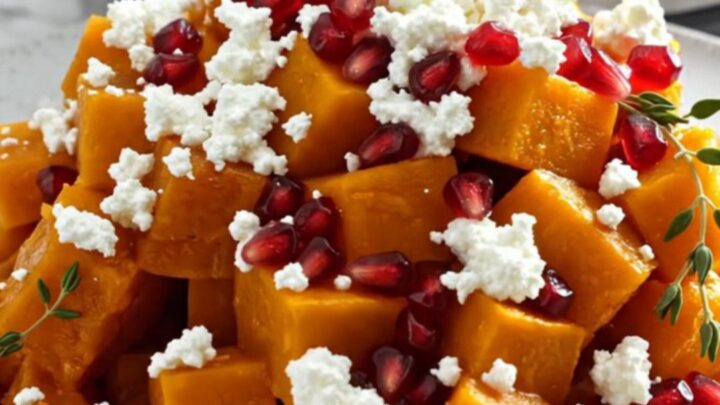
- Final assemblyTransfer the cooked squash to a decorative serving platter. Scatter the feta crumbles and fresh pomegranate seeds over the top. Garnish with a few additional fresh thyme sprigs before serving immediately while warm for the best texture and flavor profile.Look for The contrast between the golden squash, white feta, and deep red pomegranate seeds creates a visually appealing presentation.Tip Add the toppings just before serving to ensure the pomegranate seeds stay crisp and the feta remains distinct.
The final result is a beautiful platter of tender, golden squash cubes glistening with the honey glaze. The addition of the white feta crumbles and deep ruby pomegranate seeds provides a stunning visual contrast. The dish should smell sweet and aromatic, with a subtle tang from the cheese. Everything should be assembled just before serving so the pomegranate seeds remain cold and crisp, providing a refreshing burst of flavor against the warm, tender squash.
Common mistakes
A common mistake is overcrowding the slow cooker, which can lead to uneven cooking; ensure the squash is distributed in an even layer. Another error is cutting the squash into uneven sizes, which causes some pieces to turn to mush while others remain undercooked and firm.
Lastly, do not lift the lid during the cooking process unless absolutely necessary, as the loss of heat and steam will significantly increase the time required for the squash to reach the desired level of tenderness.
How to tell it’s done
The squash is done when it is fork-tender throughout, meaning a fork slides easily into the center of the cubes without resistance. The edges should appear slightly translucent and caramelized, coated in a thick, glossy honey-butter glaze.
The total cooking time of three hours on high is usually sufficient, but because slow cookers vary in heat intensity, check the texture at the two-and-a-half-hour mark. The squash should be soft but not falling apart into a puree.
Up next · Part 3 of 3
2 variations · storage & make-ahead · 3 answers · printable card
Tips, FAQ & printable recipe (Part 3)← Back to the ingredients (Part 1)