Dinner · Part 2 of 3: Instructions
Slow-Cooker Honey Mustard Glazed Fingerling Potatoes Step-by-step instructions
- Prep
- Cook
- Total
- Serves
- 6
Before you start
Before beginning, ensure your fingerling potatoes are thoroughly washed to remove any dirt from the skin, then pat them dry with a clean kitchen towel. Halve the potatoes lengthwise to ensure they cook at the same rate and have plenty of surface area to absorb the delicious glaze.
Measure your honey, mustard, and butter precisely to ensure the perfect balance of flavors. Have your slow cooker ready on the counter and your fresh rosemary washed and ready to be chopped for the final garnish.
Ingredients at a glance (6)
- 3 lb fingerling potatoes, halved
- 1/4 cup wildflower honey
- 1/4 cup whole-grain Dijon mustard
- 6 tbsp unsalted butter, melted
- fresh rosemary needles, for serving
- cracked black pepper, for serving
Instructions
Glaze preparation
- Prepare the glazeIn a medium mixing bowl, whisk together the wildflower honey, whole-grain Dijon mustard, and melted butter until the mixture is smooth and fully emulsified. Ensure the butter is thoroughly incorporated so the glaze adheres well to the potatoes during the cooking process.Look for The glaze should appear uniform and glossy with no streaks of butter remaining.Tip Use a warm bowl to keep the butter from hardening if the room temperature is cool.
The mixture of honey, mustard, and melted butter should be smooth, emulsified, and consistent in color. It should smell fragrant and tangy, with the sweetness of the honey balancing the heat of the mustard, creating a perfect base for the potatoes.
Slow-cooker simmering
- Slow-cook the potatoesPlace the halved fingerling potatoes into the ceramic insert of the 6-quart slow cooker. Pour the prepared honey-mustard glaze over the potatoes, tossing gently with a spatula to ensure every piece is evenly coated. Cover the slow cooker and cook on the low setting for exactly four hours.Look for The glaze will thicken into a sticky, golden-amber syrup that clings to the tender potatoes.Tip Avoid lifting the lid during the first three hours to maintain a constant internal temperature.
The potatoes will release a small amount of liquid, which will mingle with the glaze. By the end of the four hours, the liquid should have reduced into a thick, sticky, amber-colored sauce that clings to the potatoes, and they should be tender throughout.
Final garnish and serving
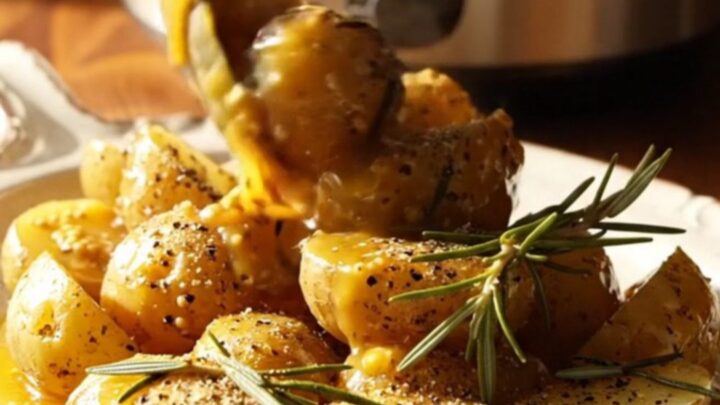
- Garnish and serveOnce the cooking time is complete and the potatoes are fork-tender, transfer them to a warm serving platter. Immediately sprinkle the fresh rosemary needles and freshly cracked black pepper over the top of the glazed potatoes to enhance the aroma before serving.Look for The potatoes should be glistening and coated in a rich, sticky glaze.Tip Serve immediately while the glaze is warm and at its peak consistency.
The final dish should look beautiful, with the potatoes glistening under the thick honey-mustard glaze. The fresh rosemary needles should provide a pop of green color and a herbal aroma that cuts through the richness of the butter and honey.
Common mistakes
A common mistake is overcrowding the slow cooker, which can lead to uneven cooking and prevent the glaze from thickening properly. Ensure the potatoes are distributed in an even layer.
Another error is using too high a temperature setting; always use the low setting to allow the honey to caramelize slowly without burning.
Finally, avoid stirring the potatoes too frequently during the cooking process, as this can break the delicate skins of the fingerlings and result in a less professional presentation.
How to tell it’s done
The potatoes are done when they are completely fork-tender, meaning a fork slides into the center of the largest piece with zero resistance. The glaze should be significantly reduced, appearing thick, glossy, and amber-colored.
Because this dish does not involve meat, there is no internal temperature to monitor, but ensuring the glaze has reached that sticky, coating consistency is the primary indicator of a successful, perfectly cooked side dish.
Up next · Part 3 of 3
2 variations · storage & make-ahead · 3 answers · printable card
Tips, FAQ & printable recipe (Part 3)← Back to the ingredients (Part 1)