Dinner · Part 2 of 3: Instructions
Slow Cooker Honey Goat Cheese Pork Tenderloin Step-by-step instructions
- Prep
- Cook
- Total
- Serves
- 4
Before you start
Before beginning, ensure your slow cooker is clean and positioned on a level surface away from the edge of your countertop. Remove the pork tenderloin from the refrigerator about 20 minutes prior to cooking so it loses its initial chill, which helps with more even temperature distribution. Have all your ingredients measured and ready to go.
If you are using fresh thyme, strip the leaves from the woody stems and discard the stems. Ensure your veal broth is at room temperature or slightly warmed to help the cooking process begin immediately once the slow cooker is turned on. Having everything prepared in advance makes the assembly process seamless and quick.
Ingredients at a glance (4)
- 1 lb pork tenderloin, trimmed
- 4 oz goat cheese rounds
- 1 tbsp fresh thyme, leaves stripped
- 1/4 cup veal broth
Instructions
Assembly Phase
- Prepare the Slow CookerPlace the pork tenderloin into the base of the slow cooker. Ensure the meat is laid flat to allow for even cooking throughout the process. Avoid overcrowding the vessel to maintain a consistent temperature during the slow cooking cycle.Look for The pork should sit flat at the bottom of the cooker.Tip Pat the pork dry with paper towels before placing it in the cooker to ensure the seasonings adhere well.
At the end of this phase, the pork should be positioned comfortably at the bottom of the slow cooker. The goat cheese rounds should be distributed evenly across the top of the meat, with the thyme leaves scattered to provide aromatic coverage. The veal broth should be poured carefully around the edges, creating a base for the sauce without washing away the herbs. Check that the lid fits securely, ensuring a tight seal to prevent moisture loss during the long, slow cooking process that is about to begin.
Cooking Phase
- Add IngredientsArrange the goat cheese rounds evenly over the top of the pork tenderloin. Sprinkle the fresh thyme leaves over the cheese and the meat. Pour the veal broth carefully around the sides of the pork to avoid washing away the thyme or disturbing the cheese placement.Look for The goat cheese should be distributed across the top of the pork.Tip Use high-quality goat cheese for a smoother, creamier sauce consistency once it melts into the broth.
During the cooking phase, the slow cooker will maintain a gentle, consistent heat. By the time the cycle completes, the kitchen should be filled with the pleasant, savory aroma of the thyme and the savory broth.
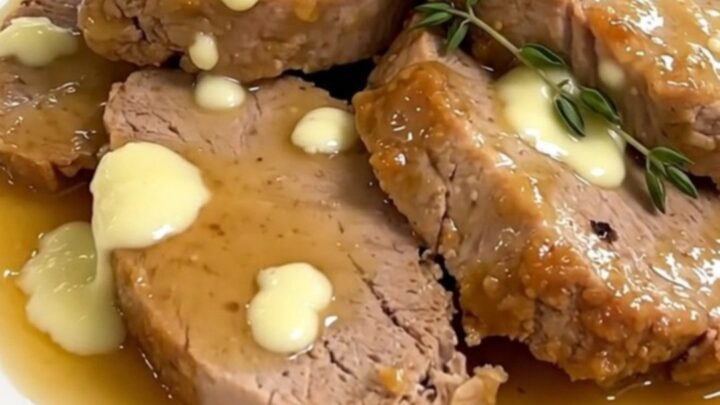
The pork will have softened significantly, and the goat cheese will have integrated into the liquid to form a rich, creamy sauce. Ensure the pork is tender and has reached the required internal temperature. The broth will have reduced slightly, concentrating the flavors into a thick, glossy finish that is ready for serving.
Resting and Serving Phase
- Cook and RestCover the slow cooker and cook on low for 4 hours until the pork reaches an internal temperature of 145°F (63°C). Once cooked, remove the pork and let it rest on a cutting board for at least 5 minutes before slicing it into medallions and serving with the goat cheese sauce.Look for The pork should be tender and the sauce should have thickened slightly.Safe temperature 145°F (63°C) internal temperature (steaks, chops and roasts)Tip Do not skip the resting period, as it allows the juices to redistribute throughout the meat, ensuring the final slices remain moist and succulent.
Once the pork is removed, it must rest on a clean board. During this time, the meat fibers relax and the juices redistribute, ensuring a tender bite. The sauce in the slow cooker should be gently whisked or stirred to ensure any remaining goat cheese is fully incorporated. After the resting period, slice the pork into even medallions. The final appearance should feature moist, perfectly cooked meat topped with a luscious, velvety sauce, ready to be plated and served immediately while still warm.
Common mistakes
A common mistake is overcooking the pork tenderloin, which can quickly lead to dry and stringy meat despite the presence of the sauce. Since tenderloin is naturally lean, it does not require an excessive amount of time to become tender; sticking to the recommended cooking time is crucial. Another error is failing to let the meat rest after cooking.
Slicing the pork immediately causes the internal juices to escape onto the cutting board, resulting in a drier final product. Finally, ensure the goat cheese is added as indicated; stirring it in too early or too aggressively can sometimes cause the sauce to separate instead of emulsifying properly.
How to tell it’s done
The pork tenderloin is perfectly cooked when it reaches an internal temperature of 145°F (63°C) when measured with a meat thermometer in the thickest part of the meat. At this stage, the pork will be firm to the touch but still retain a slight springiness.
The exterior should appear cooked through and opaque, while the goat cheese should have fully melted into the veal broth to create a smooth, creamy, and slightly glossy sauce that coats the meat beautifully. Always allow the meat to rest for at least 5 minutes before slicing to ensure optimal juiciness and texture.
- Steaks, chops and roasts: 145°F (63°C) in the thickest part, then a 3-minute rest
Up next · Part 3 of 3
2 variations · storage & make-ahead · 3 answers · printable card
Tips, FAQ & printable recipe (Part 3)← Back to the ingredients (Part 1)