Dinner · Part 2 of 3: Instructions
Slow Cooker Honey Glazed Braised Pork Shank Step-by-step instructions
- Prep
- Cook
- Total
- Serves
- 2
Before you start
Ensure the pork shank is patted dry with paper towels before starting, as this helps the glaze adhere better to the surface. Have all ingredients measured and ready, especially the veal stock, to keep the preparation process efficient.
If using a large onion, peel it completely and ensure the clove is pushed firmly into the flesh so it does not dislodge during the long cooking process. Clear enough counter space around the slow cooker to handle the ingredients safely and comfortably without any crowding.
Ingredients at a glance (5)
- 2 lbs pork shank
- 3 large carrots, cut into chunks
- 1 whole onion, studded with 1 clove
- 3 tbsp honey
- 1 cup veal stock
Instructions
Arrangement Phase
- Prepare the Slow Cooker BasePlace the raw pork shank into the center of the slow cooker. Arrange the carrot chunks and the clove-studded onion around the sides of the pork to ensure even cooking.Look for The ingredients are arranged in a single layer.Tip Ensure the shank sits flat on the base of the cooker for steady heat distribution.
At this stage, the pork shank should be positioned firmly in the center of the slow cooker, surrounded by the carrots and the onion. Everything should be arranged in a single layer to ensure consistent heat contact. Check that the vegetables are evenly distributed around the meat to allow them to cook through at the same rate as the pork, and ensure the cooker is plugged in and ready for the liquid ingredients.
Glazing Phase
- Add Glaze and LiquidDrizzle the honey evenly over the surface of the pork shank. Carefully pour the veal stock around the meat into the bottom of the slow cooker without washing off the honey.Look for The honey coats the top of the shank.Tip Using a glass measuring cup makes pouring the liquid around the edges much easier.
After adding the honey and veal stock, the cooker should look well-prepared. The honey should be visible on the top of the shank, while the stock should pool at the base of the vessel.
Check that the stock level is sufficient to keep the bottom of the meat and vegetables submerged, creating the necessary environment for braising. Ensure the lid is securely closed to trap all the moisture and aromatic flavors inside for the duration of the cooking.
Cooking and Resting Phase
- Slow Cook and RestCover and cook on low for 8 hours until the pork reaches 145°F (63°C). Once finished, remove the meat and let it rest for at least 5 minutes before serving to ensure tenderness.Look for The meat pulls away easily from the bone.Safe temperature 145°F (63°C) internal temperature (steaks, chops and roasts)Tip The residual heat in the slow cooker will keep the dish warm while the meat rests.
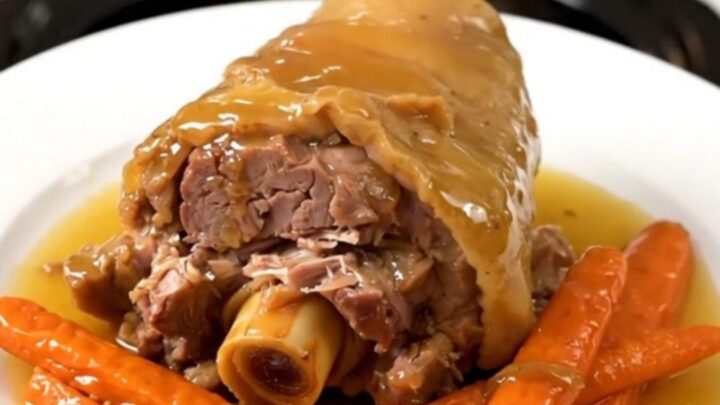
The final phase is characterized by the rich, savory aroma of braised pork filling the kitchen. The carrots should be soft, and the sauce should have reduced to a glossy, thick consistency. Before removing the meat, check that it is falling away from the bone. Once transferred to a serving plate, the meat should rest for at least 5 minutes, allowing the internal temperature to stabilize and the juices to settle before you begin carving or serving.
Common mistakes
A common mistake is adding too much liquid, which can result in a thin, watery sauce rather than a concentrated glaze. Stick to the measured amount of veal stock to maintain the correct consistency.
Another error is checking the dish too frequently; opening the lid lets out steam and heat, which significantly increases the total cooking time and can lead to uneven results. Finally, avoid rushing the resting period, as this is crucial for the juices to redistribute throughout the meat, ensuring maximum tenderness and flavor in every bite.
How to tell it’s done
The pork shank is perfectly cooked when the meat is extremely tender and pulls away effortlessly from the central bone. Using a meat thermometer is the most reliable way to check for doneness; insert the probe into the thickest part of the meat, avoiding the bone, to ensure it reaches an internal temperature of at least 145°F (63°C).
The glaze should appear thick, glossy, and slightly reduced, coating the meat and carrots evenly in a rich, flavorful sauce.
- Steaks, chops and roasts: 145°F (63°C) in the thickest part, then a 3-minute rest
Up next · Part 3 of 3
2 variations · storage & make-ahead · 3 answers · printable card
Tips, FAQ & printable recipe (Part 3)← Back to the ingredients (Part 1)