Dinner · Part 1 of 3: Ingredients
Slow-Cooker Honey Dijon Turkey Cutlets
- Prep
- Cook
- Total
- Serves
- 6
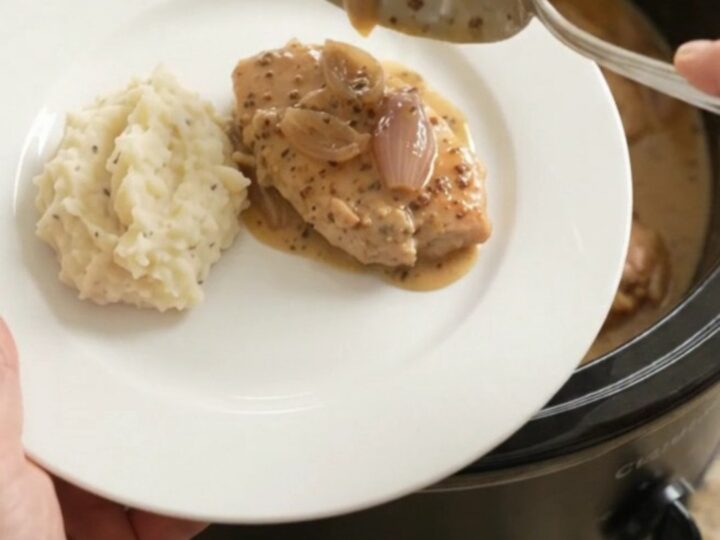
This slow-cooker honey Dijon turkey breast is the definition of set-it-and-forget-it cooking. Just layer turkey cutlets with shallots, whole-grain mustard, honey, butter, and cream, then walk away.
Hours later, you’ll have fork-tender turkey in a velvety, sweet-tangy sauce that tastes like you fussed for hours. It’s a weeknight miracle that also happens to be elegant enough for Sunday supper.
There are slow cooker recipes that require browning, deglazing, and a dozen steps—and then there are the ones you dump in and forget. This honey Dijon turkey falls firmly into the latter camp. With just five ingredients and no pre-cooking, it delivers juicy, pull-apart turkey in a sauce that’s rich, creamy, and bright with mustard and honey.
The whole-grain mustard provides little pops of tang, while the butter and cream turn silky as they mingle with the turkey juices. Serve it over mashed potatoes or rice to soak up every last drop.
Ingredients
- 2 lb boneless, skinless turkey breast cutlets
- 1/4 cup whole-grain Dijon mustard
- 1/4 cup honey
- 2 shallots, thinly sliced
- 4 tbsp salted butter, cut into pats
- 1/2 cup heavy whipping cream
Why this recipe works
The magic of this recipe lies in the slow, gentle heat of the slow cooker. Turkey breast cutlets are lean, but the combination of butter, heavy cream, and the natural juices released during cooking keeps them moist and tender.
The low temperature allows the collagen in the meat to break down without drying out, resulting in fork-tender pieces that almost shred with a glance.
The sauce is equally clever: honey and whole-grain Dijon create a sweet-and-sharp base, while the butter and cream add richness and body. As the turkey cooks, its juices mingle with the sauce, creating a deeply savory, slightly tangy glaze.
Because everything is layered in the pot and left undisturbed, the flavors meld and concentrate over hours, producing a cohesive dish that tastes far more complex than its five ingredients suggest.
Notes and substitutions
Choose turkey breast cutlets that are uniformly thick so they cook evenly. If your store only sells whole turkey breast, slice it yourself into 1/2-inch thick pieces. Whole-grain Dijon mustard is key—it adds texture and a milder heat than smooth Dijon. If you only have smooth, you can use it, but consider adding a teaspoon of mustard seeds for crunch.
This recipe is naturally versatile. If you prefer chicken, boneless, skinless chicken breasts or thighs work beautifully. Thighs will be even more forgiving and can cook on low for up to 8 hours. For a dairy-free version, substitute the butter with olive oil and the cream with full-fat coconut milk; the sauce will be slightly thinner but still delicious.
- whole-grain Dijon mustard: Use smooth Dijon mustard for a silkier sauce, or add a teaspoon of yellow mustard seeds for extra texture.
- turkey breast cutlets: Chicken breast cutlets or boneless, skinless chicken thighs work well; adjust cooking time for thighs (about 4 hours on low).
- heavy whipping cream: Half-and-half or coconut cream (for dairy-free) can be substituted, but the sauce will be slightly thinner.
- honey: Maple syrup or agave nectar can replace honey for a different sweetness profile.
Equipment
- 6-quart slow cooker
- Measuring cups and spoons
- Chef's knife
- Cutting board
- Serving spoon
Up next · Part 2 of 3
4 steps · 6 h of cooking · what to look for at each stage
Step-by-step instructions (Part 2)