Dinner · Part 1 of 3: Ingredients
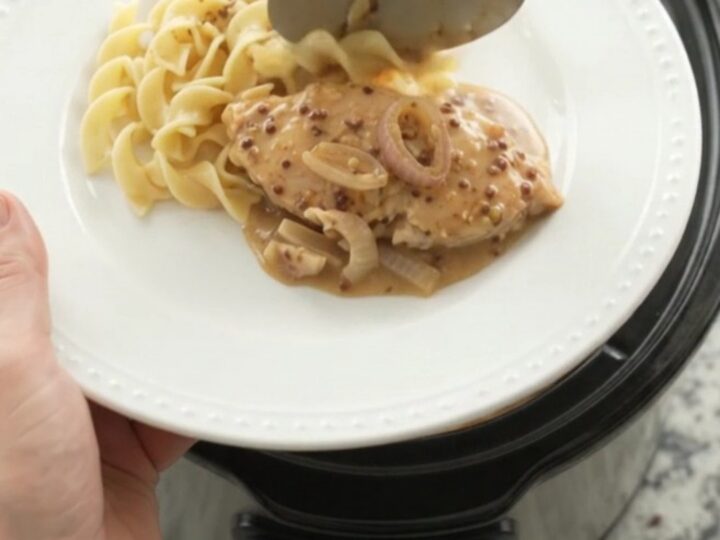
Slow Cooker Honey Dijon Turkey Cutlets
- Prep
- Cook
- Total
- Serves
- 4
This slow cooker honey-Dijon turkey is the set-it-and-forget-it dinner you’ve been craving. Tender turkey breast cutlets simmer in a creamy, tangy sauce with sweet honey and mellow shallots. After a few hours, the meat becomes fork-tender and soaks up all the savory goodness.
Serve it over buttered noodles for a comforting meal that feels special but requires almost no effort. Perfect for busy weeknights when you want a home-cooked dinner without standing over the stove.
This recipe brings together simple ingredients to create a rich, comforting dish. Turkey cutlets are layered with whole-grain Dijon mustard, honey, and shallots, then topped with a mixture of sour cream and savory pan gravy.
The slow cooker does all the work, turning the turkey into succulent, pull-apart pieces in a silky sauce. The sauce is perfect for soaking into egg noodles or mashed potatoes. It’s a hands-off meal that tastes like you spent hours in the kitchen – but you didn’t.
Ingredients
- 1 1/2 lb boneless turkey breast cutlets
- 1/4 cup whole-grain Dijon mustard
- 3 tbsp honey
- 2 shallots, thinly sliced
- 1/2 cup sour cream
- 1 cup savory pan gravy
For serving
- 8 oz buttered egg noodles, for serving
Why this recipe works
The slow cooker’s low, steady heat breaks down the turkey’s connective tissue, making even lean cutlets tender and moist. Cooking on LOW for several hours allows the flavors to meld without overcooking the meat.
The sour cream and gravy create a creamy sauce that clings to the turkey, while the honey and mustard provide a sweet-tangy balance. This method is forgiving – the turkey stays juicy because it’s submerged in liquid.
The combination of whole-grain Dijon and honey is a classic pairing that works beautifully with poultry. The shallots soften and mellow as they cook, adding a subtle oniony sweetness. The savory pan gravy adds depth and richness, tying everything together.
Because the ingredients are simply layered and not stirred, each component retains its character while the sauce develops complexity. The result is a cohesive, restaurant-quality dish with minimal hands-on time.
Notes and substitutions
Choose turkey breast cutlets that are evenly thick so they cook uniformly. If they are thicker than 1/2 inch, pound them gently between plastic wrap. Whole-grain Dijon mustard gives a lovely texture and a robust flavor; smooth Dijon can be used, but the sauce will be less rustic. Honey adds natural sweetness – use a mild honey like clover or orange blossom for the best balance.
The savory pan gravy can be homemade or store-bought. If using store-bought, choose a high-quality turkey or chicken gravy. Sour cream adds richness and a slight tang; full-fat works best for a creamy sauce. You can substitute Greek yogurt for a lighter option, but the sauce may be a bit thinner. The buttered egg noodles are optional but highly recommended – they soak up the delicious sauce beautifully.
- whole-grain Dijon mustard: smooth Dijon mustard or yellow mustard (reduce to 3 tbsp if using yellow)
- savory pan gravy: chicken broth (use 1 cup) plus 1 tbsp cornstarch mixed with 2 tbsp water
- sour cream: Greek yogurt (plain, full-fat) for a tangier sauce
- turkey breast cutlets: boneless, skinless chicken breasts (thin-sliced)
Equipment
- Slow cooker (6-7 quart)
- Mixing spoon
- Cutting board
- Chef's knife
- Measuring cups and spoons
Up next · Part 2 of 3
4 steps · 4 h of cooking · what to look for at each stage
Step-by-step instructions (Part 2)