Dinner · Part 2 of 3: Instructions
Slow Cooker Honey Balsamic Pork Roast for Easy Dinners Step-by-step instructions
- Prep
- Cook
- Total
- Serves
- 6
Before you start
Before starting, ensure your slow cooker is clean and positioned on a stable, heat-resistant surface. Have your pork shoulder patted dry with paper towels to ensure the seasonings adhere well.
Slice the red onion into uniform strips so they cook evenly throughout the duration of the slow cook. Gather your measuring cups and ensure you have all ingredients prepped and ready for assembly to make the process as efficient as possible.
Ingredients at a glance (4)
- 3 lb pork shoulder
- 1 red onion, sliced
- 1 packet pork seasoning
- 1 cup honey balsamic mixture
Instructions
Preparation and Assembly
- Prepare the Slow CookerPlace the raw pork shoulder into the base of the slow cooker insert. Ensure the pork is positioned flat to allow for even cooking throughout the process.Look for The pork fits snugly in the bottom of the cooker.Tip Trim excess fat from the roast if desired to reduce grease.
- Add Aromatics and SeasoningScatter the sliced red onion over the pork. Open the seasoning packet and sprinkle the contents evenly over the meat and onions to ensure thorough flavor distribution.Look for The seasonings cover the surface of the meat.Tip Use a fresh onion for the best texture and flavor profile.
The pork is placed neatly in the slow cooker, topped with onions and seasonings. The setup looks organized and ready for the liquid addition. Ensure the pork is not overcrowded and that the slow cooker insert is secure in its base before proceeding to the next stage.
Slow Cooking
- Glaze and Slow CookPour the honey balsamic mixture over the seasoned pork and onions. Cover the slow cooker with the lid and cook on low for 8 hours until the meat reaches an internal temperature of 145°F (63°C). Once cooked, remove the roast and let it rest for at least 3 minutes before shredding.Look for The liquid surrounds the meat and the onions begin to soften.Safe temperature 145°F (63°C) internal temperature (steaks, chops and roasts)Tip Do not lift the lid during cooking to maintain internal heat.
The slow cooker is covered and set to low. You should hear the gentle hum of the appliance. Over the next several hours, the kitchen will fill with the savory aroma of balsamic vinegar and roasting pork. The liquid should be bubbling gently, indicating the glaze is working into the meat.
Shredding and Finishing
- Shred and ServeRemove the pork from the slow cooker and shred the meat using two forks. Return the shredded meat to the juices in the slow cooker to coat it well before serving.Look for The meat pulls apart easily and is well coated in the glaze.Tip Let the meat rest for at least 10 minutes before shredding to retain moisture.
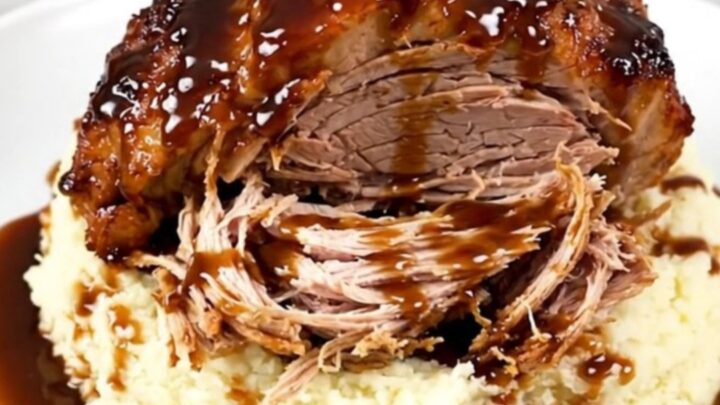
The pork is tender and ready to be removed. It should feel soft and yield to the touch. Once shredded, the meat should be glistening with the reduced honey balsamic sauce. Check that the pork is thoroughly coated and that the onions have softened into the glaze.
Common mistakes
Avoid the common mistake of lifting the slow cooker lid during the cooking process, as this releases heat and steam, which can significantly extend the cooking time and lead to uneven results.
Another frequent error is failing to trim excessive fat; while some fat is necessary for flavor, too much can make the final sauce overly greasy.
Finally, do not rush the resting period, as this is crucial for the moisture to redistribute throughout the meat, ensuring every bite is tender.
How to tell it’s done
The pork is done when it reaches an internal temperature of at least 145°F (63°C) and the meat pulls apart easily with the gentle pressure of two forks. The texture should be succulent and moist, with the glaze appearing glossy and reduced.
Always use a meat thermometer in the thickest part of the roast to ensure it has reached the safe temperature, then allow it to rest for at least 10 minutes to lock in the juices before final shredding.
- Steaks, chops and roasts: 145°F (63°C) in the thickest part, then a 3-minute rest
Up next · Part 3 of 3
2 variations · storage & make-ahead · 3 answers · printable card
Tips, FAQ & printable recipe (Part 3)← Back to the ingredients (Part 1)