Dinner · Part 2 of 3: Instructions
Slow Cooker Honey Balsamic Duck Legs for an Easy Dinner Step-by-step instructions
- Prep
- Cook
- Total
- Serves
- 4
Before you start
Before beginning, ensure that your duck legs are completely thawed if they were frozen. Peel the shallots carefully, leaving them whole to maintain their structural integrity during the long cooking time. Prepare the honey balsamic sauce in a separate glass measuring cup so it is ready to pour immediately.
Ensure your slow cooker is clean and placed on a stable, heat-resistant surface. Having all ingredients measured and prepared beforehand makes the assembly process fast and efficient, ensuring you spend less time in the kitchen and more time enjoying your evening.
Ingredients at a glance (4)
- 4 count duck legs
- 6 count shallots, peeled
- 1 sprig fresh rosemary
- 3/4 cup honey balsamic mixture
Instructions
Assembly of ingredients
- Prepare the slow cookerPlace the raw duck legs skin-side up at the bottom of the slow cooker. Arrange the peeled whole shallots around the meat to ensure they cook evenly in the sauce. Place the fresh rosemary sprig directly on top of the duck to infuse the aromatics during the long cooking process.Look for The duck legs should be arranged in a single layer if possible for even cooking.Tip Ensure the shallots are fully peeled and whole to maintain their shape during the long cooking time.
The duck legs should be arranged in the slow cooker with the skin facing upward to allow the fat to render effectively. The shallots should be tucked around the sides, and the rosemary placed on top to release its oils. Everything should look neat and ready for the sauce. Ensure the slow cooker is plugged in and the surface is clear of any clutter before you begin adding the liquid components.
Cooking the duck
- Add the sauce and cookPour the honey balsamic mixture over the duck legs and shallots. Ensure the sauce covers the ingredients evenly. Cover the slow cooker with its lid and cook on low for 4 hours until the meat is tender and the sauce has reduced slightly into a glossy glaze, reaching an internal temperature of 165°F (74°C).Look for The liquid should be bubbling gently and the aroma of balsamic and herbs should be present.Safe temperature 165°F (74°C) internal temperature (poultry)Tip Do not lift the lid during the first few hours to maintain a consistent internal temperature.
During the cooking phase, the kitchen will begin to fill with a rich, savory aroma of balsamic and herbs. The duck will slowly become very tender as the fat renders out and mixes with the honey and vinegar. You should observe a gentle bubbling of the sauce. At the end of this phase, the duck should be fully cooked, and the sauce should have a thick, glossy consistency that coats the back of a spoon.
Final plating and serving
- Rest and serveCarefully remove the duck legs from the slow cooker and transfer them to a serving plate. Allow the meat to rest for 5 minutes before serving to let the juices redistribute. Serve the glazed shallots alongside the duck, drizzling any remaining sauce from the slow cooker over the top.Look for The skin should be soft and the meat should pull away easily from the bone.Safe temperature 165°F (74°C) internal temperature (poultry)Tip Resting the meat is essential to ensure the texture remains succulent and tender after cooking.
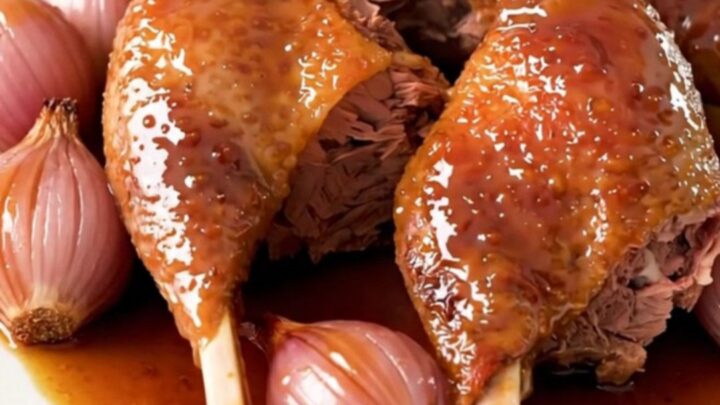
The duck should be removed carefully to avoid breaking the tender meat. Once plated, the dish should look glossy and inviting, with the tender shallots arranged artfully around the legs.
Check that the meat is hot and the sauce has a rich, dark sheen. Ensure the resting time is respected, as this is the final step to guarantee the best possible texture and flavor before the meal is served to the table.
Common mistakes
A common mistake is overcrowding the slow cooker with too many ingredients, which can prevent the meat from cooking evenly. While the recipe is forgiving, ensure the duck legs are not piled too high so the sauce can circulate properly.
Another error is checking the progress too often; every time the lid is lifted, heat escapes, which can significantly increase the total cooking time and affect the final tenderness. Finally, ensure the shallots are not chopped, as they will disintegrate completely if cut into small pieces during the long, slow cook.
How to tell it’s done
To determine if the duck is done, use a digital meat thermometer inserted into the thickest part of the leg, avoiding the bone. The internal temperature must reach 165°F (74°C). The meat should be visibly tender and easily pull away from the bone when tested with a fork.
The skin will be soft and glazed, and the shallots should be completely tender. Always allow the duck to rest for at least 5 minutes before serving to ensure the juices redistribute throughout the meat, maintaining the best texture.
- Poultry: 165°F (74°C) in the thickest part
Up next · Part 3 of 3
2 variations · storage & make-ahead · 3 answers · printable card
Tips, FAQ & printable recipe (Part 3)← Back to the ingredients (Part 1)