Dinner · Part 2 of 3: Instructions
Slow Cooker Homemade Pork and Beans for an Easy Dinner Step-by-step instructions
- Prep
- Cook
- Total
- Serves
- 6
Before you start
Before starting, ensure the navy beans have been soaked for at least 8 hours or overnight to reduce cooking time and ensure even texture. Prepare the pork shoulder by trimming any large, hard fat caps and cutting the meat into uniform one-inch cubes.
Have all your measuring tools ready and ensure the slow cooker insert is clean and properly seated in the base. It is helpful to have your molasses-tomato sauce pre-measured in a pitcher for easy pouring, as this minimizes mess during assembly.
Ingredients at a glance (5)
- 2 lb pork shoulder, cut into bite-size cubes
- 1 lb dried navy beans, soaked and drained
- 1/2 cup brown sugar
- 1 tbsp dry mustard
- 2 cups molasses-tomato sauce
Instructions
Assembly Phase
- Assemble the IngredientsPlace the cubed pork shoulder into the slow cooker insert. Add the prepared navy beans on top of the pork. Ensure the pork is evenly distributed across the bottom of the vessel to facilitate uniform cooking throughout the process.Look for The pork cubes should form a single layer covering the base of the slow cooker insert.Tip Soak the dried beans overnight to ensure they soften properly during the long cooking time.
The pork and beans are layered neatly in the slow cooker. The ingredients look fresh and organized, with the beans covering the pork evenly.
Ensure the slow cooker is plugged in and ready for the seasoning and sauce application, as this is the final step before the long, slow cooking process begins. Everything should be contained within the insert, ready for the lid to be secured.
Seasoning Phase
- Season and SauceSprinkle the brown sugar and dry mustard evenly over the beans and pork. Pour the molasses-tomato sauce over the entire mixture, ensuring all ingredients are well coated. Cover the slow cooker with its lid to trap the heat and moisture.Look for The sauce should cover the majority of the beans and meat, creating a thick, uniform layer.Tip Mixing the sugar and mustard into the sauce before adding it to the cooker can help distribute the flavors more evenly.
The brown sugar, dry mustard, and molasses-tomato sauce have been added, creating a rich, dark base over the ingredients. The aroma of the molasses is already present. Check that the sauce has settled around the sides of the beans and pork. Once the lid is placed on the slow cooker, the environment is sealed, and you should avoid opening it until the end of the cooking cycle.
Cooking Phase
- Slow Cook and ServeCook on low for 8 hours or until the pork reaches an internal temperature of 145°F (63°C). Once cooked, let the pork rest for at least 5 minutes before serving. The sauce should be thick and glossy, clinging to the tender pork and beans.Look for The sauce will be thick and pourable, and the pork will be tender enough to break apart easily with a spoon.Safe temperature 145°F (63°C) internal temperature (steaks, chops and roasts)Tip Use a meat thermometer to check the center of the largest pork piece to ensure it is thoroughly cooked.
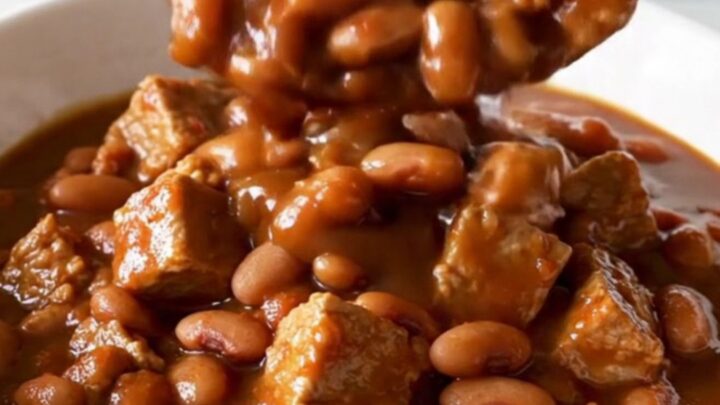
The dish has reached a state of deep, caramelized maturity. The pork is tender and the sauce has reduced to a thick, flavorful consistency that clings to the ingredients. The beans are perfectly cooked and creamy. Before serving, verify the internal temperature of the pork with a thermometer to ensure it is safe and ready to eat. The final dish should be steaming and aromatic.
Common mistakes
A common mistake is using beans that have not been soaked, which will result in hard, undercooked beans even after the full cooking time. Another frequent error is cutting the pork into uneven pieces; large chunks will remain tough while smaller pieces may overcook.
Avoid lifting the lid frequently during the cooking process, as this releases heat and steam, which significantly increases the total cooking time and can affect the final texture of the sauce and the tenderness of the meat.
How to tell it’s done
The dish is finished when the pork shoulder is fork-tender and reaches an internal temperature of 145°F (63°C). The beans should be creamy and soft but not mushy, maintaining their shape. The sauce should be thickened, dark, and glossy, coating the back of a spoon.
If the sauce is still too watery, allow it to continue cooking for a short period. Always use a meat thermometer inserted into the thickest piece of pork to verify it has reached the safe temperature before serving.
- Steaks, chops and roasts: 145°F (63°C) in the thickest part, then a 3-minute rest
Up next · Part 3 of 3
2 variations · storage & make-ahead · 3 answers · printable card
Tips, FAQ & printable recipe (Part 3)← Back to the ingredients (Part 1)