Dinner · Part 2 of 3: Instructions
Slow Cooker Herb Butter Seafood Boil Step-by-step instructions
- Prep
- Cook
- Total
- Serves
- 6
Before you start
Before you begin, make sure your slow cooker is clean and dry. If using frozen crab and shrimp, thaw them overnight in the refrigerator or under cold running water.
Slice the andouille sausage into 1/2-inch coins and halve the baby potatoes. If your parsley-garlic butter is cold, let it soften at room temperature for 15 minutes so it melts quickly during cooking.
Ingredients at a glance (6)
- 1 1/2 lb snow crab clusters, thawed if frozen
- 2 lb raw jumbo shrimp, peeled and deveined (tails on)
- 12 oz smoked andouille sausage, sliced into 1/2-inch coins
- 1 1/2 lb baby potatoes, halved
- 6 tbsp parsley-garlic scampi butter (room temperature)
- 1/2 cup dry white wine
Instructions
Layer and Start
- Layer the Seafood and VegetablesPlace the snow crab clusters and raw jumbo shrimp in the bottom of a 6-quart slow cooker. Scatter the sliced andouille sausage coins and halved baby potatoes over the seafood, distributing them evenly.Look for The slow cooker should be about two-thirds full with the seafood and vegetables.Tip If the crab clusters are very large, break them into smaller pieces so they fit in a single layer.
- Add the Butter and WineDot the top of the mixture with the parsley-garlic scampi butter, placing the pats evenly over the seafood and potatoes. Pour the white wine around the edges of the slow cooker, being careful not to wash the butter off the top.Look for The butter pats sit on top of the ingredients, and the wine pools at the bottom.Tip Use a dry white wine like Sauvignon Blanc or Pinot Grigio; avoid sweet wines.
- Cover and Cook on LowCover the slow cooker with the lid and set it to low. Cook for 3 to 4 hours, until the shrimp are pink and opaque and the potatoes are fork-tender. Do not stir during cooking, as that can break up the crab.Look for The butter melts and the liquid begins to bubble gently around the edges.Safe temperature 145°F (63°C) internal temperature (shellfish)Tip Resist the urge to lift the lid; the slow cooker retains heat and moisture.
At the end of this phase, the slow cooker is filled with raw seafood, sausage, and potatoes. The butter pats sit on top, and the wine is pooled at the bottom.
You'll see the butter starting to melt and the liquid gently simmering around the edges. The aroma of garlic and herbs begins to fill the kitchen.
Slow Cook and Check
- Check the Seafood and PotatoesAfter 3 hours, check the shrimp and potatoes. The shrimp should be pink and firm, and the potatoes should be easily pierced with a fork. The crab should be heated through and the meat should be opaque and flaky.Look for The sauce is a rich golden color with melted butter and wine, and the shrimp are curled and pink.Safe temperature 145°F (63°C) internal temperature (shellfish)Tip If the potatoes are still hard, continue cooking for another 30 minutes and check again.
- Finish Cooking the CrabIf the crab clusters are not fully heated through, gently submerge them in the sauce using tongs, then cover and cook for an additional 15 to 20 minutes. The internal temperature of the crab meat should reach 145°F (63°C) when checked with an instant-read thermometer.Look for Steam rises from the slow cooker when the lid is lifted, and the crab shells are bright red.Safe temperature 145°F (63°C) internal temperature (shellfish)Tip Crab is already cooked when purchased; this step just warms it through.
- Turn Off the Slow CookerOnce the seafood is cooked and the potatoes are tender, turn off the slow cooker. Leave the lid on for 5 minutes so the flavors meld and the sauce thickens slightly.Look for The butter-wine sauce is slightly reduced and coats the back of a spoon.Tip Do not let the seafood sit in the hot liquid for more than 20 minutes after cooking, or it may overcook.
After 3 to 4 hours, the shrimp are pink and curled, the potatoes are fork-tender, and the crab is heated through. The sauce is a glossy, golden emulsion, and the whole dish is bubbling gently. The kitchen smells richly of garlic, butter, and seafood.
Serve and Enjoy
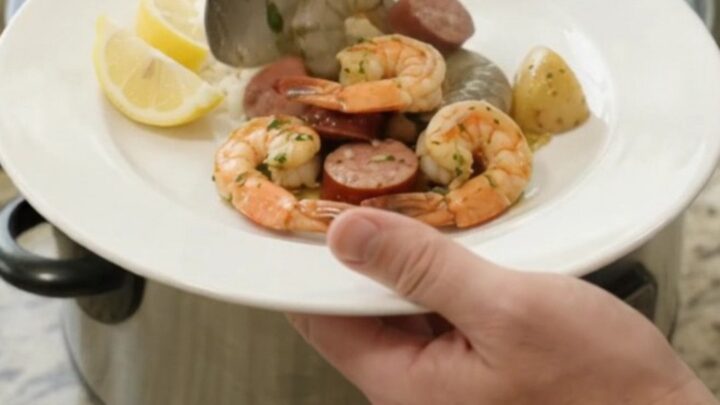
- Scoop and ServeUsing a slotted spoon, lift the seafood, sausage, and potatoes out of the slow cooker and transfer them to a large serving platter or individual bowls. Ladle a little of the butter sauce over the top.Look for The seafood is glossy with butter sauce, and the potatoes are coated and tender.Tip Serve with crusty bread or steamed rice to soak up the extra sauce.
- Garnish and EnjoyGarnish with fresh lemon wedges and chopped parsley, if desired. Serve immediately while hot.Look for The dish is steaming and fragrant with garlic and herbs.Tip Provide seafood crackers and small forks for cracking the crab legs.
When you lift the lid, steam rises and the seafood is glistening with butter sauce. The crab legs are bright red, the shrimp are plump, and the potatoes are coated. The sauce has thickened slightly and clings to the spoon. Everything is hot and ready to serve.
Common mistakes
The most common mistake is overcooking the shrimp, which makes them rubbery. Stick to the recommended cooking time and check early. Another pitfall is adding too much liquid—the seafood releases its own juices, so resist the urge to add more wine or broth.
Also, don't stir the pot during cooking, as this can break up the crab clusters and turn the potatoes mushy. Finally, be sure to use a slow cooker that's the right size; a 6-quart works perfectly for this recipe.
How to tell it’s done
The dish is done when the shrimp are pink and opaque and the potatoes are easily pierced with a fork. The crab meat should be heated through and reach an internal temperature of 145°F (63°C).
The sauce should be a rich golden color, and the butter should be fully melted and emulsified with the wine. If you're unsure, use an instant-read thermometer to check the thickest part of the shrimp or crab.
- Shellfish: 145°F (63°C) in the thickest part
Up next · Part 3 of 3
4 variations · storage & make-ahead · 5 answers · printable card
Tips, FAQ & printable recipe (Part 3)← Back to the ingredients (Part 1)