Dinner · Part 2 of 3: Instructions
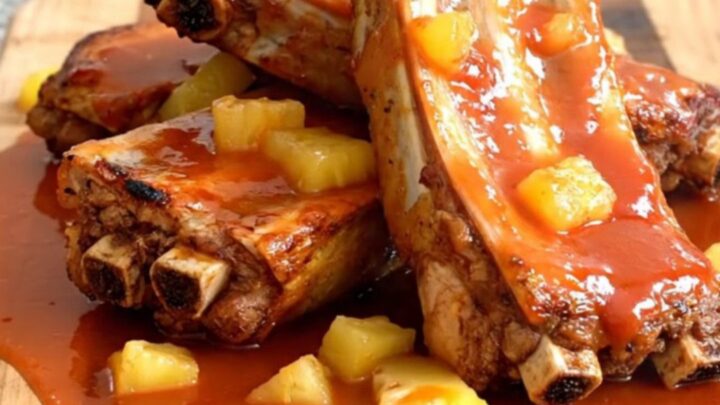
Slow Cooker Hawaiian Pineapple Spareribs Step-by-step instructions
- Prep
- Cook
- Total
- Serves
- 4
Before you start
Before beginning, ensure your slow cooker is clean and positioned on a stable, heat-resistant surface. Take the spareribs out of the refrigerator about 20 minutes before you start to allow them to lose some of their chill.
While the meat rests, prepare your pineapple, brown sugar, ginger, pineapple juice, and ketchup. Having all your ingredients measured and ready to go makes the assembly process fast and efficient, allowing you to get the slow cooker running in just a few minutes.
Ingredients at a glance (6)
- 4 lb pork spareribs, cut into sections
- 2 cups pineapple chunks
- 1/2 cup brown sugar
- 1 tsp ground ginger
- 1 cup pineapple juice
- 1/2 cup ketchup
Instructions
Rib Arrangement
- Assemble the ribsArrange the pork sparerib sections around the interior wall of the slow cooker insert. Ensure they are placed securely so they can cook evenly.Look for The ribs are lined up neatly against the edges of the slow cooker.Tip If the ribs are too long, trim them into smaller, uniform segments to fit the cooker better.
At this phase, the ribs should be standing firmly against the interior walls of the slow cooker. They should be arranged in a circular fashion, leaving the center open for the sauce to pool. Ensure that the ribs are not overlapping too heavily, as this can lead to uneven cooking. Once the ribs are positioned, the foundation for the dish is set, and you are ready to introduce the aromatics and the liquid ingredients to begin the flavor infusion.
Flavor Infusion
- Add aromatics and sauceScatter the pineapple chunks over the ribs. Sprinkle the brown sugar and ground ginger evenly over the top. In a measuring cup, whisk together the pineapple juice and ketchup, then pour this mixture over the ribs.Look for The sauce mixture is fully combined and poured over the ribs.Tip Make sure to whisk the ketchup and juice until smooth to ensure a consistent glaze.
During this phase, you are layering the ingredients that will form the signature Hawaiian glaze. The pineapple chunks should be distributed evenly among the ribs. Once the brown sugar and ground ginger are sprinkled, ensure they are distributed to provide consistent flavor.
After pouring the whisked pineapple juice and ketchup mixture, the liquid should settle into the bottom and coat the ribs. Everything is now prepared for the long, slow braise that will meld these distinct flavors into a cohesive, delicious sauce.
Slow Braising
- Slow cook and serveCover the slow cooker and cook on low for 8 hours. Before serving, verify that the pork reaches an internal temperature of 145°F (63°C). Let the ribs rest for 5 minutes before transferring to a serving board.Look for The sauce is thick and glossy, and the meat pulls away from the bone easily.Safe temperature 145°F (63°C) internal temperature (steaks, chops and roasts)Tip The residual heat will continue to cook the meat slightly during the rest period.
As the ribs cook, the kitchen should begin to smell fragrant and sweet. By the end of this phase, the ribs should be visibly soft, with the meat shrinking back from the ends of the bones. The sauce will have reduced into a thick, syrupy glaze that clings to the pork. Before proceeding to serve, verify the internal temperature of the thickest part of the meat to ensure it is fully cooked, and allow the resting period to ensure the best possible texture.
Common mistakes
A common mistake is overcrowding the slow cooker. Even though the ribs are arranged against the walls, ensure there is still enough space for the heat to circulate properly. Another error is lifting the lid too frequently to check on the progress.
Each time the lid is removed, heat escapes and the cooking time is extended, which can disrupt the delicate braising process. Trust the slow cooker to do its job and keep the lid closed until the final hour of cooking.
How to tell it’s done
The ribs are done when the meat is extremely tender and pulls away easily from the bone with a gentle tug of a fork. The sauce should be thickened and glossy, coating the ribs completely.
Most importantly, use a digital meat thermometer to ensure the pork has reached an internal temperature of at least 145°F (63°C). The resting period after cooking is crucial to allow the juices to redistribute throughout the meat, ensuring every bite remains moist and flavorful.
- Steaks, chops and roasts: 145°F (63°C) in the thickest part, then a 3-minute rest
Up next · Part 3 of 3
2 variations · storage & make-ahead · 3 answers · printable card
Tips, FAQ & printable recipe (Part 3)← Back to the ingredients (Part 1)