Dinner · Part 2 of 3: Instructions
Slow-Cooker Guinness Stout and Brown Sugar Pulled Pork Step-by-step instructions
- Prep
- Cook
- Total
- Serves
- 8
Before you start
Before starting, ensure your slow cooker is clean and the ceramic insert is properly seated. Take the pork butt out of the refrigerator about 30 minutes before you begin to take the chill off, though it should not sit out longer.
Peel the garlic cloves and slice the yellow onions into uniform, thick rounds. Have your tongs and forks ready for the shredding stage, and clear enough counter space to accommodate the slow cooker. Verify that your Guinness stout is at room temperature to ensure a consistent start to the cooking process.
Ingredients at a glance (6)
- 2 yellow onions, sliced
- 4.5 lb pork butt
- 4 cloves garlic cloves
- 1/2 cup dark brown sugar
- 14.9 oz draught Guinness stout
- 2 tbsp Dijon mustard
Instructions
Layering the aromatics
- Layer the ingredientsPlace the sliced yellow onions and peeled garlic cloves at the bottom of the ceramic slow-cooker vessel to create a flavorful bed. Nestled the seasoned pork butt directly on top of the aromatics.Look for The onions should be evenly distributed across the bottom of the crockpot.Tip Ensure the pork sits flat to allow for even cooking throughout the long simmer.
The onions and garlic should be spread evenly at the bottom of the vessel. The pork butt should be placed securely on top, providing a stable base for the slow-cooking process. Ensure the slow cooker is plugged in and ready for the long simmer ahead, as proper layering is the key to preventing the meat from sticking to the bottom of the pot.
Adding the stout and sugar
- Add liquids and sugarSprinkle the dark brown sugar evenly over the top of the pork butt. Pour the entire contents of the draught Guinness stout into the slow cooker, carefully pouring around the edges to avoid washing away the sugar.Look for The beer should partially submerge the base of the pork roast.Tip Pouring slowly helps maintain the sugar coating on the surface of the meat.
The brown sugar should coat the top of the pork, and the Guinness stout should be poured carefully to pool around the base.
The smell of the malty beer and sweet sugar will start to permeate the kitchen even before the heat is applied. Check that the liquid level is sufficient to keep the meat moist during the initial stages of the slow-cooker cycle.
Shredding and finishing
- Simmer, shred, and finishCook on the low setting for 8 hours. Once the pork is fork-tender, remove it briefly to shred. Whisk the Dijon mustard into the remaining reduced stout gravy in the pot, then toss the shredded meat back into the mixture to coat thoroughly. Ensure the pork reaches at least 145°F (63°C) and let it rest for 3 minutes before serving.Look for The pork should pull apart with minimal resistance using two forks.Safe temperature 145°F (63°C) internal temperature (steaks, chops and roasts)Tip If the sauce is too thin, you can simmer it on high for 15 minutes without the lid to reduce it further.
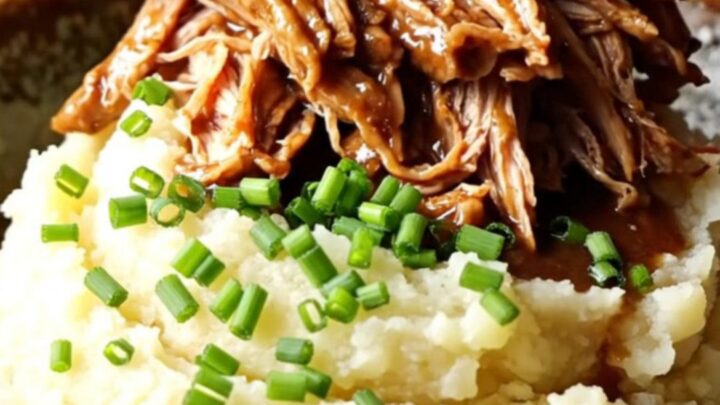
The pork will be dark, caramelized, and extremely tender at this stage. The gravy should be rich and aromatic. Once the mustard is whisked in, the final sauce will have a perfect balance of tang and depth. The pork should shred effortlessly with little effort, and the final dish will be ready to be plated over your chosen side dish immediately.
Common mistakes
A common mistake is rushing the cooking process by using the high setting, which can cause the outside of the pork to toughen before the center is tender. Another error is failing to incorporate the Dijon mustard at the end; this step is vital for balancing the sweetness and the maltiness of the stout.
Avoid lifting the lid frequently, as each time you open the slow cooker, you lose heat and steam, which can significantly extend the cooking time and impact the final texture of the pork.
How to tell it’s done
The pork is perfectly done when it reaches an internal temperature of at least 145°F (63°C). Visually, the meat should be incredibly soft, with the fibers separating easily when pulled with two forks.
The gravy should have reduced slightly, appearing glossy and dark. Always allow the meat to rest for at least 3 minutes after shredding or before serving to ensure the juices redistribute, resulting in the most tender and flavorful bite possible.
- Steaks, chops and roasts: 145°F (63°C) in the thickest part, then a 3-minute rest
Up next · Part 3 of 3
2 variations · storage & make-ahead · 3 answers · printable card
Tips, FAQ & printable recipe (Part 3)← Back to the ingredients (Part 1)