Appetizers · Part 2 of 3: Instructions
Slow Cooker Grape Jelly Pork Bites for Easy Appetizers Step-by-step instructions
- Prep
- Cook
- Total
- Serves
- 6
Before you start
Before beginning, ensure your workspace is clean and you have a sharp knife for cubing the pork loin. Prepare the pork by trimming away any excess silver skin or large fat caps, which ensures a more tender final texture.
Measure out your grape jelly, chili sauce, and garlic powder in advance so they are ready to be added to the slow cooker insert immediately after the pork is cubed. Having your ingredients pre-measured streamlines the process and ensures you are ready to start the slow cooking cycle without delay.
Ingredients at a glance (4)
- 2 lb pork loin, cut into 1-inch cubes
- 1 cup grape jelly
- 1 tsp garlic powder
- 1/2 cup red chili sauce
Instructions
Preparation of the Pork
- Prepare the PorkPlace the cubed pork loin into the base of the slow cooker, ensuring the pieces are distributed evenly across the bottom to encourage uniform cooking.Look for The pork should cover the bottom of the slow cooker insert completely.Tip Cut the pork into consistent 1-inch pieces to ensure every bite cooks at the same rate.
The pork cubes should be uniform in size and arranged in a single layer at the base of the slow cooker. Ensure the meat is cold from the refrigerator before it goes into the slow cooker, and handle it with clean hands or gloves to maintain food safety standards.
Check that the slow cooker insert is dry before adding the pork to avoid any unwanted moisture buildup at the bottom during the initial stages of cooking.
Adding the Sauce Ingredients
- Add the Glaze IngredientsAdd the grape jelly, garlic powder, and red chili sauce directly over the pork cubes in the slow cooker. Do not stir yet; the heat will melt the jelly into the sauce as it cooks.Look for The jelly sits on top of the pork, ready to melt down.Tip Use a silicone spatula to scrape every bit of jelly from the measuring cup.
The grape jelly, chili sauce, and garlic powder should be layered over the pork without being stirred. At this stage, the ingredients will look distinct and separate. Check that the grape jelly is evenly distributed across the surface of the meat. There is no need for water or other liquids, as the pork will release juices that will combine with the jelly and chili sauce to form the braising liquid.
Slow Cooking and Final Glazing
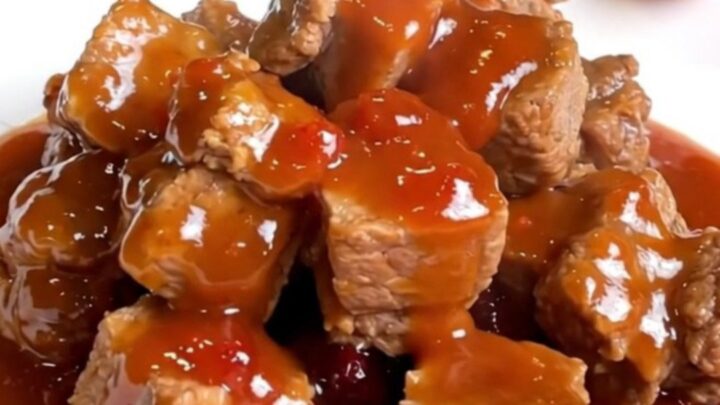
- Slow Cook and ServeCover the slow cooker and cook on low for 4 hours. Once finished, check that the pork has reached an internal temperature of 145°F (63°C). Let the pork rest for at least 3 minutes before serving on a platter.Look for The sauce is thick, glossy, and coats the pork completely.Safe temperature 145°F (63°C) internal temperature (steaks, chops and roasts)Tip Stir the pork gently after the cooking time to ensure all pieces are coated in the thickened sauce.
After four hours, the pork should be tender and the sauce should have transformed into a thick, dark red, and glossy glaze. Use a spoon to gently toss the pork in the sauce to ensure each piece is coated. Check the internal temperature of the pork to ensure it has reached 145°F (63°C). The kitchen should smell savory and slightly sweet, with no signs of burnt sauce around the edges of the slow cooker insert.
Common mistakes
A common mistake is cutting the pork into uneven pieces, which leads to some bites being overcooked while others remain undercooked. Aim for consistent 1-inch cubes to ensure even heat distribution. Another error is over-crowding the slow cooker with too much meat, which can prevent the sauce from coating each piece properly.
Additionally, avoid lifting the lid frequently during the cooking process; every time the lid is removed, heat escapes, which significantly increases the total cooking time and can affect the consistency of the glaze.
How to tell it’s done
To determine if the pork is done, use a digital meat thermometer inserted into the thickest part of a piece of pork. The meat should reach an internal temperature of at least 145°F (63°C).
Because pork loin is a lean cut, it is important to monitor the cooking time carefully to avoid overcooking, which can lead to a tough or dry texture. The sauce should appear glossy and thick, clinging to the cubes rather than running off them, which indicates the sugars have properly caramelized and reduced during the braising process.
- Steaks, chops and roasts: 145°F (63°C) in the thickest part, then a 3-minute rest
Up next · Part 3 of 3
2 variations · storage & make-ahead · 3 answers · printable card
Tips, FAQ & printable recipe (Part 3)← Back to the ingredients (Part 1)