Dinner · Part 1 of 3: Ingredients
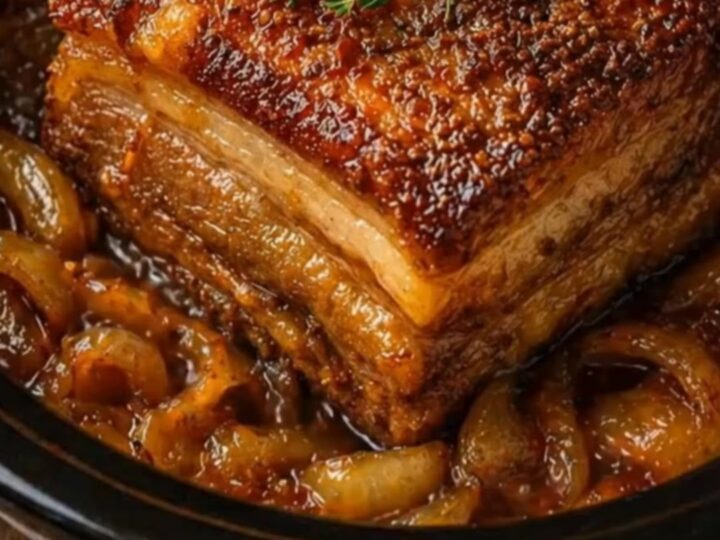
Slow Cooker Glazed Pork Belly with Crispy Skin
- Prep
- Cook
- Total
- Serves
- 6
Experience the ultimate contrast of textures with this slow cooker glazed pork belly. A tender, melt-in-your-mouth interior meets an incredibly crispy, crackling skin that shatters with every bite. By slow-cooking the pork belly over a bed of sweet onions and finishing it under the broiler, you achieve a restaurant-quality dish with minimal effort. It is the perfect centerpiece for a cozy weekend dinner.
Pork belly is celebrated for its rich flavor and luxurious texture, but cooking it to perfection can often feel intimidating. This slow cooker method simplifies the entire process, rendering the fat slowly over several hours to ensure the meat becomes exceptionally tender. The rich glaze caramelizes beautifully, infusing the pork with deep flavor.
Paired with soft, slow-cooked onions that absorb all the delicious pan juices, this dish delivers an impressive culinary experience. Whether hosting a special dinner or simply craving a comforting, savory meal, this recipe guarantees a spectacular result every single time.
Ingredients
- 3 lb skin-on pork belly, square and scored
- 2 large yellow onions, sliced into thick rounds
- 1 cup glaze
- fresh thyme, for serving
Why this recipe works
The slow cooker is the ideal vessel for preparing pork belly because it allows the tough connective tissues and thick layers of fat to break down gradually over several hours.
This low-and-slow heating process transforms what could be a tough cut of meat into an incredibly succulent, fork-tender masterpiece. As the pork cooks, its natural juices mingle with the glaze, creating a rich, deeply concentrated sauce that continually bastes the meat from the bottom up.
Finishing the slow-cooked pork belly under a hot broiler is the crucial second step that elevates this dish to greatness. While the slow cooker excels at rendering fat and tenderizing meat, it cannot produce a crispy crust. Placing the tender pork belly under the intense, direct heat of the broiler quickly dries out the moisture on the skin, causing it to puff up, blister, and turn into an ultra-crispy, crackling layer while caramelizing the sweet glaze.
Notes and substitutions
When selecting pork belly for this recipe, look for a piece with a balanced distribution of meat and fat layers. A square, skin-on cut is essential if you want to achieve that signature crackling texture.
Scoring the skin in a diamond pattern is also vital; it allows the glaze to penetrate deep into the meat and helps the fat render out more efficiently during the long cooking process. Ensure your knife is very sharp to slice through the tough skin without tearing it.
For the aromatics and glaze, high-quality ingredients yield the best results. Slicing the onions thickly ensures they do not disintegrate during the long cooking cycle, providing a sturdy bed for the pork belly and transforming into a delicious, melt-in-your-mouth side dish.
If fresh thyme is unavailable, rosemary or sliced green onions make excellent alternatives for garnishing the finished dish, adding a touch of freshness that cuts through the richness of the pork.
- glaze: A homemade mixture of soy sauce and honey, or a store-bought teriyaki sauce, can be used as the glaze.
Equipment
- slow cooker
- baking sheet
- whisk
- small bowl
- sharp chef knife
- meat thermometer
Up next · Part 2 of 3
4 steps · 8 h of cooking · what to look for at each stage
Step-by-step instructions (Part 2)