Dinner · Part 2 of 3: Instructions
Slow Cooker German Pork Chops with Bacon and Potatoes Step-by-step instructions
- Prep
- Cook
- Total
- Serves
- 4
Before you start
Before starting, ensure you have all ingredients measured and ready. Slice the red potatoes and yellow onions into thin, even rounds to ensure they cook through at the same rate as the pork.
Pre-cook the bacon until it is crispy, then crumble it into pieces. Having your mustard sauce whisked in a separate bowl allows for a quick and clean assembly once you start layering in the slow cooker insert.
Ingredients at a glance (6)
- 4 bone-in pork chops
- 1 lb red potatoes, thinly sliced
- 1 large yellow onion, sliced into rings
- 4 slices bacon, cooked and crumbled
- 1/2 cup grainy mustard
- 2 tbsp apple cider vinegar
Instructions
Assembly Phase
- Prepare the layersPlace the bone-in pork chops into the bottom of the slow cooker insert. Layer the thin red potato slices and onion rings evenly over the pork chops. Scatter the crumbled cooked bacon over the top of the vegetables.Look for Ensure the potatoes and onions are distributed evenly across the surface of the meat.Tip Use a mandoline slicer if available to ensure the potato slices are uniform in thickness for even cooking.
At this stage, the slow cooker should be layered with the pork on the bottom, followed by the potatoes and onions, and topped with the crumbled bacon.
The structure should be neat, with the ingredients evenly distributed to ensure the heat circulates properly. Verify that no ingredients are touching the very edges of the insert to prevent uneven browning or sticking.
Sauce Application
- Add the sauceIn a small mixing bowl, whisk together the grainy mustard and apple cider vinegar until smooth. Pour the mixture evenly over the layered pork, potatoes, bacon, and onions in the slow cooker.Look for Make sure the sauce coats the top layer of bacon and potatoes well.Tip Whisking the sauce in a separate bowl ensures the vinegar and mustard are fully emulsified before adding to the slow cooker.
The mustard and vinegar sauce should be poured evenly over the entire surface of the ingredients. The sauce will naturally seep down through the layers as it heats, infusing the pork and vegetables with its tangy flavor. Ensure the bowl is scraped clean to get every drop of the sauce into the pot before covering with the lid.
Slow Braising
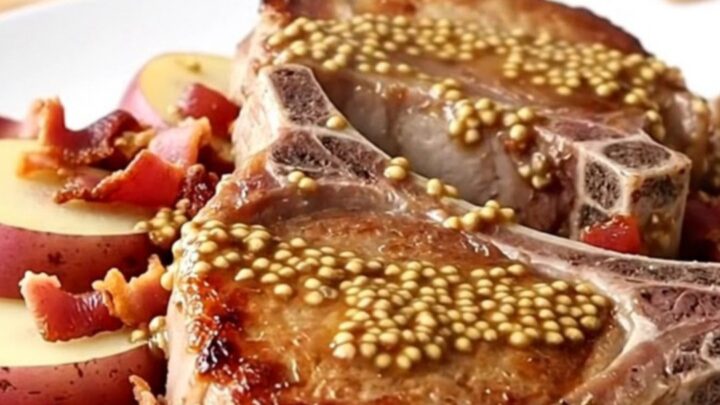
- Slow cook and serveCover the slow cooker and cook on low for 6 hours until the pork is tender and reaches an internal temperature of 145°F (63°C). Once cooked, remove the pork chops and let them rest for at least 5 minutes before serving with the sauce and vegetables.Look for The pork is done when it is fork-tender and juices run clear.Safe temperature 145°F (63°C) internal temperature (steaks, chops and roasts)Tip Check the temperature with a meat thermometer at the thickest part of the chop to ensure it is cooked safely.
During the final phase, the kitchen will begin to smell savory and tangy. The pork chops should be perfectly braised, and the potatoes should be tender and coated in the thickened mustard sauce.
The dish is ready once the meat reaches the safe internal temperature and is tender to the touch, indicating the braising process is complete.
Common mistakes
Avoid lifting the lid of the slow cooker frequently during the cooking process, as this releases heat and moisture, significantly increasing the total cooking time and potentially drying out the pork.
Additionally, ensure the bacon is cooked until crispy before adding it; using raw bacon will result in a greasy, chewy texture that does not add the intended smoky crunch to the final dish.
How to tell it’s done
The pork chops are properly cooked when they reach an internal temperature of 145°F (63°C). Use a digital meat thermometer inserted into the thickest part of the chop, avoiding the bone. The meat should be fork-tender and pulling away slightly from the bone, while the potatoes should be soft enough to pierce easily with a fork.
- Steaks, chops and roasts: 145°F (63°C) in the thickest part, then a 3-minute rest
Up next · Part 3 of 3
2 variations · storage & make-ahead · 3 answers · printable card
Tips, FAQ & printable recipe (Part 3)← Back to the ingredients (Part 1)