Desserts · Part 2 of 3: Instructions
Slow-Cooker German Chocolate Coconut Pecan Dump Cake Step-by-step instructions
- Prep
- Cook
- Total
- Serves
- 8
Before you start
Ensure the slow cooker insert is clean and dry. Gather all ingredients, including the cake mix, frosting, chocolate chips, pecans, and butter. Slice the stick of butter into small, even pieces.
Having everything measured and ready to go allows for rapid assembly, ensuring the layers are uniform before the slow cooker begins its work. Clear a workspace near the slow cooker to keep the preparation process tidy and efficient.
Ingredients at a glance (5)
- 30 oz coconut-pecan frosting
- 1 box German chocolate cake mix
- 1 cup semi-sweet chocolate chips
- 1/2 cup pecans
- 1 stick butter, sliced
Instructions
Layering the ingredients
- Layering the ingredientsSpread the coconut-pecan frosting evenly across the bottom of the slow cooker insert. Sprinkle the German chocolate cake mix over the frosting layer, then distribute the semi-sweet chocolate chips and pecans on top. Finally, place the sliced butter evenly across the entire surface of the cake mix to ensure even melting and moisture distribution during the cooking process.Look for The frosting should cover the bottom completely before adding the dry layers.Tip Ensure the butter slices are spread out to help the dry mix hydrate properly.
The frosting should form a solid, even base at the bottom of the cooker, followed by a level layer of dry cake mix, chocolate chips, and pecans. The butter slices should be distributed evenly across the top, ensuring that as they melt, they will permeate all the dry ingredients below, providing the necessary moisture for the cake to bake properly during the long, low-temperature cooking cycle.
Slow cooking the cake
- Slow cooking the cakeCover the slow cooker with the lid and set it to cook on the HIGH setting. Allow the cake to bake for two and a half hours without removing the lid. The heat will cause the frosting at the bottom to caramelize into a rich, praline-like sauce that bubbles up through the chocolate cake, creating a moist and decadent texture throughout.Look for Look for the mixture to be bubbling around the edges and the center to be set.Tip Avoid lifting the lid frequently as this releases essential heat and steam.
During the cooking phase, the slow cooker should remain closed. You may hear faint bubbling sounds as the frosting melts and caramelizes. The cake will transform as the butter and frosting create a rich, syrupy base that infuses the cake mix. By the end of the two and a half hours, the kitchen should be filled with the rich aroma of chocolate and toasted coconut, indicating the process is complete.
Final serving
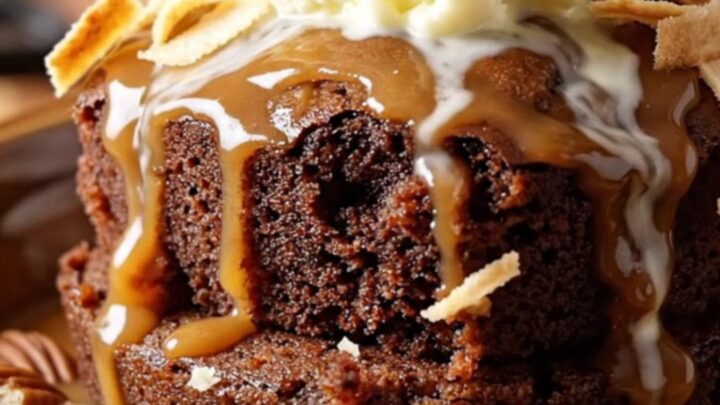
- Final servingOnce the cooking time is complete, turn off the slow cooker and let the cake rest for about ten minutes to allow the sauce to thicken slightly. Scoop the warm, fudge-dripping cake into individual bowls. Serve immediately while warm, ideally topped with a generous scoop of vanilla bean ice cream and a sprinkle of toasted coconut curls for added texture and flavor contrast.Look for The cake should look moist with visible pockets of caramelized praline lava.Tip Serving immediately ensures the best contrast between the hot cake and cold ice cream.
After resting, the cake should have a glossy appearance with visible swirls of the coconut-pecan sauce. It should be warm and moist, with a texture similar to a thick, fudge-like pudding cake.
When served in bowls with a scoop of vanilla ice cream, the heat from the cake should begin to soften the ice cream, creating a delightful contrast in temperatures that enhances the overall dessert experience.
Common mistakes
A common mistake is lifting the lid too often during the cooking process, which allows heat to escape and significantly increases the cooking time. Another error is over-mixing the layers; the dump cake method relies on the ingredients resting on top of each other to create distinct textures.
Finally, using a slow cooker that is significantly too large can cause the cake to spread too thin and potentially dry out before the center is fully cooked through.
How to tell it’s done
The cake is done when the edges are bubbling and the center appears set, with the cake crumb feeling tender to the touch. The internal temperature of the cake is not the primary indicator here; rather, visual cues are key.
You should see the caramelized frosting sauce bubbling up through the chocolate cake, indicating that the butter and sugars have fully melted and integrated. Allow it to rest briefly, which helps the sauce stabilize before serving.
Up next · Part 3 of 3
2 variations · storage & make-ahead · 3 answers · printable card
Tips, FAQ & printable recipe (Part 3)← Back to the ingredients (Part 1)