Dinner · Part 2 of 3: Instructions
Slow Cooker Garlic Herb Pork Roast with Glazed Carrots Step-by-step instructions
- Prep
- Cook
- Total
- Serves
- 6
Before you start
Before beginning, ensure your slow cooker is clean and positioned on a stable, heat-resistant surface away from the edge of the counter. Prepare all your ingredients by measuring the broth and ensuring the pork roast is ready to be seasoned. If your slow cooker has a ceramic insert, make sure it is properly seated in the heating base to ensure efficient and even heat distribution throughout the entire cooking process.
Ingredients at a glance (4)
- 3 lb pork roast
- 1 lb baby carrots
- 1 packet garlic herb seasoning packet
- 1 cup broth
Instructions
Preparation and Setup
- Assemble the RoastPlace the raw pork roast into the bottom of the slow cooker basin. Scatter the baby carrots evenly around the sides of the pork to ensure they cook thoroughly in the liquid.Look for The pork is centered with carrots surrounding it.Tip Ensure the pork roast is thawed completely before placing it in the slow cooker for even cooking.
The pork roast is positioned securely at the bottom of the slow cooker. The baby carrots are distributed around the meat, creating a stable base. Everything is arranged neatly, ensuring that the ingredients are ready for the seasoning and liquid to be added.
The slow cooker is ready to be plugged in, and the workspace is clear of any unnecessary clutter, ensuring a smooth and efficient assembly before the heat is applied.
Seasoning and Liquid Addition
- Season and Add LiquidSprinkle the entire contents of the garlic herb seasoning packet over the pork and carrots. Pour the broth into the slow cooker, carefully avoiding washing the seasoning off the meat.Look for The seasoning coats the top of the roast.Tip Use a low-sodium broth if you prefer to control the saltiness of the final dish.
The garlic herb seasoning is evenly distributed, creating an aromatic layer over the pork. The broth has been poured carefully, settling into the bottom of the basin without disturbing the seasoning on the meat. The slow cooker is now properly covered with the lid, creating a sealed environment that will trap moisture and heat. The setup is complete, and the slow cooker is ready to begin the long, slow cooking process.
Slow Cooking and Finishing
- Slow Cook and ServeCover the slow cooker and set to low heat for 8 hours. Once finished, ensure the internal temperature of the pork reaches 145°F (63°C). Let the meat rest for 10 minutes before slicing and serving.Look for The pork is fork-tender and pulls apart easily.Safe temperature 145°F (63°C) internal temperature (steaks, chops and roasts)Tip Always use a meat thermometer to verify the temperature in the thickest part of the roast.
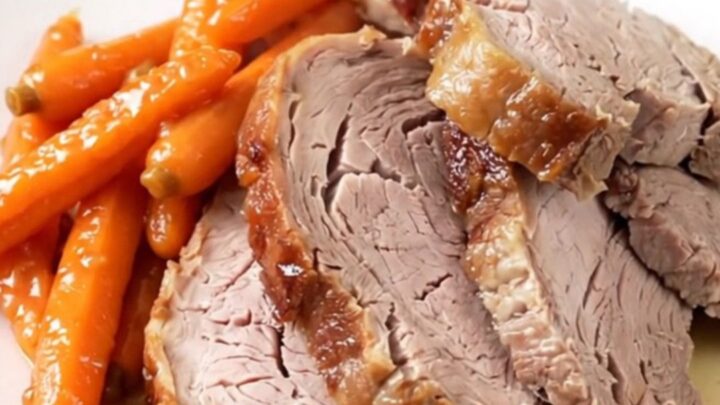
The pork has reached a tender, succulent consistency, and the carrots are perfectly glazed in the reduced broth. The aroma of garlic and herbs fills the air, signaling that the dish is ready.
After verifying the internal temperature of 145°F (63°C), the roast is removed to a carving board to rest. The kitchen is ready for the final slicing and plating, with the dish looking moist, steaming, and fully prepared for serving.
Common mistakes
A common mistake is opening the slow cooker lid frequently during the cooking process. Each time the lid is lifted, heat escapes and the cooking time is extended, which can lead to uneven results.
Trust the slow cooker to do its job and only check the temperature toward the end of the recommended time. Additionally, ensure you do not crowd the slow cooker so much that the lid does not fit securely, as this will also cause heat loss.
How to tell it’s done
The pork is perfectly cooked when it reaches an internal temperature of at least 145°F (63°C) at its thickest point, as measured by an accurate meat thermometer.
The meat should be tender enough to slice cleanly without resistance, or pull apart with a fork if it has been cooked for the full duration. The carrots should be soft and easily pierced with a knife, having absorbed the savory flavors of the surrounding liquid.
- Steaks, chops and roasts: 145°F (63°C) in the thickest part, then a 3-minute rest
Up next · Part 3 of 3
2 variations · storage & make-ahead · 3 answers · printable card
Tips, FAQ & printable recipe (Part 3)← Back to the ingredients (Part 1)