Dinner · Part 2 of 3: Instructions
Slow-Cooker Garlic Butter Pork Shoulder: Set-and-Forget Step-by-step instructions
- Prep
- Cook
- Total
- Serves
- 8
Before you start
Before you start, take the pork shoulder out of the refrigerator and let it sit at room temperature for up to 30 minutes. Pat it dry with paper towels. Smash the garlic cloves and pick the herb sprigs.
If you're using a slow cooker liner, now is the time to place it. Measure out the cowboy butter medallions so they're ready to go. Have a cutting board and two forks ready for shredding later.
Ingredients at a glance (5)
- 4 lb boneless pork shoulder (Boston butt)
- 12 cloves garlic, smashed
- 4 sprigs fresh rosemary
- 6 sprigs fresh thyme
- 4 medallions garlic-herb compound cowboy butter
Instructions
Layering the Roast
- Layer the Roast and AromaticsPlace the pork shoulder in the center of the slow cooker insert. Scatter the smashed garlic cloves over the top, then lay the rosemary and thyme sprigs across the meat. Press the herbs gently so they stay in place.Look for The pork fills the bottom of the cooker, with garlic and herbs scattered across the surface.Tip Smash the garlic cloves with the flat side of a knife to release their flavor without mincing.
- Top with Cowboy ButterPlace the four medallions of cowboy butter evenly on top of the roast, spacing them so they will melt and baste the meat as it cooks.Look for The butter medallions sit on the pork, ready to melt into the crevices.Tip If the butter is very cold, let it sit at room temperature for 10 minutes so it softens slightly and spreads as it melts.
At this stage, the pork shoulder sits in the center of the slow cooker, with smashed garlic cloves and fresh herb sprigs scattered over the top.
The cowboy butter medallions are placed on top, ready to melt. The scene is neat and aromatic, with the raw meat and herbs ready to transform.
Slow-Cooking
- Slow-Cook Until Fork-TenderCover the slow cooker and cook on low for 8 to 10 hours, until the pork is fork-tender and easily shreds. The internal temperature should read at least 145°F (63°C), but for shredding, cook until it reaches 200°F (93°C) for best texture. Let it rest for 3 minutes before slicing.Look for The meat is deeply browned, the garlic is soft, and the liquid is bubbling gently.Safe temperature 145°F (63°C) internal temperature (steaks, chops and roasts)Tip Do not lift the lid during cooking; each peek adds 20 minutes of cook time.
- Rest the PorkTurn off the slow cooker and let the pork rest in the liquid for at least 10 minutes. This allows the juices to redistribute and makes the meat easier to handle.Look for The liquid settles, and the meat looks moist and glistening.Tip Resting is essential for whole cuts; it keeps the meat succulent.
After hours of gentle cooking, the pork is fork-tender, surrounded by a bubbling garlic-herb butter gravy. The garlic has softened into sweet confit, the herbs have released their oils, and the kitchen smells deeply savory. The liquid is rich and glossy, and the meat is ready to shred.
Shredding and Serving
- Shred and ServeTransfer the pork to a cutting board. Using two forks, shred the meat into bite-size pieces, discarding any large fat pieces. Return the shredded pork to the slow cooker and stir gently to coat with the garlic-herb butter gravy. Serve warm over buttered egg noodles or your favorite sides.Look for The pork pulls apart easily into moist, tender strands.Tip For extra flavor, let the shredded pork sit in the gravy for 10 minutes before serving.
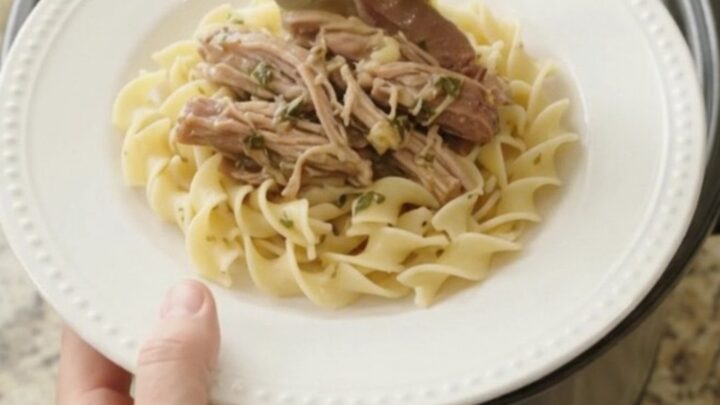
The shredded pork is piled back into the gravy, each strand coated with buttery goodness. It looks moist and succulent, with visible herbs and soft garlic pieces. The dish is ready to serve over noodles or as desired, with the gravy pooling around the meat.
Common mistakes
One common mistake is lifting the lid to check on the pork—each time you do, heat escapes and adds to the cooking time. Another is not resting the meat before shredding; resting allows the juices to redistribute, preventing dry pork.
Also, avoid using a lean cut like tenderloin, which will dry out. And don't skip the herbs—they are essential for the flavor profile.
How to tell it’s done
The pork is done when it is fork-tender and easily shreds with little resistance. Use a thermometer to check the internal temperature; it should read at least 145°F (63°C) for safety, but for shredding, aim for 200°F (93°C) to ensure the collagen has fully broken down.
The meat will be moist, pull apart in long strands, and the gravy will be rich and aromatic.
- Steaks, chops and roasts: 145°F (63°C) in the thickest part, then a 3-minute rest
Up next · Part 3 of 3
4 variations · storage & make-ahead · 5 answers · printable card
Tips, FAQ & printable recipe (Part 3)← Back to the ingredients (Part 1)