Desserts · Part 2 of 3: Instructions
Slow Cooker Fresh Fig and Almond Clafoutis Step-by-step instructions
- Prep
- Cook
- Total
- Serves
- 4
Before you start
Before beginning, ensure all ingredients are measured and ready. Wash the figs thoroughly under cool running water, pat them completely dry, and remove any woody stems. Prepare a clean, dry workspace for the slow cooker, ensuring it is positioned on a flat, heat-resistant surface away from any edges.
Have your serving plates ready so you can plate the clafoutis quickly once it has finished its mandatory resting period. Confirm that your slow cooker is plugged in and the lid is clean, as the steam trapped inside is vital for the proper setting of the custard.
Ingredients at a glance (4)
- 6 medium fresh figs, quartered
- 1/2 cup almond powder
- 1/4 cup blond sugar
- 1 cup whole milk
Instructions
Layering the Fruit
- Prepare the baseWash the fresh figs thoroughly and pat them dry. Remove the stems and quarter each fig. Arrange the fig quarters cut-side up in an even layer at the bottom of the slow cooker insert to ensure they cook evenly and release their juices into the batter.Look for Figs are arranged in a single layer at the bottom of the slow cooker.Tip Ensure the figs are ripe but firm so they hold their shape during the long cooking process.
The figs should be arranged in a single, neat layer at the bottom of the slow cooker. They should be cut-side up to allow the sugars to interact with the batter. Ensure the figs are dry before placing them in the cooker to avoid adding excess water, which could dilute the final custard texture.
Adding the Batter
- Combine ingredientsSprinkle the almond powder evenly over the prepared fig layer. Add the blond sugar by shaking it carefully over the almonds to create a light, even dusting. Finally, pour the whole milk gently into the slow cooker, allowing it to settle around and over the figs and almond mixture.Look for The milk covers the fruit and almond layers, creating a uniform base for the clafoutis.Tip Pour the milk slowly to avoid displacing the figs you carefully arranged in the first step.
The almond powder, sugar, and milk should be added carefully to avoid disturbing the fig arrangement. The milk should completely cover the almond and sugar mixture. At this stage, the ingredients should look well-distributed, with the figs partially submerged in the liquid base, ready for the slow, gentle cooking process.
Slow Cooking
- Bake and setCover the slow cooker and cook on the low setting for two hours. Once the clafoutis is set, golden, and firm to the touch, turn off the heat. Let the dish rest for at least 10 minutes before serving to allow the internal structure to stabilize, reaching an internal temperature of 160°F (71°C) for the egg-based custard.Look for The center is firm and the edges are golden brown.Safe temperature 160°F (71°C) internal temperature (egg dishes)Tip Avoid lifting the lid during the cooking process to maintain a consistent temperature inside the cooker.
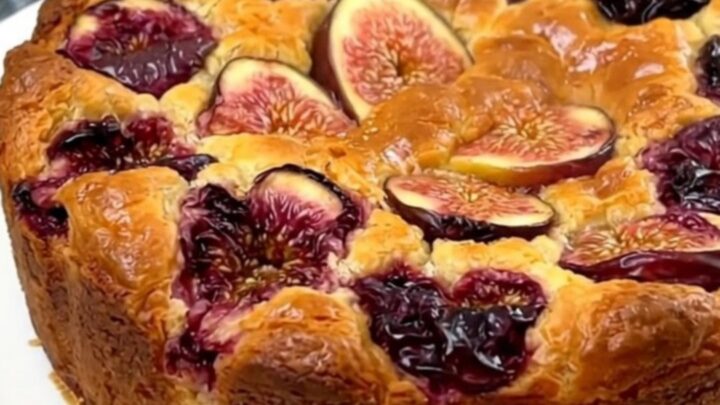
The finished clafoutis should be golden, firm, and slightly puffed. It should smell fragrant and sweet, with no signs of raw milk or runny batter. After the rest period, the structure should be stable enough to hold its shape when scooped, offering a beautiful, glossy appearance and a tender, custardy mouthfeel.
Common mistakes
A common mistake is overcrowding the slow cooker with too many figs, which can release excess moisture and prevent the batter from setting properly. Stick to a single layer to ensure balance.
Another error is opening the lid too frequently during the cooking process; this releases essential heat and steam, which significantly increases the cooking time and can result in an uneven texture.
Finally, failing to let the dish rest for at least 10 minutes after cooking is a mistake, as the clafoutis needs this time to firm up; cutting into it too soon will result in a messy, liquid presentation.
How to tell it’s done
The clafoutis is done when the custard is set, firm to the touch in the center, and the edges appear golden. The internal temperature of the custard should reach 160°F (71°C) to ensure the eggs are fully cooked. The surface should look glossy and slightly puffed, indicating that the milk and almond mixture has thickened appropriately.
If the center still appears liquid or unstable after the recommended time, continue cooking in 15-minute increments until the desired consistency is achieved. Always use a digital thermometer to verify the temperature in the thickest part of the custard before turning off the power.
- Egg dishes: 160°F (71°C) in the thickest part
Up next · Part 3 of 3
2 variations · storage & make-ahead · 3 answers · printable card
Tips, FAQ & printable recipe (Part 3)← Back to the ingredients (Part 1)