Dinner · Part 1 of 3: Ingredients
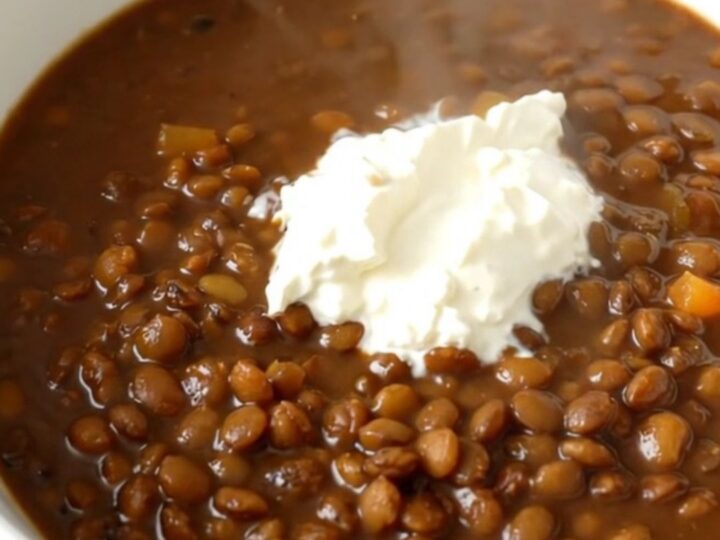
Slow Cooker French Green Lentils in Red Wine and Sweet Onions
- Prep
- Cook
- Total
- Serves
- 4
Transform humble pantry staples into a sophisticated French-style bistro dish with minimal effort. This slow cooker lentil stew relies on the gentle, long-duration cooking method to coax out deep, nuanced flavors from sweet onions and red wine, creating a comforting meal that feels special enough for guests yet simple enough for a busy weeknight.
Let the slow cooker do the work while you focus on other tasks, resulting in perfectly tender lentils every single time.
This recipe takes the classic approach of slow-cooking legumes to achieve a melt-in-your-mouth texture that standard stovetop methods often struggle to replicate without constant monitoring. By layering ingredients in the slow cooker, the onions slowly caramelize while the lentils absorb the aromatic red wine broth, resulting in a complex and savory dish.
The addition of fresh thyme and a final touch of heavy cream elevates the simple base into a refined stew. Perfect for those who appreciate traditional French-inspired flavors, this dish is a reliable staple for any season, providing warmth and satisfaction without the need for complex techniques or excessive preparation time.
Ingredients
Main Ingredients
- 1 1/2 cups green lentils, rinsed and picked over
- 2 cups sweet onions, thinly sliced
- 1 cup carrots, diced
Aromatics
- 3 sprigs fresh thyme
- 1 bay leaf
Liquid
- 1/2 cup dry red wine
- 3 cups vegetable broth
Topping
- 2 tbsp heavy cream, for serving
Why this recipe works
The slow cooker method provides a steady, low-temperature environment that is ideal for lentils, allowing them to soften uniformly without breaking down into a mushy consistency. This gentle heat ensures that the vegetables, particularly the sweet onions, break down slowly and infuse the cooking liquid with their natural sugars, creating a rich and flavorful foundation for the dish.
The combination of red wine and vegetable broth creates a balanced base that provides both depth and brightness.
The wine adds a necessary acidic component that cuts through the earthiness of the green lentils, while the aromatics, like fresh thyme and bay leaf, provide a classic savory profile that defines many traditional French vegetable preparations, ensuring a cohesive and well-rounded flavor.
Notes and substitutions
When selecting ingredients for this recipe, choose green lentils, often labeled as French or Puy lentils, as they hold their shape better than red or yellow varieties during the long cooking time.
Ensure that the red wine used is one that you enjoy drinking, as the flavor will concentrate during the cooking process; a dry variety such as Pinot Noir or Merlot works exceptionally well here.
Regarding equipment, a standard oval-shaped slow cooker with a capacity of at least 4 quarts is ideal, as it allows for proper heat circulation. If the slow cooker has a keep-warm setting, this can be used to hold the stew at the perfect serving temperature for up to an hour if dinner service needs to be delayed slightly after the cooking time concludes.
- Red wine: Replace with additional vegetable broth mixed with a splash of balsamic vinegar for acidity.
- Green lentils: Use brown lentils if green are unavailable, though they may become softer during the long cooking process.
Equipment
- slow cooker
- chef knife
- cutting board
- measuring cups
Up next · Part 2 of 3
3 steps · 4 h of cooking · what to look for at each stage
Step-by-step instructions (Part 2)