Dinner · Part 2 of 3: Instructions
Slow Cooker French Beef Shank Pot-au-Feu Step-by-step instructions
- Prep
- Cook
- Total
- Serves
- 4
Before you start
Before beginning, ensure all vegetables are washed and prepped. Peel the carrots and turnips, and chop them into large, uniform chunks. Trim the leeks, removing the dark green tops, and slice the white and light green parts into thick sections.
Thoroughly rinse the leeks to remove any dirt trapped inside. Stud the whole peeled onion with 3 to 4 whole cloves by pushing them into the flesh. Set out your slow cooker and ensure it is placed on a stable, heat-resistant surface near an outlet, ready for assembly.
Ingredients at a glance (6)
- 1 piece beef shank with marrow bone
- 3 medium carrots, chopped
- 2 large leeks, chopped
- 2 medium turnips, chopped
- 1 whole onion, studded with cloves
- 4 cups beef broth
Instructions
Layering the ingredients
- Assemble the slow cookerPlace the raw beef shank with the marrow bone directly into the bottom of the slow cooker. Arrange the chopped carrots, leeks, and turnips around the meat, ensuring they are evenly distributed for consistent cooking.Look for The beef shank should be at the base to ensure it remains submerged in the liquid while cooking.Tip Ensure the vegetables are cut into uniform, large chunks so they maintain their texture during the long cooking process.
At this stage, the slow cooker should be neatly packed with the beef shank at the bottom, surrounded by the chopped carrots, leeks, and turnips. The ingredients should look vibrant and fresh, ready for the slow braising process.
Ensure the beef is positioned securely so it remains in contact with the base of the cooker for steady heat conduction throughout the cooking time.
Adding aromatics and broth
- Add aromatics and liquidNestle the whole onion, which has been studded with whole cloves, into the center of the slow cooker among the vegetables. Pour the beef broth over the ingredients until they are mostly covered.Look for The broth should just cover the vegetables and the beef to facilitate even braising throughout the cooking cycle.Tip Using a high-quality, low-sodium beef broth will allow the natural flavors of the beef shank to shine without overpowering the dish.
The onion is nestled in the center, and the broth has been poured over the ingredients. The liquid should be visible around the vegetables, creating a poaching environment. The kitchen should begin to smell faintly of beef and fresh vegetables. Check that the liquid level is adequate and that the onion is stable in its position before covering the pot securely.
Slow cooking and final rest
- Slow cook and serveCover the slow cooker and cook on low for 8 hours until the beef reaches an internal temperature of at least 145°F (63°C). Once cooked, let the meat rest for 10 minutes before serving. The beef should be falling off the bone and the vegetables tender.Look for The meat is done when it pulls away easily from the bone and is fork-tender throughout the thickest part of the shank.Safe temperature 145°F (63°C) internal temperature (steaks, chops and roasts)Tip Allowing the meat to rest is crucial for retaining the juices, resulting in a more succulent final dish when served on plates.
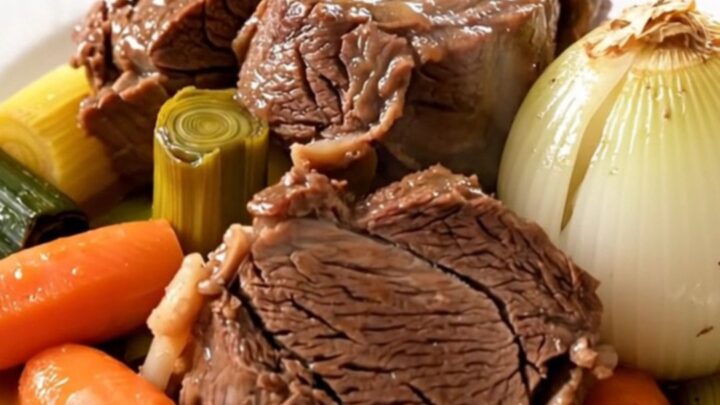
After the long cook, the beef will be incredibly tender and the vegetables perfectly soft. The broth should be fragrant and rich. The meat must rest for 10 minutes to allow the juices to redistribute, ensuring maximum tenderness. Check the internal temperature one final time to confirm it has reached the safe threshold of 145°F (63°C) before proceeding to plate the meal.
Common mistakes
A common mistake is cutting the vegetables too small, which leads to them disintegrating into the broth during the long cooking time. Another error is failing to ensure the beef is properly submerged; check that the liquid level is sufficient to cover most of the shank.
Avoid lifting the lid frequently, as this releases the trapped heat and steam, significantly increasing the total cooking time and potentially drying out the meat.
How to tell it’s done
The beef is fully cooked when it reaches an internal temperature of at least 145°F (63°C). Visually, the meat should be visibly tender, pulling away easily from the central marrow bone with the nudge of a fork.
The vegetables should be soft enough to pierce easily with a knife but still hold their shape. The broth will have clarified slightly and taken on the rich color of the beef juices and aromatics.
- Steaks, chops and roasts: 145°F (63°C) in the thickest part, then a 3-minute rest
Up next · Part 3 of 3
2 variations · storage & make-ahead · 3 answers · printable card
Tips, FAQ & printable recipe (Part 3)← Back to the ingredients (Part 1)