Dinner · Part 2 of 3: Instructions
Slow-Cooker Filipino Chicken and Pork Belly Adobo Step-by-step instructions
- Prep
- Cook
- Total
- Serves
- 6
Before you start
Before starting, ensure all ingredients are fresh and ready for the slow cooker. Cube the pork belly into uniform 1-inch pieces to ensure consistent cooking. Peel the garlic cloves and crush them using the side of a large chef knife to release their essential oils.
Measure the soy sauce and vinegar accurately to maintain the correct acid-to-salt ratio. Have your slow cooker clean and placed on a stable surface away from flammable materials. Ensure the chicken thighs are patted dry, although no rinsing is necessary, as this helps the glaze adhere better during the final stages of cooking.
Ingredients at a glance (7)
- 2 lb bone-in chicken thighs
- 1 lb pork belly, cubed
- 12 cloves garlic cloves, crushed
- 1/2 cup soy sauce
- 1/2 cup cane vinegar
- 1 tsp whole black peppercorns
- 3 leaves bay leaves
Instructions
Layering and Initial Setup
- Layering the IngredientsPlace the bone-in chicken thighs and cubed pork belly into the ceramic slow cooker insert. Add the crushed garlic cloves, soy sauce, cane vinegar, whole black peppercorns, and bay leaves on top of the proteins.Look for Ensure the proteins are arranged in an even layer to promote consistent cooking throughout the process.Tip Crushing the garlic cloves rather than mincing them keeps the flavor mellow during the long cooking time.
At this stage, the slow cooker contains all raw ingredients neatly arranged. The garlic, peppercorns, and bay leaves are distributed evenly to ensure the flavors permeate the chicken and pork.
Everything should look organized, with the liquids beginning to settle at the bottom of the ceramic insert. Ensure the lid is securely in place before turning the unit on to the low setting, as this initial seal is crucial for building the steam and heat necessary for the long, slow braise ahead.
Slow-Cook Simmering
- Slow CookingCover the slow cooker with the lid and set to low heat. Cook for five hours without lifting the lid, allowing the pork belly fat to render and the vinegar-soy mixture to reduce into a rich, glossy glaze.Look for The sauce should thicken and coat the back of a spoon, and the pork belly should be fork-tender.Safe temperature 165°F (74°C) internal temperature (poultry)Tip Avoid lifting the lid during the first four hours to maintain the consistent internal temperature required for slow cooking.
After several hours, the kitchen will begin to fill with the savory, tangy aroma of the simmering adobo. The liquid level will have decreased, and the fat from the pork belly will have started to render and float, creating a beautiful sheen on the surface of the sauce. The meat should look plump and saturated with the dark soy-vinegar mixture. At this point, the process is well underway, and the proteins are becoming increasingly tender as the collagen breaks down into the sauce.
Final Glazing and Plating
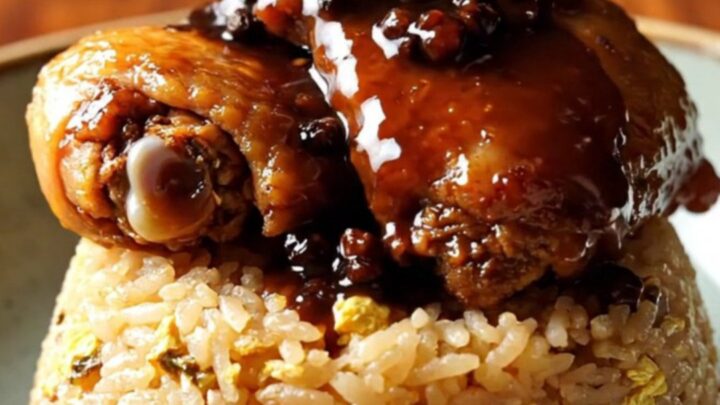
- Final Glazing and ServingCheck that the chicken has reached an internal temperature of 165°F (74°C). Remove the proteins carefully and let them rest for at least 5 minutes before serving over garlic fried rice. Spoon the thickened adobo jus over the meat.Look for The chicken and pork should be extremely tender and coated in a dark, shiny reduction of the cooking liquid.Safe temperature 145°F (63°C) internal temperature (steaks, chops and roasts)Tip If the sauce is not thick enough, you may simmer it in a saucepan on the stove for a few extra minutes before serving.
The final phase is characterized by a thick, syrupy consistency of the sauce that clings to the meat. The chicken should be cooked through to 165°F (74°C) and the pork belly completely tender. The appearance is professional and inviting, with the dark, glossy glaze contrasting with the meat. Once you have confirmed the internal temperatures and the texture is perfect, the dish is ready to be plated over a bed of fluffy garlic fried rice, spooning the remaining jus over the top.
Common mistakes
A common mistake is using too much salt, as soy sauce is already high in sodium; avoid adding extra salt until the very end, if at all. Another error is neglecting to use bone-in chicken, which can lead to dry, flavorless meat.
Do not open the slow cooker lid repeatedly, as this releases heat and moisture, significantly slowing down the cooking time and preventing the sauce from reducing properly. Finally, ensure the pork belly is not cut too small, or it may disintegrate completely during the long five-hour simmer, losing its satisfying texture.
How to tell it’s done
The dish is done when the pork belly is fork-tender, meaning it yields easily to pressure, and the chicken has reached an internal temperature of 165°F (74°C). The sauce should have reduced significantly, appearing dark, glossy, and slightly thick rather than watery.
If the pork belly still feels tough or firm, continue cooking for another 30 minutes, as the connective tissue requires more time to break down fully. The final appearance should be a rich, lacquered coating on the meat, indicating the vinegar and soy have successfully melded and concentrated during the slow-cook process.
- Poultry: 165°F (74°C) in the thickest part
- Steaks, chops and roasts: 145°F (63°C) in the thickest part, then a 3-minute rest
Up next · Part 3 of 3
2 variations · storage & make-ahead · 3 answers · printable card
Tips, FAQ & printable recipe (Part 3)← Back to the ingredients (Part 1)