Dinner · Part 2 of 3: Instructions
Slow Cooker Fajita Pork Tenderloin for Easy Dinners Step-by-step instructions
- Prep
- Cook
- Total
- Serves
- 4
Before you start
Prepare the ingredients by slicing the bell peppers and onions into uniform strips, which helps them cook at the same rate. Ensure the pork tenderloin is removed from the refrigerator about 20 minutes before cooking to take the chill off, which promotes more even heat penetration.
Have all measured ingredients ready to assemble, as the process is quick and requires little more than layering the components directly into the slow cooker vessel before turning it on.
Ingredients at a glance (5)
- 2 lbs pork tenderloin
- 2 large bell peppers, sliced
- 1 large onion, sliced
- 2 tbsp fajita seasoning
- 1 1/2 cups chunky salsa
Instructions
Assembly of ingredients
- Prepare the slow cookerPlace the pork tenderloins into the base of the slow cooker, ensuring they are arranged in an even layer to allow for consistent heat distribution during the cooking process.Look for The pork lies flat on the bottom of the ceramic insert.Tip Ensure the tenderloins are not overlapping significantly to promote even cooking throughout the thickness of the meat.
The pork should be positioned at the base of the slow cooker, ready to be covered by the vegetable layer. Ensure the peppers and onions are sliced into consistent strips to allow for even softening. Check that the seasoning is distributed over the vegetables before adding the salsa, creating a base that will develop into a flavorful sauce as the slow cooker heats up.
Slow cooking process
- Add vegetables and seasoningDistribute the sliced bell peppers and onions over the pork. Sprinkle the fajita seasoning evenly over the top of the vegetables and meat, then pour the chunky salsa over everything to coat the ingredients thoroughly.Look for The vegetables and salsa create a layer covering the pork entirely.Tip Distribute the salsa evenly to ensure every part of the pork is exposed to the moisture and spices.
During the cooking phase, the pork and vegetables should be sealed by the lid to trap moisture and heat. The contents will begin to release their juices, creating a braising liquid. The kitchen should begin to smell of peppers, onions, and spices, indicating that the ingredients are melding correctly. Avoid opening the lid, as this releases vital heat required for consistent cooking.
Final resting and slicing
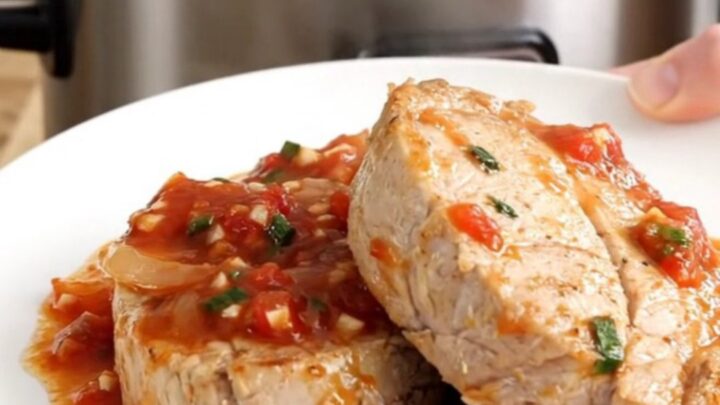
- Cook and serveCover the slow cooker and cook on low for 4 to 6 hours or on high for 2 to 3 hours. Once done, ensure the pork reaches an internal temperature of 145°F (63°C). Remove the pork from the cooker, let it rest for at least 3 minutes, then slice it into thick rounds before serving with the cooked vegetables and sauce.Look for The pork is tender and pulls apart easily with a fork.Safe temperature 145°F (63°C) internal temperature (steaks, chops and roasts)Tip Letting the meat rest ensures the juices redistribute, keeping the pork moist when sliced.
After removing the pork from the slow cooker, verify the internal temperature has reached 145°F (63°C). The meat should be firm yet tender to the touch. Allowing it to rest for at least 3 minutes is essential for juice retention.
The final appearance should feature juicy, pale centers with a soft, braised exterior, topped with the vibrant, tender peppers and a rich, thick salsa sauce.
Common mistakes
A common mistake is overcrowding the slow cooker, which can lead to uneven cooking and excess liquid accumulation. Ensure the pork is arranged in a single layer to maintain consistent contact with the heat source.
Avoid lifting the lid frequently during the cooking process, as this releases heat and steam, significantly extending the cooking time. Additionally, do not over-salt the dish before cooking, as the salsa and pre-made fajita seasoning often contain enough sodium to season the entire meal effectively.
How to tell it’s done
The pork is perfectly cooked when it reaches an internal temperature of 145°F (63°C). At this stage, the meat should be opaque throughout with a tender, juicy center. The vegetables should be soft and wilted, having absorbed the flavors of the salsa and seasoning.
Using a digital meat thermometer is the most reliable way to ensure safety and quality, ensuring the meat is cooked through but remains succulent rather than dry or over-processed.
- Steaks, chops and roasts: 145°F (63°C) in the thickest part, then a 3-minute rest
Up next · Part 3 of 3
2 variations · storage & make-ahead · 3 answers · printable card
Tips, FAQ & printable recipe (Part 3)← Back to the ingredients (Part 1)