Dinner · Part 2 of 3: Instructions
Espresso Brown Sugar Crockpot Brisket with Texas Bark Step-by-step instructions
- Prep
- Cook
- Total
- Serves
- 8
Before you start
Before you start, take the brisket out of the refrigerator and let it sit at room temperature for up to 30 minutes—this helps the rub penetrate. Pat the brisket completely dry with paper towels; moisture is the enemy of bark.
Measure out the espresso powder, coarse black pepper, and dark brown sugar into a small bowl. Have the smoky beef tallow mop sauce ready. Set up your Crockpot on a stable surface. No need to preheat it; the slow cooker will come to temperature gradually.
Ingredients at a glance (7)
- 4 lb trimmed beef brisket
- 2 tbsp espresso powder
- 2 tbsp coarse black pepper
- 60 g dark brown sugar
- 180 ml smoky beef tallow mop sauce
- pickles, for serving
- Texas toast, for serving
Instructions
Coat and assemble
- Coat the brisketPat the brisket dry with paper towels. In a small bowl, mix the espresso powder, coarse black pepper, and dark brown sugar. Rub the mixture evenly over the entire surface of the brisket, pressing gently so it adheres. Place the coated brisket in the Crockpot.Look for The brisket is fully covered with a dark, fragrant rub.Tip For a thicker bark, let the rubbed brisket sit in the refrigerator for 1 hour before cooking.
- Add the mop saucePour the smoky beef tallow mop sauce over and around the brisket, ensuring the bottom of the Crockpot has some liquid. The sauce will keep the meat moist during the long cook and help the bark set.Look for The sauce pools around the brisket but does not cover the top.Tip Do not submerge the brisket completely; the top should stay dry to form bark.
The brisket is evenly coated with the espresso-brown sugar rub, and the mop sauce surrounds it in the Crockpot. The rub looks like a dark, sandy paste. The kitchen smells of coffee and pepper. Before moving on, make sure the brisket is not submerged in the sauce—the top should be dry to allow bark formation.
Slow-cook and rest
- Slow-cook on lowCover the Crockpot and set it to LOW. Cook for 9 hours, without lifting the lid, until the brisket is fork-tender and the internal temperature reaches 145°F (63°C). The long, gentle heat breaks down the connective tissue while the sugar and espresso form a dark, crackly bark. Let it rest for 3 minutes before slicing.Look for The house fills with a smoky, sweet aroma; the bark looks dark and set.Safe temperature 145°F (63°C) internal temperature (steaks, chops and roasts)Tip Resist the urge to peek—every time the lid lifts, heat escapes and cooking time increases.
- Rest the brisketOnce the brisket reaches 145°F (63°C), turn off the slow cooker. Transfer the brisket to a cutting board and let it rest for at least 3 minutes. This allows the juices to redistribute, ensuring moist slices.Look for The brisket is firm but yields to gentle pressure.Tip Resting is essential; skipping it can make the meat dry.
After 9 hours on low, the brisket is fork-tender and the bark has set into a dark, crackly crust. The sauce has reduced slightly and the fat has rendered.
The meat pulls apart easily with a fork. The internal temperature reads 145°F (63°C). The brisket has rested for at least 3 minutes, and the juices are reabsorbed.
Slice and serve
- Slice and serveSlice the brisket against the grain into thick, juicy pieces. Serve on butcher paper with pickles and Texas toast on the side. The bark should crackle as you cut through it.Look for Slices hold together and show a dark, caramelized edge.Tip Cut against the grain for the most tender bites.
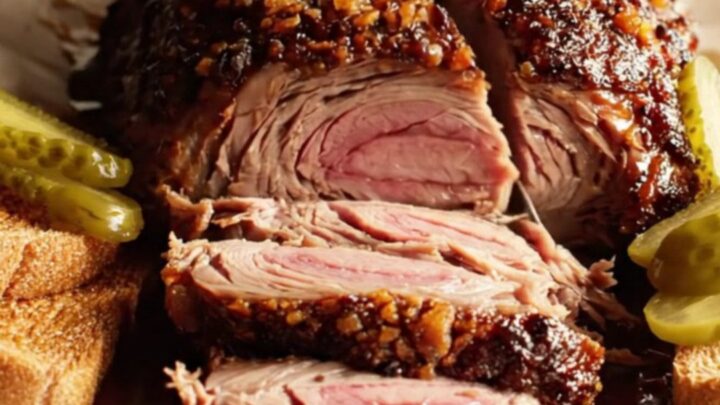
The brisket slices cleanly against the grain, showing a dark bark and rosy pink smoke ring inside. The slices are juicy and hold together. Pickles and Texas toast are ready to serve. The bark crackles as you cut, and the aroma is smoky, sweet, and peppery.
Common mistakes
A common mistake is lifting the lid to check on the brisket. Each time you do, heat escapes and adds 20-30 minutes to the cooking time. Trust the process and keep the lid on. Another mistake is skipping the rest period; without it, the juices run out and the meat becomes dry.
Also, do not trim the brisket too aggressively—leave a thin layer of fat to keep it moist. Finally, do not use a high heat setting; low and slow is non-negotiable for bark and tenderness.
How to tell it’s done
The brisket is done when it is fork-tender and the internal temperature reaches 145°F (63°C) for food safety, but for the most tender texture, cook until it reaches 195°F (91°C) if you prefer pulled-style brisket.
For slicing, 145°F (63°C) is safe and will be tender after 9 hours on low. The bark should be dark, dry to the touch, and crackle when you press it. Let the brisket rest at least 3 minutes before slicing to allow the juices to redistribute.
- Steaks, chops and roasts: 145°F (63°C) in the thickest part, then a 3-minute rest
Up next · Part 3 of 3
4 variations · storage & make-ahead · 5 answers · printable card
Tips, FAQ & printable recipe (Part 3)← Back to the ingredients (Part 1)