Dinner · Part 1 of 3: Ingredients
Slow-Cooker Eastern North Carolina Vinegar Pulled Pork
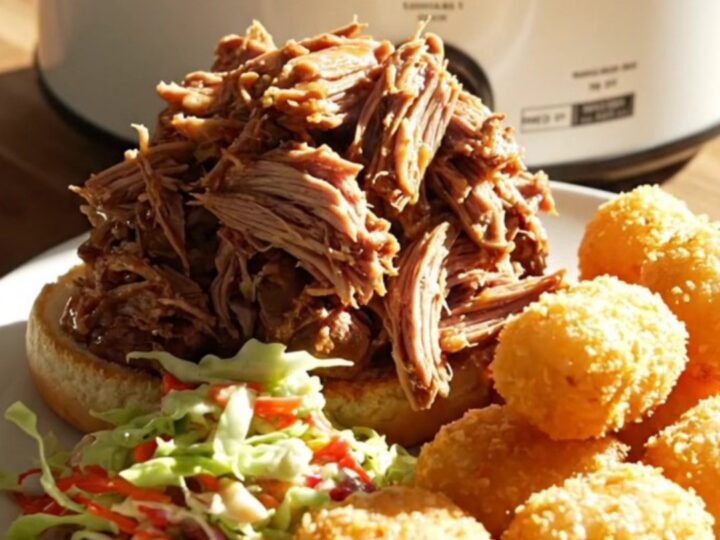
- Prep
- Cook
- Total
- Serves
- 10
Discover the secret to authentic Eastern North Carolina BBQ right in your own kitchen. This slow-cooker method brings out the deep, smoky, and tangy flavors that define this legendary regional dish.
By using a simple vinegar-based mop sauce and a long, low-temperature cook, the pork shoulder transforms into succulent, flavorful perfection that is ideal for feeding a crowd or preparing a memorable weekend meal. Follow this method for consistent, professional-style results every time you crave the bold taste of true Southern barbecue.
Eastern North Carolina BBQ is famous for its distinct, vinegar-forward flavor profile and tender, hand-shredded pork. Unlike other regional styles that rely on heavy tomato-based sauces, this version celebrates the pure essence of the meat, enhanced by the sharp tang of cider vinegar and the fiery kick of crushed red pepper.
This recipe simplifies the traditional pit-master process by utilizing a slow cooker, allowing the pork to braise in its own juices and the spicy vinegar mop sauce. The result is a deeply savory, fall-apart tender dish that captures the heart of coastal Carolina cooking in a convenient, home-friendly format.
Ingredients
Pork
- 5 lb bone-in pork shoulder
Rub
- 1 tbsp kosher salt
- 1 tsp black pepper
- 2 tbsp brown sugar
Mop Sauce
- 1 1/2 cups apple cider vinegar
- 2 tbsp crushed red pepper flakes
- 1 tbsp hot sauce
Why this recipe works
The slow-cooking process is essential for breaking down the tough connective tissues in the pork shoulder. By cooking the meat on low for an extended period, the collagen gradually melts into gelatin, resulting in a buttery texture that is impossible to achieve with high-heat methods.
This slow transformation ensures the meat remains juicy and tender, even after it has been shredded and tossed with the sauce.
The vinegar-based mop sauce serves a dual purpose in this recipe. As the pork cooks, the acidity of the apple cider vinegar penetrates the meat, balancing the natural richness of the pork fat.
Simultaneously, the crushed red pepper flakes infuse the pan juices with a slow-building heat. Finishing the shredded pork in these concentrated juices ensures every bite is infused with the signature tangy, spicy profile characteristic of Eastern Carolina barbecue.
Notes and substitutions
When selecting a pork shoulder, look for a bone-in cut with good marbling. The bone helps conduct heat during the long cooking process and contributes to a more flavorful final product. Ensure the pork fits comfortably in the slow cooker; if it is too large, it may be necessary to cut the roast into two or three large pieces, which will still yield excellent results.
A classic slow cooker with a ceramic insert is ideal for this recipe. Avoid using a convection or high-heat setting, as these will likely dry out the meat before the connective tissues have fully broken down. If the vinegar mop sauce seems too thin at the end, simply reduce it in a small saucepan over medium heat for a few minutes before tossing it with the shredded pork to concentrate the flavors.
- apple cider vinegar: white vinegar can be used for a sharper, more traditional tang.
- bone-in pork shoulder: boneless pork shoulder works well but may cook slightly faster.
Equipment
- Slow cooker
- Mixing bowl
- Tongs
- Fork
- Knife
Up next · Part 2 of 3
3 steps · 9 h of cooking · what to look for at each stage
Step-by-step instructions (Part 2)