Dinner · Part 2 of 3: Instructions
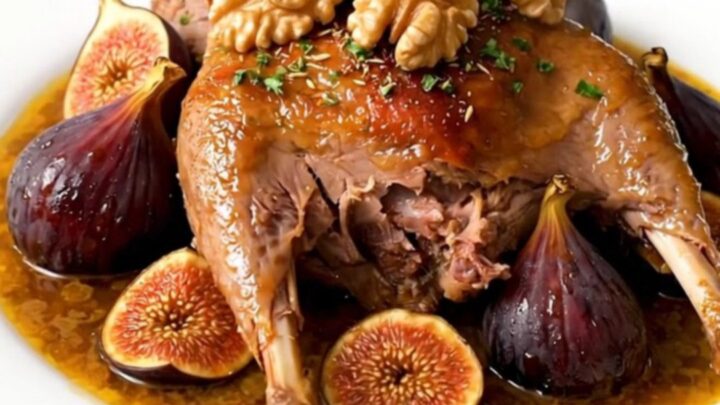
Slow Cooker Duck Tagine with Figs and Walnuts Step-by-step instructions
- Prep
- Cook
- Total
- Serves
- 4
Before you start
Before starting, ensure the slow cooker is clean and placed on a stable surface. Prepare the ingredients by slicing the onions thinly to ensure they break down into the sauce. Measure out the honey and stir it into warm water until fully incorporated.
Have the walnuts chopped and ready for the final step. Ensure you have a reliable meat thermometer to check the internal temperature of the duck, as this is the most critical step for ensuring the poultry is cooked thoroughly and safely before serving.
Ingredients at a glance (6)
- 4 pieces duck legs
- 1 cup dried figs
- 2 medium onions, sliced
- 2 tbsp mixed tagine spices
- 1 cup warm honey water
- 1/2 cup walnuts, chopped
Instructions
Preparation and Layering
- Assemble the IngredientsPlace the raw duck legs at the bottom of the slow cooker. Evenly distribute the dried figs and sliced onions over the duck. Sprinkle the mixed spices over the contents of the slow cooker to ensure even seasoning.Look for The duck legs are arranged in a single layer at the bottom of the vessel.Tip Pat the duck skin dry before placing it in the slow cooker to help the seasoning adhere better.
The duck legs should be arranged in a single layer at the bottom. The onions and figs should be distributed evenly on top, and the spice blend should be sprinkled uniformly over the surface.
The slow cooker should look well-organized and ready for the liquid. Ensure the countertop is clean and all raw meat handling protocols have been followed, including washing hands and surfaces thoroughly after contact with the raw duck.
Slow Braising
- Add Liquid and Slow CookPour the warm honey water over the layered ingredients in the slow cooker. Cover the slow cooker and set to low heat. Cook until the duck is tender and reaches an internal temperature of 165°F (74°C).Look for The liquid should just partially submerge the duck and onion base.Safe temperature 165°F (74°C) internal temperature (poultry)Tip Ensure the honey is fully dissolved in the warm water before pouring to prevent clumping.
As the duck cooks, the sauce will darken and thicken as the honey, spices, and onion juices combine. The kitchen will begin to smell warm and aromatic. The duck should look glossy and the figs should appear plump and soft. If you notice any excessive liquid pooling, do not stir the contents, as this may break up the delicate duck legs. The goal is a rich, reduced sauce that coats the meat perfectly.
Final Garnish
- Final Garnish and ServeRemove the duck carefully from the slow cooker and transfer to a serving plate. Top the tagine with the chopped walnuts just before serving to add a necessary crunch to the tender meat and fruit.Look for The walnuts provide a golden-brown contrast against the dark, rich tagine sauce.Tip Toast the walnuts lightly in a dry pan for two minutes to enhance their flavor before adding them to the dish.
At this final stage, the duck should be removed carefully to avoid it falling apart before it reaches the plate. The sauce should be thick enough to coat the back of a spoon. The walnuts should be added as a final touch to provide a fresh, nutty crunch. The dish is ready when the duck is perfectly tender and the entire house is filled with the inviting scent of the spiced tagine.
Common mistakes
A common mistake is overcrowding the slow cooker, which can prevent the meat from cooking evenly. Another error is failing to ensure the liquid covers the base of the ingredients, which can lead to dry patches.
Avoid lifting the lid frequently, as this releases heat and moisture, significantly increasing the cooking time. Finally, do not add the walnuts too early, as they will lose their signature crunch and become soggy in the sauce if exposed to the heat for too long.
How to tell it’s done
The duck is done when the meat is extremely tender and pulls away easily from the bone with a fork. Using a meat thermometer, insert the probe into the thickest part of the duck leg, avoiding the bone.
The internal temperature must reach at least 165°F (74°C). If the meat is still firm or the temperature is below this threshold, continue cooking on low and check again in thirty-minute intervals until the safe temperature is reached.
- Poultry: 165°F (74°C) in the thickest part
Up next · Part 3 of 3
2 variations · storage & make-ahead · 3 answers · printable card
Tips, FAQ & printable recipe (Part 3)← Back to the ingredients (Part 1)