Dinner · Part 2 of 3: Instructions
Slow Cooker Duck Legs with Pears and Red Wine Step-by-step instructions
- Prep
- Cook
- Total
- Serves
- 4
Before you start
Before beginning, ensure that your slow cooker is placed on a heat-resistant surface with adequate ventilation. If your duck legs have excessive skin or fat, you may choose to trim some of it away, though a small amount of fat is necessary for the final sauce.
Have your spices measured and the red wine ready to pour. It is important to handle raw poultry carefully to avoid cross-contamination in the kitchen, so keep your workspace clean and wash your hands thoroughly after handling the raw meat.
Ingredients at a glance (4)
- 4 pieces duck legs
- 2 large pears, quartered
- 1 tbsp gingerbread spice blend
- 1 cup dry red wine
Instructions
Preparation
- Prepare and combine ingredientsPlace the raw duck legs into the base of the slow cooker. Arrange the quartered pears around the duck pieces. Sprinkle the gingerbread spice blend evenly over the duck and pears to coat them thoroughly.Look for Ensure the duck legs are skin-side up for better rendering.Tip Trim excess fat from the duck legs before placing them in the slow cooker if a leaner result is preferred.
At this stage, the duck legs should be arranged neatly in the slow cooker with the pears nestled around them. The dry spices should be distributed evenly, and the wine should be poured to create a shallow bath. Check that the slow cooker is plugged in and set to the low setting before covering it with the lid to begin the long, slow braising process that will tenderize the meat.
Braising
- Add wine and cookPour the dry red wine over the seasoned duck and pears. Cover the slow cooker with its lid and cook on the low setting for 5 hours. The wine will mingle with the rendered duck fat and spices to create a fragrant, flavorful braising liquid.Look for The liquid should be simmering gently.Tip Avoid lifting the lid during the first 4 hours to maintain a consistent internal temperature.
During the main cooking phase, the kitchen will begin to fill with the aromatic scent of red wine and warm spices. Through the lid of the slow cooker, you should see the wine gently simmering. Avoid the temptation to open the lid, as this releases heat and moisture. The duck legs are slowly softening, and the pears are absorbing the deep color and flavor of the wine reduction.
Finishing
- Finish and serveVerify that the duck legs are fully cooked and tender, reaching an internal temperature of at least 165°F (74°C). Carefully remove the duck legs and pears from the slow cooker, letting the meat rest for 5 minutes before serving to allow the juices to redistribute.Look for The meat should be falling off the bone and the pears should be soft.Safe temperature 165°F (74°C) internal temperature (poultry)Tip If the sauce is too thin, you can reduce it in a small saucepan over medium heat for a few minutes before serving.
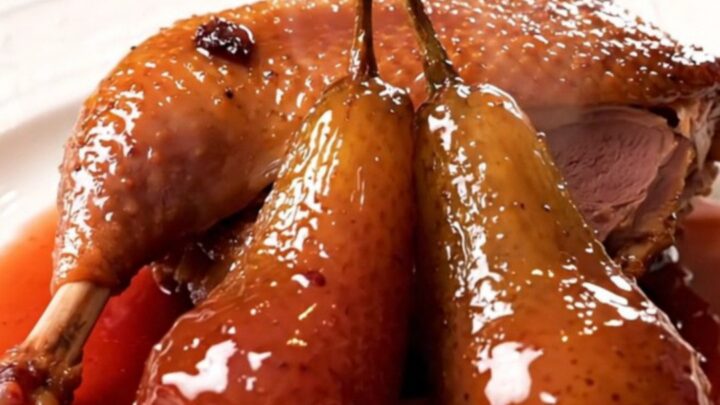
At the final stage, the duck legs should appear dark, glossy, and incredibly tender. The sauce should have thickened slightly from the rendered fat and wine reduction.
Before serving, check the internal temperature of the duck to ensure it has reached 165°F (74°C). The pears should be soft enough to be pierced easily with a fork. Let the dish rest briefly to allow the flavors to settle.
Common mistakes
A common mistake is overcrowding the slow cooker, which can prevent the duck from cooking evenly and result in a steamed rather than braised texture. Ensure all pieces are in a single layer if possible.
Another error is failing to use enough liquid; while the duck will release fat, the red wine is necessary for the braising process. Finally, do not rush the cooking time. Duck legs require a long, slow cook, and cutting the time short will result in tough, chewy meat.
How to tell it’s done
The duck is done when the meat is exceptionally tender and pulls away from the bone with minimal resistance. Use a meat thermometer to ensure the thickest part of the leg reaches an internal temperature of at least 165°F (74°C).
The pears should be translucent and soft, having absorbed the wine and spices. Once these conditions are met, the duck should rest for 5 minutes before serving to ensure the best texture and moisture retention.
- Poultry: 165°F (74°C) in the thickest part
Up next · Part 3 of 3
2 variations · storage & make-ahead · 3 answers · printable card
Tips, FAQ & printable recipe (Part 3)← Back to the ingredients (Part 1)