Dinner · Part 2 of 3: Instructions
Slow Cooker Duck Confit and Mushroom Lasagna Step-by-step instructions
- Prep
- Cook
- Total
- Serves
- 6
Before you start
Before beginning, ensure your slow cooker insert is clean and dry. Prepare all ingredients by shredding the duck confit and removing any excess fat, slicing the mushrooms into uniform pieces, and measuring out the tomato coulis and cheese.
Since the recipe relies on the slow cooker to do the heavy lifting, having all components ready to assemble allows for a swift and organized setup. Ensure you have a sturdy spatula available for serving the finished lasagna, as the layers can be quite delicate once cooked.
Ingredients at a glance (6)
- 2 cups shredded duck confit, skin removed
- 8 oz sliced mushrooms
- 1 tsp herbes de Provence
- 2 cups tomato coulis
- 9 sheets no-boil lasagna noodles
- 2 cups shredded emmental cheese
Instructions
Layering the Ingredients
- Assemble the BasePlace a thin layer of tomato coulis on the bottom of the slow cooker to prevent sticking. Arrange a layer of no-boil lasagna noodles over the sauce, followed by a portion of shredded duck confit and sliced mushrooms. Repeat these layers until all ingredients are used, finishing with a generous sprinkle of herbes de Provence and the remaining tomato coulis.Look for ensure the noodles are evenly covered by the sauce to soften properly during the slow cooking processTip ensure the sauce reaches the edges of the slow cooker to keep the pasta moist
At the end of this phase, the slow cooker should be filled with uniform layers of noodles, duck, mushrooms, and sauce. The ingredients should be evenly distributed, and the final layer of tomato coulis should lightly coat the top noodles to prevent them from drying out during the initial stages of the cooking process.
Cooking the Lasagna
- Slow Cook the LasagnaCover the slow cooker with the lid and cook on low heat for 4 hours. Ensure the duck reaches an internal temperature of 165°F (74°C) throughout the dish. The moisture from the mushrooms and the tomato coulis will steam the noodles perfectly, creating a tender texture without the need for pre-boiling.Look for the lasagna should be bubbling at the edges and the noodles tender when pierced with a knifeSafe temperature 165°F (74°C) internal temperature (poultry)Tip avoid lifting the lid during the first three hours to maintain consistent heat
Once the cooking phase is complete, the lasagna should appear soft and well-integrated. The mushrooms will have released their moisture, and the tomato coulis should have thickened into a rich, aromatic sauce.
The duck will be heated through, and the overall volume of the dish will have settled slightly, indicating the noodles have absorbed the liquids.
Melting the Cheese
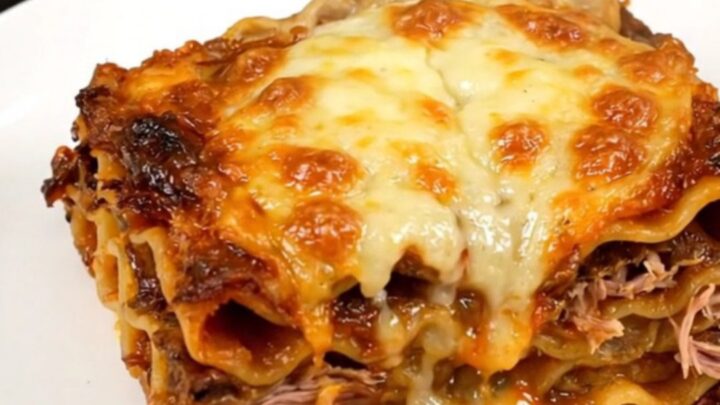
- Melt and ServeOnce the lasagna is cooked through, sprinkle the shredded emmental cheese over the top. Replace the lid for an additional 10 minutes until the cheese is completely melted and bubbly. Turn off the heat and allow the dish to rest for 10 minutes before serving to ensure the layers hold together when sliced.Look for the cheese should be fully melted and slightly golden around the edgesTip resting allows the sauce to thicken slightly for cleaner serving slices
After adding the cheese and heating for the final ten minutes, the top should be covered in a blanket of melted, golden emmental. The cheese should be soft and stretchy when lifted with a spatula. The entire dish should smell fragrant and savory, with the herbs having permeated the entire lasagna, confirming it is ready for the resting stage.
Common mistakes
A common mistake is using too little sauce, which can result in dry, crunchy noodles. Ensure each layer is well-coated with the tomato coulis. Another error is overloading the slow cooker; make sure to leave enough space for the steam to circulate, which helps the pasta cook evenly.
Lastly, failing to let the lasagna rest before serving can cause the layers to slide apart. Patience during the resting phase is key to achieving clean, beautiful portions on the plate.
How to tell it’s done
The lasagna is done when the noodles are tender and the duck has reached an internal temperature of 165°F (74°C). The cheese should be fully melted and the edges of the lasagna should be bubbling with a thick, reduced sauce.
If the center seems too firm, continue cooking for an additional 15 minutes. Always check the temperature in the thickest part of the lasagna to ensure it is cooked through properly before serving.
- Poultry: 165°F (74°C) in the thickest part
Up next · Part 3 of 3
2 variations · storage & make-ahead · 3 answers · printable card
Tips, FAQ & printable recipe (Part 3)← Back to the ingredients (Part 1)