Dinner · Part 2 of 3: Instructions
Slow Cooker Duck Breast with Figs and Honey Step-by-step instructions
- Prep
- Cook
- Total
- Serves
- 4
Before you start
Before you begin, ensure your workspace is clean and organized. Have your duck breasts, fresh figs, shallots, and liquid ingredients measured and ready.
Scoring the duck skin is a crucial preparatory step that should be done with a sharp knife, taking care not to cut into the meat itself. Ensure the slow cooker is plugged in and ready on a heat-safe surface before you start adding your ingredients to avoid moving the heavy cooker later.
Ingredients at a glance (4)
- 4 pieces duck breasts, scored
- 8 pieces fresh figs, halved
- 2 large shallots, sliced
- 1 cup honey-balsamic veal stock
Instructions
Assembling the Pot
- Prepare the Slow CookerPlace the scored duck breasts into the slow cooker with the skin side facing down to help render the fat during the cooking process. Arrange the halved fresh figs evenly around the duck pieces to ensure they absorb the flavors of the cooking liquid.Look for ensure the skin is touching the baseTip Scoring the skin allows fat to render more efficiently.
At this stage, the duck breasts are arranged skin-side down, surrounded by the halved figs. The shallots are evenly distributed, and the honey-balsamic liquid is poured over everything. The slow cooker should be set to the low setting, creating a closed environment where the ingredients can begin to slowly meld together in the flavorful liquid base.
Slow Cooking Period
- Add Aromatics and LiquidScatter the sliced shallots over the duck and figs. Pour the honey-balsamic veal stock over the ingredients, ensuring the liquid coats the components evenly. Cover the slow cooker and set to low heat for approximately 4 hours.Look for liquid should cover the base of the ingredientsTip Use a high-quality stock for the best flavor outcome.
During the cooking phase, the kitchen will begin to smell of balsamic and shallots. The duck fat will slowly render out, mixing with the honey and veal stock to create a rich, aromatic braising liquid.
The figs will gradually soften, absorbing the savory juices. Ensure the lid remains tightly closed to maintain the necessary temperature for even, consistent cooking throughout.
Final Resting and Serving
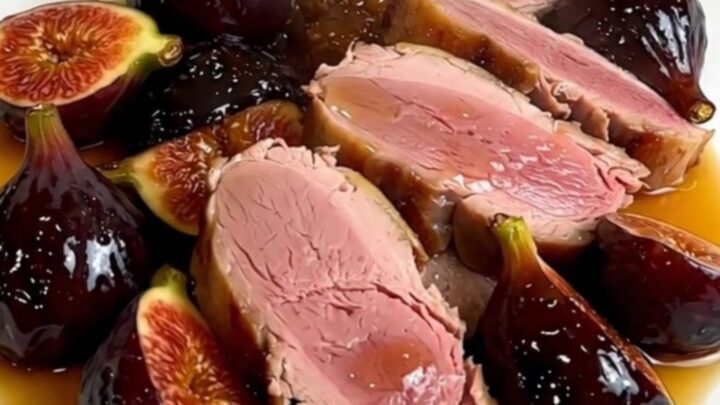
- Final Cook and ServeCheck that the internal temperature of the duck reaches 165°F (74°C). Once cooked, carefully remove the duck and let it rest for at least 5 minutes before slicing. The figs should be soft and glazed by the reduced sauce.Look for duck is tender and sauce is slightly thickenedSafe temperature 165°F (74°C) internal temperature (poultry)Tip Resting is essential for maintaining juiciness.
Once the cooking time is complete, the duck will appear tender and well-glazed. After reaching the safe internal temperature of 165°F (74°C), the duck must be removed and rested for 5 minutes. This resting period is critical, as it allows the juices to redistribute throughout the meat, ensuring that each slice remains moist and tender when finally served with the glazed figs.
Common mistakes
A common mistake is failing to score the duck skin, which prevents the fat from rendering properly and results in a rubbery texture. Another issue is using high heat settings, which can cause the delicate meat to toughen rather than become tender.
Avoid lifting the lid too frequently, as this releases the trapped heat and moisture, significantly increasing the cooking time and potentially drying out the meat before it has a chance to soften.
How to tell it’s done
The duck is done when the internal temperature reaches 165°F (74°C). The meat should be tender to the touch, and the fat should be well-rendered. The figs will look soft and translucent, having absorbed the balsamic and honey glaze.
Always use a meat thermometer inserted into the thickest part of the breast to ensure it has reached the safe temperature, as slow cookers can vary significantly in their heating performance.
- Poultry: 165°F (74°C) in the thickest part
Up next · Part 3 of 3
2 variations · storage & make-ahead · 3 answers · printable card
Tips, FAQ & printable recipe (Part 3)← Back to the ingredients (Part 1)