Dinner · Part 2 of 3: Instructions
Slow Cooker Dijon Mustard Pork Cheeks with Pearl Onions Step-by-step instructions
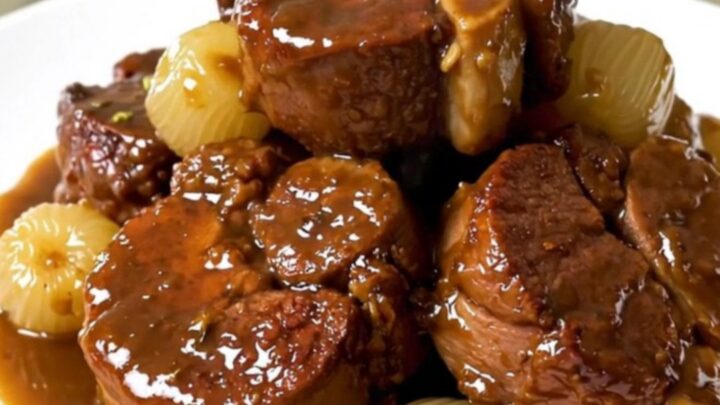
- Prep
- Cook
- Total
- Serves
- 4
Before you start
Before beginning, ensure your slow cooker insert is clean and dry. Prepare the pork cheeks by trimming away any tough silver skin, which can become chewy if left on. Peel the pearl onions completely, ensuring the root ends are removed.
Have your measuring cups ready for the stock and mustard. Because this is a long-cooking recipe, verify that your slow cooker is placed on a heat-safe surface away from any wall cabinets, as the steam output can be significant over an eight-hour period.
Ingredients at a glance (5)
- 2 lb pork cheeks, trimmed
- 1/2 cup Dijon mustard
- 1 cup peeled pearl onions
- 1 tsp dried tarragon
- 1 cup veal stock
Instructions
Coating and layering
- Prepare and combine ingredientsCoat the pork cheeks thoroughly in the Dijon mustard using a mixing bowl or by brushing them directly. Place the mustard-coated pork cheeks into the bottom of the slow cooker insert, ensuring they are evenly distributed.Look for The pork cheeks are fully coated in a thick layer of mustard.Tip Ensure the pork cheeks are trimmed of any excess silver skin before coating to ensure they become tender during the long cooking process.
The pork cheeks should be thoroughly coated in a thick, even layer of Dijon mustard. They should be arranged in the base of the slow cooker. The pearl onions should be distributed evenly on top, and the dried tarragon should be scattered across the surface to ensure even seasoning throughout the braising process before the liquid is added.
Adding stock and seasoning
- Add aromatics and liquidScatter the peeled pearl onions over the pork cheeks in the slow cooker. Sprinkle the dried tarragon evenly over the top of the onions and meat. Pour the veal stock carefully into the slow cooker, avoiding the sides to keep the edges clean.Look for The liquid surrounds the meat and onions without submerging them entirely.Tip Using a high-quality veal stock provides a deeper, more gelatinous sauce compared to standard beef broth.
The veal stock should be poured in carefully, settling around the base of the ingredients. There should be enough liquid to cover about half to two-thirds of the meat. The herbs should be visible on top of the onions. At this stage, the slow cooker is ready to be covered and set to the low temperature setting to begin the long, slow braise.
Braising until tender
- Slow cook and finishCover the slow cooker and cook on low for 8 hours or until the meat is fork-tender. Once cooked, ensure the internal temperature of the pork reaches at least 145°F (63°C). Let the meat rest for 5 minutes before serving to allow the juices to redistribute for the best texture.Look for The pork cheeks are fork-tender and the sauce is glossy and reduced.Safe temperature 145°F (63°C) internal temperature (steaks, chops and roasts)Tip If the sauce is too thin, remove the pork and onions, then set the slow cooker to high and reduce the liquid for 10 minutes.
At the end of the cooking time, the pork cheeks should be extremely tender and easily pulled apart. The pearl onions should be translucent and soft, but not completely falling apart.
The sauce should have a deep, rich color and a slightly thickened consistency. Check that the meat has reached the safe internal temperature before turning off the slow cooker.
Common mistakes
A common mistake is overcrowding the slow cooker, which can prevent the meat from cooking evenly. Arrange the pork in a single layer if possible. Another error is using too much liquid; the pork and onions will release their own juices, so avoid adding more stock than specified, or the sauce will become watery and lose its intense flavor.
Finally, avoid lifting the lid during the first six hours of cooking, as this releases heat and moisture, significantly extending the required cooking time.
How to tell it’s done
The pork cheeks are done when they are fork-tender, meaning they can be easily pierced and pulled apart with minimal resistance. Use an instant-read thermometer to check the thickest part of the meat; it must reach at least 145°F (63°C).
The sauce should be slightly thickened and glossy, clinging to the back of a spoon. If the meat still feels firm, continue cooking for another 30 to 60 minutes, as tough cuts require patience to reach the optimal texture.
- Steaks, chops and roasts: 145°F (63°C) in the thickest part, then a 3-minute rest
Up next · Part 3 of 3
2 variations · storage & make-ahead · 3 answers · printable card
Tips, FAQ & printable recipe (Part 3)← Back to the ingredients (Part 1)