Dinner · Part 1 of 3: Ingredients
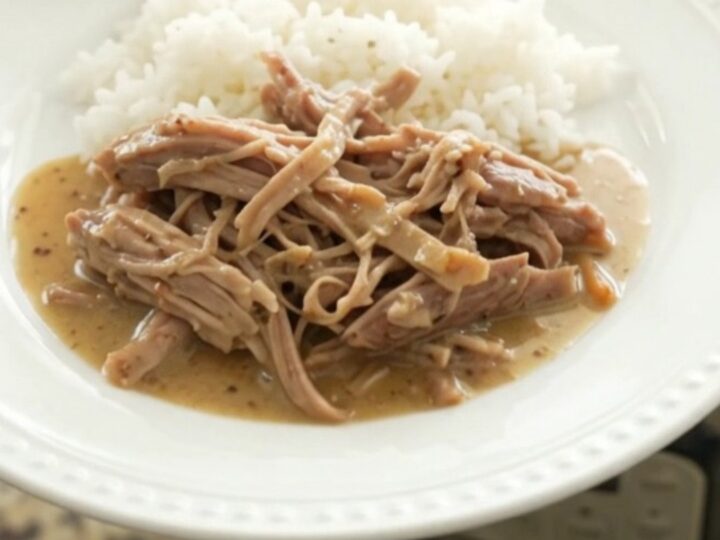
Slow-Cooker Dijon Cream Pork Shoulder with Shallots and Carrots
- Prep
- Cook
- Total
- Serves
- 8
This slow-cooker pork shoulder is the definition of set-it-and-forget-it. You simply place the roast in the pot, surround it with shallots and carrots, dollop on a creamy Dijon mixture, pour in some au jus, and walk away.
Hours later, you're rewarded with fork-tender pork in a velvety, tangy sauce that's perfect over rice. It's a hands-off dinner that tastes like you spent all day in the kitchen—because, in a sense, you did.
This recipe turns a humble pork shoulder into a meltingly tender, flavor-packed meal with almost no effort. The combination of whole-grain Dijon mustard, sour cream, and au jus creates a rich, tangy sauce that coats every strand of pork and every sweet carrot and shallot.
The slow cooker does all the work, making it ideal for busy weekdays or lazy weekends. Serve it over steamed rice to soak up every last drop of the creamy gravy. It's comfort food at its finest, and it's ready when you are.
Ingredients
- 4 lb boneless Boston butt pork shoulder roast
- 8 whole peeled whole shallots
- 1 lb baby carrots
- 1 cup sour cream
- 3 tbsp whole-grain Dijon mustard
- 1 cup au jus
For serving
- 4 cups cooked white rice, for serving
Why this recipe works
The magic of this dish lies in the slow, gentle cooking. A pork shoulder is a tough, well-exercised cut that needs time to break down its collagen into gelatin, which is what gives the meat its luscious, fork-tender texture.
Cooking it on low for 8 to 10 hours allows the connective tissue to melt completely, transforming the roast into succulent shreds that practically fall apart. The low heat also prevents the meat from drying out, keeping it moist and juicy.
The flavor combination is equally important. Whole-grain Dijon mustard brings a sharp, tangy kick that cuts through the richness of the pork, while sour cream adds a subtle tang and creamy body. The au jus provides a savory, beefy backbone that deepens the overall taste.
As the pork cooks, the shallots and carrots caramelize and soften, absorbing the flavorful sauce and becoming sweet, tender accompaniments. Every element works together to create a balanced, satisfying dish.
Notes and substitutions
Choose a well-marbled Boston butt roast for the best results—the fat keeps the meat moist during the long cooking time. If you can only find a shoulder roast, that works too; just trim any excessive fat, but leave a thin layer on top. Whole shallots are ideal here because they hold their shape during cooking and become sweet and mellow. If you can't find whole shallots, you can use pearl onions, but they may cook faster.
For the au jus, you can use store-bought or homemade; either works well. If you prefer a thicker sauce, you can mix a tablespoon of cornstarch with a little water and stir it in during the last 30 minutes of cooking. The sour cream and Dijon should be at room temperature before adding to avoid curdling. And don't skip the rice—it's essential for soaking up the delicious sauce.
- whole-grain Dijon mustard: smooth Dijon mustard or yellow mustard
- au jus: beef broth or chicken broth
- sour cream: plain Greek yogurt or crème fraîche
- baby carrots: regular carrots, peeled and cut into 2-inch pieces
Equipment
- 6-quart slow cooker
- Cutting board
- Chef's knife
- Measuring cups and spoons
- Serving spoon
- Large plate
Up next · Part 2 of 3
6 steps · 8 h of cooking · what to look for at each stage
Step-by-step instructions (Part 2)