Dinner · Part 1 of 3: Ingredients
Slow-Cooker Dijon Cream Chuck Roast with Rosemary and Thyme
- Prep
- Cook
- Total
- Serves
- 6
This slow-cooker chuck roast is the definition of set-it-and-forget-it. A well-marbled roast is topped with smashed garlic, fresh rosemary, and thyme, then finished with sour cream, whole-grain Dijon, and rich au jus.
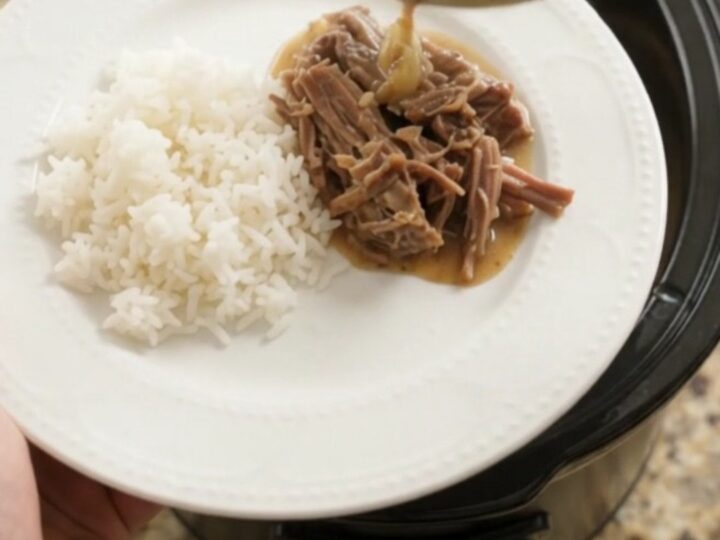
After hours of gentle simmering, the beef becomes fork-tender and bathed in a velvety, herb-flecked gravy. Serve it over steamed rice for a comforting dinner that tastes like you fussed—but you didn't.
There are slow-cooker recipes, and then there are dump-and-go miracles like this one. You simply place a beef chuck roast in the crock, scatter garlic and herbs over the top, dollop on sour cream and mustard, and pour in some au jus.
Then you walk away. Eight hours later, you're rewarded with fall-apart beef and a silky, tangy sauce that's perfect over rice. It's the kind of meal that makes a weekday dinner feel like a Sunday supper, with almost no effort at all.
Ingredients
- 3 1/2 lb beef chuck roast
- 12 garlic cloves, smashed
- 4 sprigs fresh rosemary
- 6 sprigs fresh thyme
- 1/2 cup sour cream
- 3 tbsp whole-grain Dijon mustard
- 1 cup beef au jus
for serving
- Steamed white rice, for serving
Why this recipe works
Chuck roast is the ideal cut for slow cooking because it's well-marbled with connective tissue that breaks down over long, moist heat.
As the collagen melts, it turns into gelatin, which gives the meat its signature fork-tender texture and enriches the cooking liquid into a luscious sauce. Cooking on LOW for 8 to 10 hours allows that transformation to happen gradually, so the meat stays moist and never turns stringy.
The combination of sour cream and Dijon mustard does double duty: the mustard adds a sharp, tangy bite that cuts through the richness of the beef, while the sour cream contributes a subtle tang and creamy body.
As the sauce simmers, the flavors meld and mellow, creating a gravy that's both bold and comforting. The fresh rosemary and thyme infuse the meat and sauce with woodsy, aromatic notes that make every bite taste deeply seasoned.
Notes and substitutions
For the best results, choose a chuck roast that's at least 3 1/2 pounds and has good marbling. The fat bastes the meat as it cooks and keeps it moist. If your roast is smaller, adjust the cooking time—check for tenderness at the 7-hour mark. Smashed garlic cloves are preferred over minced because they hold their shape and soften into sweet, spreadable confit-like pieces.
Use whole-grain Dijon mustard for texture and a more rustic look, but smooth Dijon works too. The au jus can be replaced with beef broth; just add a splash of Worcestershire for depth if you have it. This recipe is forgiving—don't worry if the sour cream and mustard look uneven on top; they'll blend into the sauce as it cooks. Serve over steamed rice, mashed potatoes, or even crusty bread to soak up every drop.
- whole-grain Dijon mustard: Smooth Dijon mustard or yellow mustard (use 2 tablespoons if you prefer less heat)
- beef au jus: Beef broth or beef stock (add 1/2 teaspoon Worcestershire sauce for depth, if desired)
- fresh rosemary and thyme: 1 teaspoon dried rosemary and 1 teaspoon dried thyme, crushed
- sour cream: Plain Greek yogurt or crème fraîche (full-fat works best)
Equipment
- 6-quart slow cooker
- Large spoon
- Cutting board
- Chef's knife
- Measuring cups and spoons
Up next · Part 2 of 3
7 steps · 8 h of cooking · what to look for at each stage
Step-by-step instructions (Part 2)