Dinner · Part 1 of 3: Ingredients
Slow-Cooker Dijon Cream Brisket with Potatoes
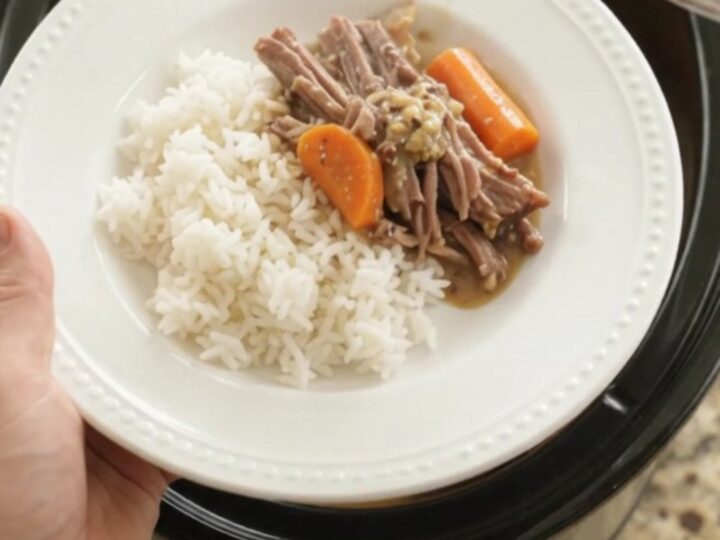
- Prep
- Cook
- Total
- Serves
- 6
This slow-cooker beef brisket is the definition of set-it-and-forget-it. A trimmed brisket goes into the pot with baby Yukon Gold potatoes, thick-cut carrots, sour cream, whole-grain Dijon, and au jus. After 8 to 10 hours on low, the meat is fork-tender and swimming in a velvety, tangy gravy. Just dump everything in, cover, and walk away. Dinner is ready when you are.
There are slow-cooker recipes, and then there are slow-cooker recipes that feel like a special occasion. This one takes a humble beef brisket and turns it into a rich, creamy, Dijon-scented masterpiece with almost no effort.
The combination of sour cream and whole-grain mustard creates a sauce that is both tangy and luxurious, while the slow-cooking process turns the brisket into shreds so tender they melt on the tongue. Yukon Gold potatoes soak up the gravy, and carrots add a touch of sweetness. It is a complete, comforting dinner that cooks while you go about your day.
Ingredients
- 3 1/2 lb beef brisket, trimmed
- 1 1/2 lb baby Yukon Gold potatoes, halved
- 4 medium heirloom carrots, thick-cut
- 1 cup sour cream
- 1/4 cup whole-grain Dijon mustard
- 1 cup au jus
- 1 tsp kosher salt
- 1/2 tsp black pepper
Why this recipe works
The slow cooker is the perfect tool for beef brisket. This cut is full of connective tissue that breaks down slowly over hours of gentle, moist heat. Cooking on LOW for 8 to 10 hours allows the collagen to melt into gelatin, which gives the meat its signature fork-tender texture and enriches the gravy.
The low temperature also means the sour cream and mustard emulsify into a smooth, creamy sauce without curdling, as long as the heat is gentle and the lid stays on.
Layering the ingredients is key. Placing the brisket on the bottom of the pot ensures it is submerged in the au jus and its own juices, keeping it moist. The potatoes and carrots are tucked around the sides, where they cook in the meat's flavorful liquid without becoming mushy.
Dolloping the sour cream and mustard on top rather than stirring them in allows them to melt and blend slowly, creating a silky pan gravy that coats every bite.
Notes and substitutions
For the best results, choose a well-marbled brisket. The fat bastes the meat as it cooks and adds flavor to the gravy. Trim any excess hard fat, but leave a thin layer. Baby Yukon Gold potatoes are ideal because they hold their shape and have a buttery texture. If using larger potatoes, cut them into 1 1/2-inch chunks. Heirloom carrots are sweeter and more colorful, but regular carrots work just as well.
Whole-grain Dijon mustard gives the sauce a rustic texture and a pleasant bite. Smooth Dijon or spicy brown mustard can be substituted. Au jus adds a deep beefy flavor; if you do not have it, use beef broth or consommé.
Sour cream is essential for the creamy element; do not substitute with Greek yogurt, as it may separate during long cooking. This recipe is naturally gluten-free if you choose a gluten-free au jus or broth.
- baby Yukon Gold potatoes: regular Yukon Gold or red potatoes, cut into 1 1/2-inch chunks
- heirloom carrots: regular carrots or parsnips, thick-cut
- whole-grain Dijon mustard: smooth Dijon mustard or spicy brown mustard
- au jus: beef broth or beef consommé
Equipment
- 6-quart slow cooker
- Cutting board
- Chef's knife
- Measuring cups and spoons
- Serving spoon
- Tongs
Up next · Part 2 of 3
5 steps · 8 h of cooking · what to look for at each stage
Step-by-step instructions (Part 2)