Dinner · Part 1 of 3: Ingredients
Slow Cooker Dijon Cream Beef Brisket with Shallots and Carrots
- Prep
- Cook
- Total
- Serves
- 6
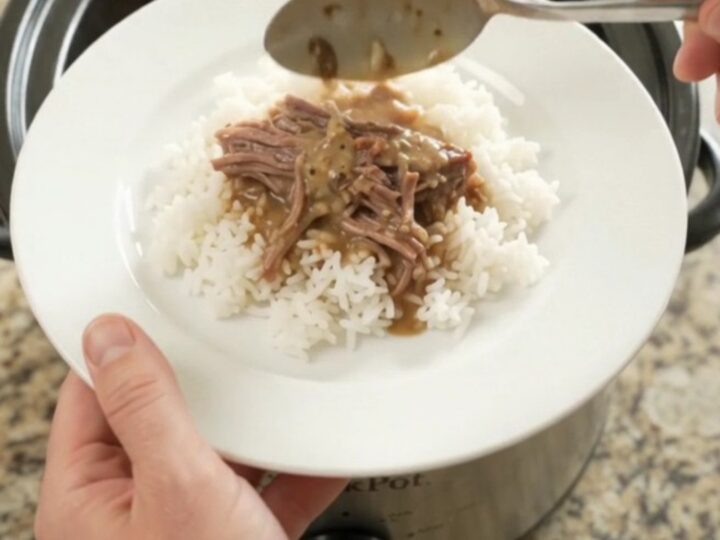
This slow cooker brisket is the definition of set-it-and-forget-it. A trimmed brisket goes into the pot with whole shallots, baby carrots, a few dollops of sour cream and Dijon, and a pour of au jus. Hours later, you come back to fork-tender beef in a velvety, tangy gravy that tastes like you fussed for ages. The best part? There's almost no prep and no stirring.
Beef brisket is a cut that begs for low, slow cooking, and the slow cooker delivers it effortlessly. Here, it simmers in a mixture of beef au jus, sour cream, and whole-grain Dijon mustard, which melts into a silky, slightly tangy sauce.
Whole shallots and baby carrots cook alongside, soaking up all the savory goodness. Serve it over steamed rice or with crusty bread to catch every drop of that creamy gravy. This is the kind of meal that makes a weekday feel like a special occasion.
Ingredients
- 3 1/2 lb beef brisket, trimmed
- 8 whole shallots, peeled
- 12 baby carrots
- 1/2 cup sour cream
- 1/4 cup whole-grain Dijon mustard
- 1 cup beef au jus
for serving
- steamed white rice, for serving
Why this recipe works
Slow cooking is the secret to transforming a tough, well-exercised cut like brisket into something supremely tender. The low heat and long cooking time break down the collagen in the meat, turning it into gelatin that enriches the sauce and gives the beef a melt-in-your-mouth texture.
Because the slow cooker traps steam and heat, it creates a gentle braising environment that keeps the meat moist without any babysitting.
The combination of sour cream and Dijon mustard might seem simple, but it's a flavor powerhouse. The sour cream adds richness and a subtle tang, while the whole-grain mustard brings a sharp, peppery bite and a pleasant texture.
As they cook, they meld with the beef au jus into a cohesive, velvety sauce that coats every strand of shredded meat. The shallots and carrots, meanwhile, caramelize and soften, adding sweetness that balances the tang.
Notes and substitutions
Choose a brisket that's well-marbled and trimmed of excess fat, but leave a thin layer to keep the meat moist. If you can't find brisket, a chuck roast works beautifully.
Whole shallots are ideal here because they hold their shape during long cooking; if you only have regular onions, cut them into large wedges. Baby carrots are convenient, but regular carrots cut into chunks are just as good.
For the au jus, use a good-quality store-bought version or make your own from beef broth and a splash of Worcestershire. Whole-grain Dijon gives a nice visual pop and texture, but smooth Dijon works too. The sour cream should be full-fat for the best richness—low-fat versions can curdle slightly. This recipe is flexible, so feel free to adjust the amount of mustard to suit your taste.
- beef brisket: chuck roast or bottom round roast, both work well for slow braising
- whole-grain Dijon mustard: smooth Dijon mustard, or a mix of yellow mustard and a pinch of mustard powder
- beef au jus: beef broth or a mix of beef broth and a splash of Worcestershire sauce
- baby carrots: 2 large carrots, peeled and cut into 2-inch chunks
Equipment
- 6-quart slow cooker
- cutting board
- chef's knife
- measuring cups and spoons
- serving spoon
- tongs
- serving plate
Up next · Part 2 of 3
8 steps · 8 h of cooking · what to look for at each stage
Step-by-step instructions (Part 2)