Dinner · Part 2 of 3: Instructions
Slow Cooker Dijon Beef with Mushrooms for a Tender Dinner Step-by-step instructions
- Prep
- Cook
- Total
- Serves
- 4
Before you start
Before beginning, ensure that your beef chuck is trimmed of excess exterior fat and cut into uniform 2-inch chunks to guarantee consistent cooking. Have your mushrooms cleaned and sliced to a uniform thickness, and ensure your measuring tools are ready to handle the liquid ingredients.
Set your slow cooker on a stable, dry surface away from the edge of the counter. Have all ingredients measured and ready to go; this preparation ensures that the assembly process is smooth and quick, allowing you to start the slow cooking cycle without delay.
Ingredients at a glance (6)
- 2 lb beef chuck roast, cut into 2-inch chunks
- 8 oz button mushrooms, sliced
- 1 beef bouillon cube
- 3/4 cup dry white wine
- 3 tbsp Dijon mustard
- 2/3 cup crème fraîche
Instructions
Layering the Ingredients
- Assemble the slow cookerPlace the beef chuck chunks in an even layer at the bottom of the slow cooker. Add the sliced button mushrooms over the top of the beef. Crumble the beef bouillon cube evenly over the mushrooms and meat, then pour the dry white wine over the entire mixture.Look for The ingredients should be layered evenly to ensure the wine distributes the bouillon flavor as it begins to cook.Tip Ensure the slow cooker is placed on a level, heat-resistant surface before starting the cooking cycle.
At this stage, the slow cooker should be neatly layered with the beef at the base, followed by the mushrooms and the bouillon. The wine should be poured evenly, just enough to moisten the base without drowning the ingredients. Everything should look organized and ready for the long, slow heat to begin. Check that the slow cooker lid fits securely, as a tight seal is vital for maintaining the internal moisture and ensuring the meat braises properly throughout the cooking cycle.
Slow Cooking the Beef
- Slow cook until tenderCover the slow cooker with the lid and set to cook on low for 6 to 8 hours, or until the beef reaches an internal temperature of at least 145°F (63°C). Let the meat rest for at least 3 minutes before proceeding to the final step.Look for The beef should shred easily with a fork, and the liquid should have reduced slightly, forming the base for the sauce.Safe temperature 145°F (63°C) internal temperature (steaks, chops and roasts)Tip Avoid lifting the lid during the first few hours of cooking to maintain a consistent temperature and moisture level.
The beef should be simmering gently, filling the kitchen with a deep, savory aroma. The meat should look significantly darker and more tender than it did at the start. The mushrooms will have softened considerably, contributing their juices to the bottom of the cooker.
Before moving to the final stage, check that the liquid has reduced slightly and that the beef is tender enough to be easily pierced with a fork, indicating that the connective tissue has successfully broken down.
Finishing the Sauce
- Finish with creamy sauceOnce the beef is fully cooked, stir in the Dijon mustard and the crème fraîche. Continue to cook on low for an additional 15 minutes to allow the sauce to thicken and become glossy.Look for The sauce will transform from a thin liquid into a rich, velvety coating that clings to the beef and mushrooms.Tip Whisk the Dijon and crème fraîche together in a small bowl before adding to the slow cooker for a smoother incorporation.
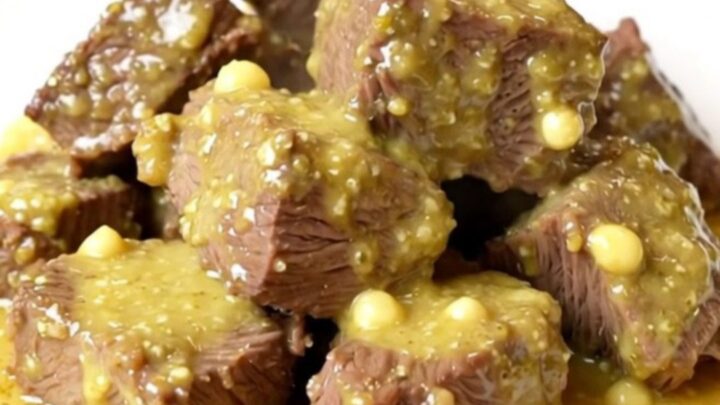
The finished dish should feature beef that is coated in a thick, creamy, and glossy Dijon sauce. The mushrooms should be perfectly tender and integrated into the sauce. The aroma should be a balanced blend of tangy mustard and rich, savory beef.
Before serving, verify that the sauce has achieved a uniform, smooth consistency. If the sauce appears too thin, you can let it simmer uncovered for a few extra minutes, but be careful not to overcook the meat, which should remain succulent and tender.
Common mistakes
A common mistake is overcrowding the slow cooker, which can prevent even cooking and lead to excess liquid that dilutes the final sauce. Another error is using a wine that is too sweet; always stick to dry white wines to maintain the proper balance of acidity. Finally, avoid adding the crème fraîche too early in the cooking process, as prolonged exposure to high heat can cause the sauce to break or curdle, resulting in a grainy texture instead of a smooth, velvety finish.
How to tell it’s done
The beef is perfectly done when it reaches an internal temperature of 145°F (63°C) and is fork-tender, meaning it yields easily to gentle pressure. The sauce should be thickened, glossy, and coats the back of a spoon.
When testing for doneness, ensure the thermometer is inserted into the center of the largest piece of meat, away from any bone or connective tissue, to get an accurate reading. Once the desired temperature is reached, let the meat rest for 5 minutes before serving to ensure the juices redistribute.
- Steaks, chops and roasts: 145°F (63°C) in the thickest part, then a 3-minute rest
Up next · Part 3 of 3
2 variations · storage & make-ahead · 3 answers · printable card
Tips, FAQ & printable recipe (Part 3)← Back to the ingredients (Part 1)