Desserts · Part 2 of 3: Instructions
Slow Cooker Crustless Custard Tart Step-by-step instructions
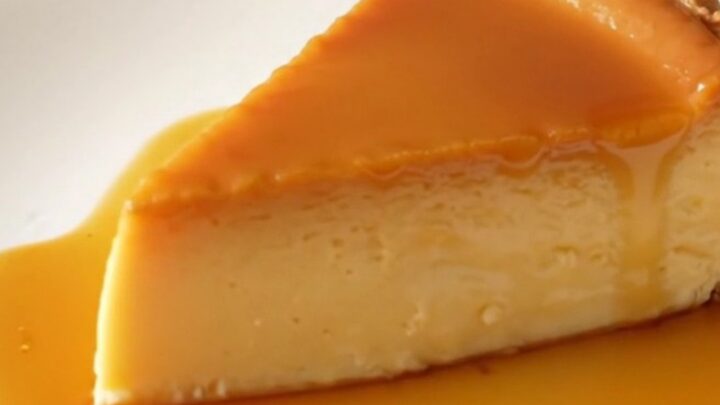
- Prep
- Cook
- Total
- Serves
- 6
Before you start
Before beginning, ensure that all ingredients are at room temperature to help them emulsify more easily. Prepare your slow cooker by lining it with parchment paper, allowing some extra paper to come up the sides for easy removal later.
Have your whisk and mixing bowl ready to combine the ingredients efficiently. Clear your workspace to ensure you have enough room for the slow cooker and your mixing bowl. Confirm that your thermometer is calibrated and ready to check the internal temperature of the custard once the cooking time concludes.
Ingredients at a glance (4)
- 4 large eggs
- 1/2 cup granulated sugar
- 2 tbsp cornstarch
- 2 cups whole milk
Instructions
Preparation and Mixing
- Prepare the slow cookerLine the base and sides of your slow cooker with a piece of parchment paper. This will ensure easy removal of the finished custard tart once it has set and cooled properly.Look for ensure the paper covers the bottom and sides completelyTip Use a slightly oversized sheet of parchment to create handles for lifting the tart out.
At this phase, the ingredients should be fully combined into a smooth, thin liquid. There should be no visible clumps of cornstarch or streaks of egg. The texture should be uniform and consistent before pouring it into the slow cooker. Ensure the parchment paper is positioned correctly so that the custard will have a clean surface for easy removal after the cooking process is complete.
Slow Cooking
- Combine the ingredientsIn a mixing bowl, whisk the eggs and granulated sugar together until smooth. Gradually add the cornstarch, ensuring no lumps remain, then slowly whisk in the whole milk until the mixture is fully incorporated.Look for the mixture should be uniform and free of cornstarch clumpsTip Whisking the cornstarch into the eggs before adding the milk prevents clumping.
During the cooking phase, the custard will gradually thicken as the egg proteins coagulate. You should notice the edges starting to set while the middle remains slightly jiggly.
The kitchen may fill with a subtle, sweet aroma as the custard sets. It is important to keep the lid on to maintain the heat, as frequent opening will lower the temperature and extend the required cooking time significantly.
Cooling and Setting
- Cook the custardPour the custard base into the prepared slow cooker. Cover and cook on low for 3 hours. To ensure the eggs are fully cooked through, the internal temperature must reach 160°F (71°C). Once finished, turn off the heat and allow the custard to rest for at least 1 hour before slicing.Look for the edges should be firm while the center remains slightly wobblySafe temperature 160°F (71°C) internal temperature (egg dishes)Tip Do not stir while cooking to keep the texture uniform.
Once the cooking time is finished, the custard will be very soft and fragile. The cooling phase is critical, as the structure continues to set as it drops in temperature. The tart should look smooth and glossy, with a firm texture that is stable enough to be sliced. Ensure it has rested for at least one hour before attempting to lift it from the slow cooker to avoid breaking the delicate structure.
Common mistakes
A common mistake is using milk with insufficient fat content, which can result in a thin, watery custard that fails to set properly. Another error is failing to whisk the cornstarch thoroughly, which leads to gritty lumps in the final dish.
Overcooking the custard can cause it to crack or lose its silky texture, so monitor it closely during the final hour. Always allow the custard to cool completely before attempting to slice it, as it needs time to stabilize and firm up.
How to tell it’s done
The custard is done when the edges are set and firm, while the center remains slightly wobbly but stable. Use an instant-read thermometer to check that the custard has reached an internal temperature of at least 160°F (71°C) to ensure the eggs are fully cooked.
The surface should look smooth and glossy. If the center is still very runny or liquid, continue cooking in small intervals. Once the temperature is reached, the tart will firm up significantly as it cools and sets.
- Egg dishes: 160°F (71°C) in the thickest part
Up next · Part 3 of 3
2 variations · storage & make-ahead · 3 answers · printable card
Tips, FAQ & printable recipe (Part 3)← Back to the ingredients (Part 1)