Dinner · Part 2 of 3: Instructions
Slow Cooker Creamy Sorrel Salmon Step-by-step instructions
- Prep
- Cook
- Total
- Serves
- 4
Before you start
Before beginning, ensure the slow cooker is placed on a stable, heat-resistant surface near an outlet.
Gather all ingredients, making sure the shallots are finely minced to ensure they soften properly during the cooking cycle. Have your measuring cup ready to combine the wine and cream.
Pat the salmon fillets dry with paper towels to ensure they are clean and free of excess moisture. If the salmon has skin, you may choose to remove it before cooking for a cleaner presentation, although leaving it on is perfectly acceptable for this method.
Ingredients at a glance (7)
- 4 fillets salmon fillets
- 2 tbsp minced shallots
- 1/2 cup chopped sorrel
- 1/2 tsp kosher salt
- 1/4 tsp black pepper
- 1/4 cup dry white wine
- 1/2 cup heavy cream
Instructions
Preparation and Arrangement
- Prepare the SalmonPlace the salmon fillets in the bottom of the slow cooker in a single layer. Ensure the fillets are spaced evenly to allow for uniform cooking throughout the process.Look for Salmon fillets should be arranged in a single layer at the bottom of the cooker.Tip Pat the salmon fillets dry with a paper towel before placing them in the cooker to remove excess moisture.
The salmon fillets are arranged in a single layer at the bottom of the slow cooker. The shallots and sorrel are evenly distributed, and the salmon is seasoned with salt and pepper. The area is clean, and the slow cooker is ready to be covered.
Sauce Integration
- Season and Add AromaticsScatter the minced shallots and chopped sorrel over the top of the salmon. Season the fish generously with kosher salt and freshly ground black pepper to enhance the flavors.Look for The shallots and sorrel should be evenly distributed over the surface of the fish.Tip Use fresh sorrel for the best flavor, as its bright, lemony acidity cuts through the richness of the cream.
The wine and cream mixture is poured carefully over the fish, ensuring the fillets are mostly submerged. The slow cooker lid is securely placed on the base, and the setting is switched to the low heat function to begin the gentle poaching process.
Cooking to Perfection
- Add Sauce and CookWhisk together the white wine and heavy cream in a measuring cup, then pour the mixture over the salmon. Cover the slow cooker and cook on low for 1.5 to 2 hours, or until the fish reaches an internal temperature of 145°F (63°C).Look for The sauce should be bubbling gently and the salmon should flake easily with a fork.Safe temperature 145°F (63°C) internal temperature (fish)Tip Do not overcook the salmon; it should remain moist and tender rather than dry.
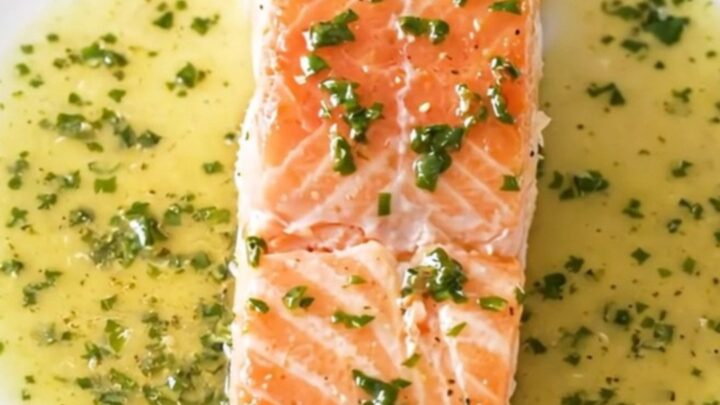
The salmon is cooked until it reaches 145°F (63°C). The sauce has thickened slightly and the sorrel has wilted into the cream, creating a vibrant, aromatic finish. The fish is tender, glossy, and ready to be served immediately from the cooker.
Common mistakes
A common mistake is overcooking the salmon, which causes the proteins to tighten and the texture to become dry. Always use a digital thermometer to check for doneness rather than relying on time alone, as slow cooker temperatures can vary.
Another error is using a sweet wine, which can make the sauce cloying. Stick to dry white wines to maintain the necessary acidity. Finally, avoid lifting the lid frequently, as this releases heat and moisture, significantly slowing down the cooking process.
How to tell it’s done
The salmon is done when it reaches an internal temperature of 145°F (63°C) at the thickest part. At this point, the flesh should be opaque and flake easily when gently pressed with a fork. It should look glossy and tender, not dry or chalky.
If the temperature is lower, cook for an additional 15 minutes and check again. The sauce should be creamy and slightly thickened, coating the fish beautifully without being watery or separated.
- Fish: 145°F (63°C) in the thickest part
Up next · Part 3 of 3
2 variations · storage & make-ahead · 3 answers · printable card
Tips, FAQ & printable recipe (Part 3)← Back to the ingredients (Part 1)