Dinner · Part 2 of 3: Instructions
Slow Cooker Creamy Pumpkin Soup for Cozy Evenings Step-by-step instructions
- Prep
- Cook
- Total
- Serves
- 4
Before you start
Prepare for this recipe by ensuring all vegetables are thoroughly washed, peeled, and cubed. A consistent dice, roughly one inch in size, is essential for uniform cooking. Gather your slow cooker and ensure it is placed on a heat-resistant, flat surface.
Have your measuring tools ready to ensure the liquid-to-vegetable ratio is correct, as this determines the final viscosity of the soup. Once the ingredients are prepared, assembly takes only moments, allowing the slow cooker to take over the remaining work until you are ready to serve.
Ingredients at a glance (6)
- 2 lbs raw pumpkin cubes
- 2 cups diced potatoes
- 1 cup sliced onions
- 1 vegetable bouillon cube, crumbled
- 4 cups water
- 1/4 cup heavy cream, for swirling
Instructions
Preparation and assembly
- Combine ingredientsPlace the raw pumpkin cubes into the slow cooker basin. Add the diced potatoes and sliced onions on top. Crumble the vegetable bouillon cube evenly over the vegetables, then pour in the water.Look for Ensure all vegetables are submerged in the water for even cooking.Tip Cut vegetables into uniform sizes to ensure they soften at the same rate during the long cook time.
At the end of this phase, the slow cooker contains all ingredients neatly layered and ready for the long, slow heat. Everything is submerged, and the bouillon is distributed to ensure flavor is infused throughout the vegetables as they begin to soften. The kitchen remains clean and the prep area is cleared, leaving the slow cooker to work undisturbed for the next few hours.
Slow cooking process
- Slow cookCover the slow cooker with its lid. Cook on the low setting for approximately 4 to 6 hours, or until all vegetables are completely tender when pierced with a fork.Look for The pumpkin and potatoes should be soft enough to mash easily with a spoon.Tip Resist the urge to lift the lid frequently, as this releases heat and extends the total cooking time.
The kitchen will begin to smell savory and slightly earthy as the vegetables break down. The vegetables are now fully tender, having reached the peak of their softness.
The water and bouillon have combined with the natural juices of the pumpkin and onions to form a flavorful base. The mixture is now ready for the final step of blending to achieve the desired silky, uniform texture.
Blending and serving
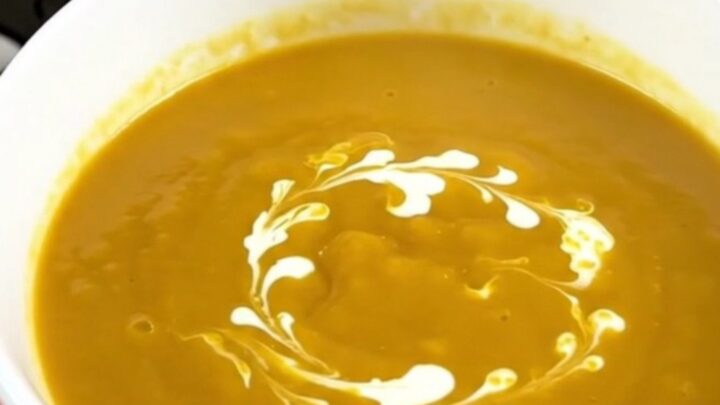
- Blend and finishOnce tender, use an immersion blender directly in the slow cooker to purée the mixture until completely smooth and velvety. Ladle the soup into bowls and finish each serving with a swirl of heavy cream.Look for The texture should be thick, creamy, and uniform without any large chunks of vegetables remaining.Tip If the soup appears too thick, add a small splash of hot water or broth to reach your desired consistency.
The soup has been transformed into a perfectly smooth, thick, and velvety consistency. The final addition of the cream swirl creates a beautiful contrast, adding a luxurious mouthfeel that complements the earthy sweetness of the pumpkin. The soup is now steaming hot, perfectly seasoned, and ready to be portioned into bowls for immediate serving as a comforting, nourishing meal.
Common mistakes
A common mistake is cutting the vegetables into uneven pieces, which results in some parts being mushy while others remain undercooked and crunchy. Another error is overfilling the slow cooker, which can lead to inefficient heat distribution and potential overflow.
Always ensure you are using enough liquid to cover the vegetables, but avoid excessive amounts that will create a watery, thin soup. Finally, ensure the bouillon is fully crumbled before adding it, as large chunks may not dissolve properly during the cooking process.
How to tell it’s done
The soup is ready when the pumpkin and potato pieces offer no resistance to the pressure of a fork. The mixture should appear soft and slightly collapsed, having absorbed the broth. When blending, the soup should transform into a thick, uniform liquid that coats the back of a spoon.
There should be no visible lumps of vegetable matter, and the color should be a consistent, warm orange hue. The final consistency should be velvety, rich, and perfectly smooth to the palate.
Up next · Part 3 of 3
2 variations · storage & make-ahead · 3 answers · printable card
Tips, FAQ & printable recipe (Part 3)← Back to the ingredients (Part 1)